
About This Book
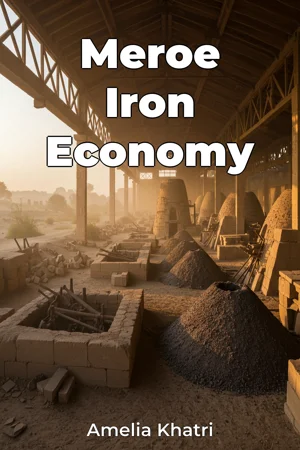
How did one ancient African kingdom forge a regional empire through the mastery of iron production, and what can its story teach us about the interconnectedness of technology, society, and environment? "Meroe Iron Economy" delves into the economic foundations of the Kingdom of Meroe (c. 300 BCE – 300 CE), a civilization in ancient Sudan that flourished due to its sophisticated iron industry. This book uncovers how Meroe's iron production not only fueled its regional influence but also shaped its labor systems and resource management strategies. These topics are critical because they offer a case study in how technological innovation can drive societal development, while also highlighting the potential environmental consequences and ethical considerations inherent in industrial growth. This book provides a comprehensive re-evaluation of Meroitic history, moving beyond traditional Egyptocentric views to focus on Meroe's unique trajectory. "Meroe Iron Economy" argues that iron production was the cornerstone of Meroe's power, enabling military expansion, agricultural intensification, and the development of a complex economy. This argument challenges previous scholarship that has often underestimated the scale and sophistication of Meroe's industrial activities. The book unfolds in three major parts. First, it introduces the geographical, historical, and archaeological context of Meroe, detailing its location in the Nile Valley, its relationship with Egypt, and the available archaeological evidence for iron production. Second, it examines the technological aspects of iron smelting in Meroe, analyzing furnace designs, ore sources, and production processes. This section also investigates the labor systems that supported the iron industry, exploring the roles of specialized artisans, enslaved workers, and other social groups. Third, the book analyzes the environmental impact of iron production, considering deforestation, soil erosion, and other ecological consequences. This part explores the strategies Meroe employed in managing its resources. The analysis relies on a diverse range of evidence, including archaeological excavations of iron production sites, analyses of iron artifacts, textual sources from Meroe and neighboring regions, and environmental data. Particular attention is given to slag heaps, furnace remains, and other material evidence that provides direct insights into the scale and technology of Meroe's iron industry. "Meroe Iron Economy" also connects to broader fields such as environmental history, economic anthropology, and African studies. By examining the ecological consequences of iron production, the book contributes to ongoing discussions about sustainable development and resource management in the ancient world. Its analysis of Meroe's labor systems sheds light on the complexities of ancient economies and the social dynamics of industrial production. This book offers a novel perspective on Meroitic history by focusing on the iron economy as a central organizing principle. It provides a nuanced picture of Meroe's rise and fall, highlighting both the achievements and the challenges of its industrial development. Written in an accessible yet rigorous style, this book is aimed at archaeologists, historians, and anyone interested in the economic, social, and environmental history of ancient Africa. It provides valuable insights for understanding the long-term consequences of industrialization, both in the past and in the present. As a work of history and world history, it adheres to the genre's focus on factual accuracy, detailed analysis, and evidence-based argumentation. The book's scope is limited to the Meroitic period and focuses primarily on the economic and ecological impacts of iron production. While it touches on political and social issues, its main emphasis is on material culture and environmental change. The lessons from Meroe's experience can be applied to contemporary challenges related to industrial development, resource management, and environmental sustainability. By understanding how one ancient society grappled with these issues, we can gain valuable insights for addressing similar challenges today. Finally, the book engages with ongoing debates about the nature of ancient African economies, the role of technology in societal development, and the relationship between humans and the environment. By presenting new evidence and offering fresh interpretations, it contributes to a deeper understanding of Meroe and its place in world history.
How did one ancient African kingdom forge a regional empire through the mastery of iron production, and what can its story teach us about the interconnectedness of technology, society, and environment? "Meroe Iron Economy" delves into the economic foundations of the Kingdom of Meroe (c. 300 BCE – 300 CE), a civilization in ancient Sudan that flourished due to its sophisticated iron industry. This book uncovers how Meroe's iron production not only fueled its regional influence but also shaped its labor systems and resource management strategies. These topics are critical because they offer a case study in how technological innovation can drive societal development, while also highlighting the potential environmental consequences and ethical considerations inherent in industrial growth. This book provides a comprehensive re-evaluation of Meroitic history, moving beyond traditional Egyptocentric views to focus on Meroe's unique trajectory. "Meroe Iron Economy" argues that iron production was the cornerstone of Meroe's power, enabling military expansion, agricultural intensification, and the development of a complex economy. This argument challenges previous scholarship that has often underestimated the scale and sophistication of Meroe's industrial activities. The book unfolds in three major parts. First, it introduces the geographical, historical, and archaeological context of Meroe, detailing its location in the Nile Valley, its relationship with Egypt, and the available archaeological evidence for iron production. Second, it examines the technological aspects of iron smelting in Meroe, analyzing furnace designs, ore sources, and production processes. This section also investigates the labor systems that supported the iron industry, exploring the roles of specialized artisans, enslaved workers, and other social groups. Third, the book analyzes the environmental impact of iron production, considering deforestation, soil erosion, and other ecological consequences. This part explores the strategies Meroe employed in managing its resources. The analysis relies on a diverse range of evidence, including archaeological excavations of iron production sites, analyses of iron artifacts, textual sources from Meroe and neighboring regions, and environmental data. Particular attention is given to slag heaps, furnace remains, and other material evidence that provides direct insights into the scale and technology of Meroe's iron industry. "Meroe Iron Economy" also connects to broader fields such as environmental history, economic anthropology, and African studies. By examining the ecological consequences of iron production, the book contributes to ongoing discussions about sustainable development and resource management in the ancient world. Its analysis of Meroe's labor systems sheds light on the complexities of ancient economies and the social dynamics of industrial production. This book offers a novel perspective on Meroitic history by focusing on the iron economy as a central organizing principle. It provides a nuanced picture of Meroe's rise and fall, highlighting both the achievements and the challenges of its industrial development. Written in an accessible yet rigorous style, this book is aimed at archaeologists, historians, and anyone interested in the economic, social, and environmental history of ancient Africa. It provides valuable insights for understanding the long-term consequences of industrialization, both in the past and in the present. As a work of history and world history, it adheres to the genre's focus on factual accuracy, detailed analysis, and evidence-based argumentation. The book's scope is limited to the Meroitic period and focuses primarily on the economic and ecological impacts of iron production. While it touches on political and social issues, its main emphasis is on material culture and environmental change. The lessons from Meroe's experience can be applied to contemporary challenges related to industrial development, resource management, and environmental sustainability. By understanding how one ancient society grappled with these issues, we can gain valuable insights for addressing similar challenges today. Finally, the book engages with ongoing debates about the nature of ancient African economies, the role of technology in societal development, and the relationship between humans and the environment. By presenting new evidence and offering fresh interpretations, it contributes to a deeper understanding of Meroe and its place in world history.
"Meroe Iron Economy" explores how the Kingdom of Meroe in ancient Sudan leveraged its sophisticated iron industry to become a regional power. The book argues that Meroe's mastery of iron production, from approximately 300 BCE to 300 CE, was central to its economic and military strength. Intriguingly, the study reveals that this industrial prowess influenced not only military expansion and agricultural progress, but also shaped the society's labor systems and resource management strategies. Considering the environmental impact, the book highlights potential deforestation and ecological consequences related to iron smelting, offering valuable insights into ancient resource management. The book is structured to provide a comprehensive understanding of Meroe's iron economy. It begins by setting the geographical and historical context, then delves into the technological aspects of iron smelting, analyzing furnace designs and ore sources. It concludes by assessing the environmental and social impacts of this industry. This approach facilitates a nuanced understanding of Meroe's rise and fall, emphasizing the interconnectedness of technology, society, and the environment. By focusing on material culture and environmental change, the book offers a novel perspective on Meroitic history and its implications for contemporary issues.
Book Details
ISBN
9788235255198
Publisher
Publifye AS
Your Licenses
You don't own any licenses for this book
Purchase a license below to unlock this book and download the EPUB.
Purchase License
Select a tier to unlock this book
Need bulk licensing?
Contact us for enterprise agreements.