
About This Book
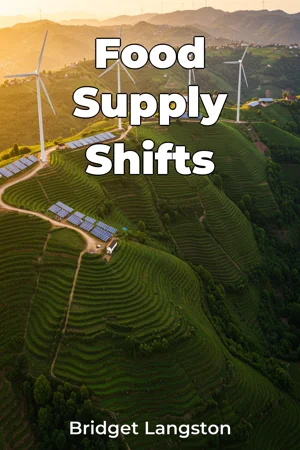
How will we feed the world in the face of unprecedented global challenges? "Food Supply Shifts" examines the complex interplay of worldwide events, accelerating climate change, and rapid technological advancements that are fundamentally reshaping food production and distribution systems. Understanding these shifts is crucial for policymakers, businesses, and concerned citizens alike, as they will determine global food security and economic stability in the coming decades. This book argues that our current food systems, built on assumptions of stable climates and readily available resources, are increasingly vulnerable. We must adapt and innovate to ensure a sustainable and equitable food supply for a growing global population. This argument is supported by data-driven analysis of climate models, economic forecasts, and technological innovations in agriculture. "Food Supply Shifts" begins by establishing the historical context of modern agriculture, tracing its evolution from localized practices to globalized systems. It then introduces the three core themes: the impact of worldwide events (geopolitical instability, trade wars, and pandemics), the environmental consequences of climate change (altered weather patterns, resource scarcity, and biodiversity loss), and the transformative power of technology (precision agriculture, biotechnology, and alternative protein sources). The book delves into each of these themes in detail. First, the impact of global disruptions on supply chains, food prices, and access to resources is analyzed, with case studies from recent events. Second, the book explores the effects of climate change on crop yields, livestock production, and fisheries, presenting climate models and their projected impact on food production regions. Third, the book evaluates the potential of new technologies to increase efficiency, reduce environmental impact, and create more resilient food systems. Chapters will examine the promise and limitations of vertical farming, genetically modified crops, cellular agriculture, and blockchain technology in supply chain management. The culmination of the book synthesizes this evidence to propose a framework for building more adaptive and resilient food systems. This framework emphasizes diversification of food sources, investment in sustainable agricultural practices, and equitable distribution mechanisms. It considers the ethical and social implications of these shifts, addressing concerns about environmental justice, economic inequality, and access to nutritious food for all. The evidence presented in "Food Supply Shifts" is drawn from a variety of sources, including peer-reviewed scientific studies, government reports, industry analyses, and on-the-ground observations from agricultural regions around the world. The book also incorporates data from international organizations such as the Food and Agriculture Organization (FAO) and the World Bank. The methodologies employed include statistical analysis, economic modeling, and comparative case studies. This book connects to other important fields of study, including environmental science, economics, and political science. By examining the environmental consequences of food production, the economic drivers of food systems, and the political factors that shape food policies, the book offers a holistic perspective on the challenges and opportunities facing the global food supply. "Food Supply Shifts" offers a unique perspective by integrating these diverse perspectives into a cohesive and actionable framework. It avoids simplistic solutions and acknowledges the complexity of the challenges. The tone is factual and analytical, presenting information in a clear and accessible manner. The target audience includes policymakers, academics, business leaders, and anyone interested in the future of food. The book will be valuable to those seeking a comprehensive understanding of the forces shaping the global food system and practical insights into how to build more resilient and sustainable food supplies. As a work of non-fiction in the environment and economics genres, the book aims to provide an objective and evidence-based analysis of the issues. While the book covers a broad range of topics, its scope is limited to the most significant factors influencing global food production and distribution. It does not delve into specific regional agricultural practices in exhaustive detail, but focuses on overarching trends and challenges. The information presented in "Food Supply Shifts" can be applied in various real-world settings. Policymakers can use the book’s framework to develop more effective food security strategies. Businesses can use the book’s analysis to assess risks and opportunities in the food sector. Consumers can use the book’s insights to make more informed choices about the food they eat. The book addresses ongoing debates about the best ways to ensure food security, including the role of technology, the importance of sustainable agriculture, and the need for equitable distribution. By presenting a balanced and evidence-based analysis of these issues, "Food Supply Shifts" seeks to contribute to a more informed and productive discussion about the future of food.
How will we feed the world in the face of unprecedented global challenges? "Food Supply Shifts" examines the complex interplay of worldwide events, accelerating climate change, and rapid technological advancements that are fundamentally reshaping food production and distribution systems. Understanding these shifts is crucial for policymakers, businesses, and concerned citizens alike, as they will determine global food security and economic stability in the coming decades. This book argues that our current food systems, built on assumptions of stable climates and readily available resources, are increasingly vulnerable. We must adapt and innovate to ensure a sustainable and equitable food supply for a growing global population. This argument is supported by data-driven analysis of climate models, economic forecasts, and technological innovations in agriculture. "Food Supply Shifts" begins by establishing the historical context of modern agriculture, tracing its evolution from localized practices to globalized systems. It then introduces the three core themes: the impact of worldwide events (geopolitical instability, trade wars, and pandemics), the environmental consequences of climate change (altered weather patterns, resource scarcity, and biodiversity loss), and the transformative power of technology (precision agriculture, biotechnology, and alternative protein sources). The book delves into each of these themes in detail. First, the impact of global disruptions on supply chains, food prices, and access to resources is analyzed, with case studies from recent events. Second, the book explores the effects of climate change on crop yields, livestock production, and fisheries, presenting climate models and their projected impact on food production regions. Third, the book evaluates the potential of new technologies to increase efficiency, reduce environmental impact, and create more resilient food systems. Chapters will examine the promise and limitations of vertical farming, genetically modified crops, cellular agriculture, and blockchain technology in supply chain management. The culmination of the book synthesizes this evidence to propose a framework for building more adaptive and resilient food systems. This framework emphasizes diversification of food sources, investment in sustainable agricultural practices, and equitable distribution mechanisms. It considers the ethical and social implications of these shifts, addressing concerns about environmental justice, economic inequality, and access to nutritious food for all. The evidence presented in "Food Supply Shifts" is drawn from a variety of sources, including peer-reviewed scientific studies, government reports, industry analyses, and on-the-ground observations from agricultural regions around the world. The book also incorporates data from international organizations such as the Food and Agriculture Organization (FAO) and the World Bank. The methodologies employed include statistical analysis, economic modeling, and comparative case studies. This book connects to other important fields of study, including environmental science, economics, and political science. By examining the environmental consequences of food production, the economic drivers of food systems, and the political factors that shape food policies, the book offers a holistic perspective on the challenges and opportunities facing the global food supply. "Food Supply Shifts" offers a unique perspective by integrating these diverse perspectives into a cohesive and actionable framework. It avoids simplistic solutions and acknowledges the complexity of the challenges. The tone is factual and analytical, presenting information in a clear and accessible manner. The target audience includes policymakers, academics, business leaders, and anyone interested in the future of food. The book will be valuable to those seeking a comprehensive understanding of the forces shaping the global food system and practical insights into how to build more resilient and sustainable food supplies. As a work of non-fiction in the environment and economics genres, the book aims to provide an objective and evidence-based analysis of the issues. While the book covers a broad range of topics, its scope is limited to the most significant factors influencing global food production and distribution. It does not delve into specific regional agricultural practices in exhaustive detail, but focuses on overarching trends and challenges. The information presented in "Food Supply Shifts" can be applied in various real-world settings. Policymakers can use the book’s framework to develop more effective food security strategies. Businesses can use the book’s analysis to assess risks and opportunities in the food sector. Consumers can use the book’s insights to make more informed choices about the food they eat. The book addresses ongoing debates about the best ways to ensure food security, including the role of technology, the importance of sustainable agriculture, and the need for equitable distribution. By presenting a balanced and evidence-based analysis of these issues, "Food Supply Shifts" seeks to contribute to a more informed and productive discussion about the future of food.
"Food Supply Shifts" explores the critical transformations occurring within global food systems due to accelerating climate change, technological advancements, and worldwide events. It emphasizes the vulnerability of current food production and distribution models and the urgent need for adaptation to ensure future food security and economic stability. The book argues that relying on past assumptions of stable climates and readily available resources is no longer viable. One intriguing insight is the potential for agricultural technology, such as precision agriculture and biotechnology, to revolutionize food production. The book begins by tracing the evolution of agriculture from localized practices to globalized systems. It delves into the impact of geopolitical instability, climate change consequences like altered weather patterns, and the transformative power of technology. It analyzes how global disruptions affect supply chains and food prices and presents climate models projecting impacts on key food production regions. The framework it proposes emphasizes diversifying food sources, investing in sustainable agriculture, and ensuring equitable distribution, addressing ethical and social concerns.
Book Details
ISBN
9788235255167
Publisher
Publifye AS
Your Licenses
You don't own any licenses for this book
Purchase a license below to unlock this book and download the EPUB.
Purchase License
Select a tier to unlock this book
Need bulk licensing?
Contact us for enterprise agreements.