
About This Book
How did a unique blend of cultures forge a thriving maritime network along the Swahili Coast, connecting Africa to the distant shores of Asia and the Middle East? "Swahili Coast Exchange" delves into the fascinating history of the Swahili city-states, exploring how their distinct architectural styles and linguistic identities were intricately linked to their participation in complex maritime trade networks. This book illuminates the profound ways in which cultural exchange and economic activity shaped the Swahili Coast, creating a vibrant and influential society. The book focuses on three core themes, beginning with Swahili architecture. The unique designs of Swahili buildings, influenced by both African and Islamic traditions, served as statements of wealth, power, and cultural identity. We also examine the development of the Swahili language, a Bantu language infused with Arabic and other linguistic influences, which facilitated trade and communication across diverse communities. Finally, we analyze the maritime trade networks themselves, tracing the routes, commodities, and cultural exchanges that connected the Swahili Coast to the wider Indian Ocean world. These themes are critically important because they demonstrate the agency of Swahili people in shaping their own history and engaging with global networks on their own terms. This book provides the critical background necessary to understand the Swahili Coast's role in world history. We will explore the rise of Islam in the region, the development of Swahili culture, and the political structures of the city-states. "Swahili Coast Exchange" argues that the Swahili city-states were not merely passive recipients of external influences but active agents who strategically used their unique cultural assets to foster trade and develop a distinct identity within the Indian Ocean network. This argument challenges Eurocentric views of history that often marginalize African contributions to global exchange. The book is structured to provide a comprehensive understanding of the Swahili Coast. It begins by introducing the geographical, historical, and cultural context of the region, followed by an in-depth exploration of Swahili architecture, examining the evolution of building styles, materials, and decorative motifs. The next section delves into the Swahili language, tracing its origins, development, and role as a lingua franca in trade and cultural exchange. A significant portion of the book is dedicated to analyzing the maritime trade networks, mapping trade routes, identifying key commodities, and exploring the interactions between Swahili merchants and traders from Asia and the Middle East. The book culminates by examining the legacy of the Swahili Coast, its lasting impact on East Africa, and its contributions to global cultural exchange. The arguments presented in this book are supported by a diverse range of evidence, including archaeological findings, architectural analysis, linguistic studies, historical texts, and oral traditions. Utilizing unique data sources, such as newly translated Swahili chronicles and detailed architectural surveys, offers fresh insights into the history of the Swahili Coast. Furthermore, the book connects to fields such as anthropology, by examining cultural interactions, linguistics, through the study of language as a tool for trade and identity, and economics, via an analysis of trade patterns and economic development. This interdisciplinary approach enriches our understanding of the Swahili Coast. "Swahili Coast Exchange" offers a unique perspective by focusing on the agency of the Swahili people in shaping their own history. The book employs a narrative non-fiction style, making the content accessible and engaging for a broad audience. It avoids technical jargon and presents complex information in a clear and concise manner. This book is intended for students, researchers, and anyone interested in African history, maritime history, or the history of global cultural exchange. It will appeal to readers who are looking for a comprehensive and accessible introduction to the Swahili Coast. In line with the conventions of world history writing, it emphasizes the interconnectedness of cultures and the importance of understanding history from a global perspective. The book focuses on the period from the 8th to the 16th centuries, acknowledging that while it offers a comprehensive overview, it does not delve into every aspect of Swahili history. The knowledge gained from this book can be applied to contemporary issues such as understanding cultural identity, promoting cross-cultural dialogue, and fostering sustainable economic development. The book also addresses ongoing debates about the extent of external influence on Swahili culture and the role of indigenous African traditions in shaping Swahili identity. By presenting a balanced and nuanced perspective, "Swahili Coast Exchange" contributes to a deeper understanding of this fascinating region and its place in world history.
How did a unique blend of cultures forge a thriving maritime network along the Swahili Coast, connecting Africa to the distant shores of Asia and the Middle East? "Swahili Coast Exchange" delves into the fascinating history of the Swahili city-states, exploring how their distinct architectural styles and linguistic identities were intricately linked to their participation in complex maritime trade networks. This book illuminates the profound ways in which cultural exchange and economic activity shaped the Swahili Coast, creating a vibrant and influential society. The book focuses on three core themes, beginning with Swahili architecture. The unique designs of Swahili buildings, influenced by both African and Islamic traditions, served as statements of wealth, power, and cultural identity. We also examine the development of the Swahili language, a Bantu language infused with Arabic and other linguistic influences, which facilitated trade and communication across diverse communities. Finally, we analyze the maritime trade networks themselves, tracing the routes, commodities, and cultural exchanges that connected the Swahili Coast to the wider Indian Ocean world. These themes are critically important because they demonstrate the agency of Swahili people in shaping their own history and engaging with global networks on their own terms. This book provides the critical background necessary to understand the Swahili Coast's role in world history. We will explore the rise of Islam in the region, the development of Swahili culture, and the political structures of the city-states. "Swahili Coast Exchange" argues that the Swahili city-states were not merely passive recipients of external influences but active agents who strategically used their unique cultural assets to foster trade and develop a distinct identity within the Indian Ocean network. This argument challenges Eurocentric views of history that often marginalize African contributions to global exchange. The book is structured to provide a comprehensive understanding of the Swahili Coast. It begins by introducing the geographical, historical, and cultural context of the region, followed by an in-depth exploration of Swahili architecture, examining the evolution of building styles, materials, and decorative motifs. The next section delves into the Swahili language, tracing its origins, development, and role as a lingua franca in trade and cultural exchange. A significant portion of the book is dedicated to analyzing the maritime trade networks, mapping trade routes, identifying key commodities, and exploring the interactions between Swahili merchants and traders from Asia and the Middle East. The book culminates by examining the legacy of the Swahili Coast, its lasting impact on East Africa, and its contributions to global cultural exchange. The arguments presented in this book are supported by a diverse range of evidence, including archaeological findings, architectural analysis, linguistic studies, historical texts, and oral traditions. Utilizing unique data sources, such as newly translated Swahili chronicles and detailed architectural surveys, offers fresh insights into the history of the Swahili Coast. Furthermore, the book connects to fields such as anthropology, by examining cultural interactions, linguistics, through the study of language as a tool for trade and identity, and economics, via an analysis of trade patterns and economic development. This interdisciplinary approach enriches our understanding of the Swahili Coast. "Swahili Coast Exchange" offers a unique perspective by focusing on the agency of the Swahili people in shaping their own history. The book employs a narrative non-fiction style, making the content accessible and engaging for a broad audience. It avoids technical jargon and presents complex information in a clear and concise manner. This book is intended for students, researchers, and anyone interested in African history, maritime history, or the history of global cultural exchange. It will appeal to readers who are looking for a comprehensive and accessible introduction to the Swahili Coast. In line with the conventions of world history writing, it emphasizes the interconnectedness of cultures and the importance of understanding history from a global perspective. The book focuses on the period from the 8th to the 16th centuries, acknowledging that while it offers a comprehensive overview, it does not delve into every aspect of Swahili history. The knowledge gained from this book can be applied to contemporary issues such as understanding cultural identity, promoting cross-cultural dialogue, and fostering sustainable economic development. The book also addresses ongoing debates about the extent of external influence on Swahili culture and the role of indigenous African traditions in shaping Swahili identity. By presenting a balanced and nuanced perspective, "Swahili Coast Exchange" contributes to a deeper understanding of this fascinating region and its place in world history.
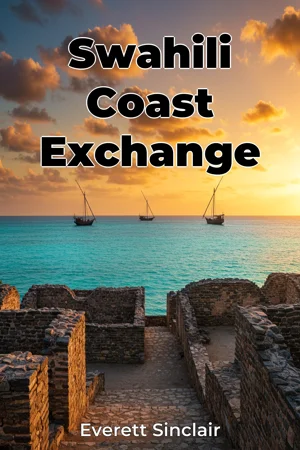
"Swahili Coast Exchange" explores the vibrant history of the Swahili Coast, highlighting its pivotal role in maritime trade and cultural exchange within the Indian Ocean world. It unveils how the Swahili city-states, located in East Africa, actively shaped their destiny by strategically leveraging their unique cultural assets. The book details the fascinating blend of African, Islamic, and Asian influences that fostered a thriving society, challenging Eurocentric views that often overlook African contributions to global exchange. The book examines how Swahili architecture, characterized by unique designs reflecting wealth and cultural identity, and the evolution of the Swahili language, a Bantu language enriched by Arabic, were central to the region's success. It also traces the intricate maritime trade networks that connected the Swahili Coast to distant shores, facilitating the exchange of goods and ideas. The book progresses systematically, beginning with the historical and cultural context, followed by in-depth explorations of architecture, language, and trade, supported by diverse evidence ranging from archaeological findings to linguistic studies.
Book Details
ISBN
9788235255044
Publisher
Publifye AS
Your Licenses
You don't own any licenses for this book
Purchase a license below to unlock this book and download the EPUB.
Purchase License
Select a tier to unlock this book
Need bulk licensing?
Contact us for enterprise agreements.