
About This Book
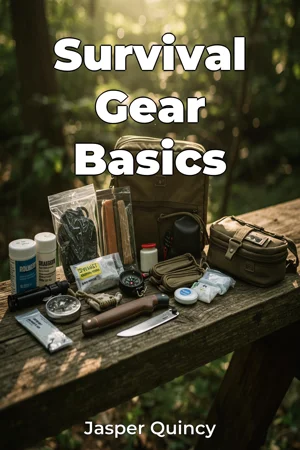
Are you truly prepared for the unexpected? "Survival Gear Basics" provides a comprehensive guide to building and utilizing essential survival kits tailored for a range of environments. This book focuses on the critical intersection of gear selection, environmental awareness, and adaptable problem-solving, ensuring readers can confidently face unforeseen challenges. We will explore two core areas: first, the strategic selection and configuration of survival gear based on specific terrains, and second, the fundamental principles of material science, packaging efficiency, and modularity that maximize utility in emergency scenarios. These topics are paramount because effective survival hinges not just on possessing tools, but on understanding their capabilities and how they work in conjunction with your environment. The evolution of survival gear is deeply rooted in human history, from rudimentary stone tools to modern high-tech equipment. Contemporary survival strategies also draw from indigenous knowledge and military applications, which have considerably shaped what constitutes essential gear today. Understanding this context is vital for appreciating the rationale behind present-day gear choices. The central argument of "Survival Gear Basics" is that effective survival preparedness is a function of informed decision-making rather than simply accumulating equipment. We emphasize a holistic approach that values knowledge, adaptability, and resourcefulness over reliance on sheer volume of gear. This book begins by introducing fundamental survival concepts and then progresses into detailed discussions of diverse terrains—including forests, deserts, mountains, and aquatic environments—and the appropriate gear for each. Chapters will focus on the core components of any survival kit: shelter, fire, water, food, navigation, and first aid. Each component will be examined in terms of material selection, ergonomic design, and practical application. The culminating sections will offer insights into advanced techniques such as improvisational gear repair, wilderness navigation, and signaling for rescue. To support our arguments, we will draw upon a combination of scientific research, field testing, and expert testimonials from experienced survivalists and emergency responders. We will also examine case studies of real-world survival situations to illustrate the effectiveness—or failure—of various gear configurations. "Survival Gear Basics" integrates knowledge from several disciplines, including materials science (understanding the properties and limitations of different materials), engineering (designing for durability and efficiency), and environmental science (assessing the impact of environmental factors on gear performance). These connections enhance the book's argument by providing a more complete understanding of the factors that influence survival outcomes. What sets this book apart is its emphasis on modularity and adaptable gear systems. Rather than advocating for a one-size-fits-all approach, we provide a framework for building customized kits that can be easily adapted to evolving needs and environmental conditions. Our writing style is straightforward and practical, geared toward providing actionable advice and clear explanations of complex concepts. We avoid jargon and prioritize clarity to ensure the information is accessible to readers of all backgrounds. "Survival Gear Basics" is targeted toward outdoor enthusiasts, hikers, campers, preppers, and anyone interested in learning how to prepare for and respond to unexpected emergencies. It offers valuable insights for both beginners and experienced survivalists looking to refine their gear selection strategies. As a health and fitness-adjacent book, the book also looks at the physical requirements for operating and transporting necessary equipment and maintaining adequate health for survival scenarios. As an adventure guide, it aims to instruct readers about how to prepare to be more independent in outdoor settings. While this book covers a wide range of survival gear and techniques, it does not delve into specialized areas such as urban survival or advanced medical procedures. Our focus remains on foundational skills and equipment that are relevant to a broad range of wilderness and semi-wilderness environments. The information provided can be directly applied to real-world scenarios, from building a basic emergency kit for your car to planning an extended wilderness expedition. We provide practical tips and checklists to help readers translate knowledge into action. While there are varying viewpoints on the relative importance of different survival skills and gear items, this book aims to provide a balanced perspective based on scientific evidence and field experience. We address common myths and misconceptions about survival preparedness.
Are you truly prepared for the unexpected? "Survival Gear Basics" provides a comprehensive guide to building and utilizing essential survival kits tailored for a range of environments. This book focuses on the critical intersection of gear selection, environmental awareness, and adaptable problem-solving, ensuring readers can confidently face unforeseen challenges. We will explore two core areas: first, the strategic selection and configuration of survival gear based on specific terrains, and second, the fundamental principles of material science, packaging efficiency, and modularity that maximize utility in emergency scenarios. These topics are paramount because effective survival hinges not just on possessing tools, but on understanding their capabilities and how they work in conjunction with your environment. The evolution of survival gear is deeply rooted in human history, from rudimentary stone tools to modern high-tech equipment. Contemporary survival strategies also draw from indigenous knowledge and military applications, which have considerably shaped what constitutes essential gear today. Understanding this context is vital for appreciating the rationale behind present-day gear choices. The central argument of "Survival Gear Basics" is that effective survival preparedness is a function of informed decision-making rather than simply accumulating equipment. We emphasize a holistic approach that values knowledge, adaptability, and resourcefulness over reliance on sheer volume of gear. This book begins by introducing fundamental survival concepts and then progresses into detailed discussions of diverse terrains—including forests, deserts, mountains, and aquatic environments—and the appropriate gear for each. Chapters will focus on the core components of any survival kit: shelter, fire, water, food, navigation, and first aid. Each component will be examined in terms of material selection, ergonomic design, and practical application. The culminating sections will offer insights into advanced techniques such as improvisational gear repair, wilderness navigation, and signaling for rescue. To support our arguments, we will draw upon a combination of scientific research, field testing, and expert testimonials from experienced survivalists and emergency responders. We will also examine case studies of real-world survival situations to illustrate the effectiveness—or failure—of various gear configurations. "Survival Gear Basics" integrates knowledge from several disciplines, including materials science (understanding the properties and limitations of different materials), engineering (designing for durability and efficiency), and environmental science (assessing the impact of environmental factors on gear performance). These connections enhance the book's argument by providing a more complete understanding of the factors that influence survival outcomes. What sets this book apart is its emphasis on modularity and adaptable gear systems. Rather than advocating for a one-size-fits-all approach, we provide a framework for building customized kits that can be easily adapted to evolving needs and environmental conditions. Our writing style is straightforward and practical, geared toward providing actionable advice and clear explanations of complex concepts. We avoid jargon and prioritize clarity to ensure the information is accessible to readers of all backgrounds. "Survival Gear Basics" is targeted toward outdoor enthusiasts, hikers, campers, preppers, and anyone interested in learning how to prepare for and respond to unexpected emergencies. It offers valuable insights for both beginners and experienced survivalists looking to refine their gear selection strategies. As a health and fitness-adjacent book, the book also looks at the physical requirements for operating and transporting necessary equipment and maintaining adequate health for survival scenarios. As an adventure guide, it aims to instruct readers about how to prepare to be more independent in outdoor settings. While this book covers a wide range of survival gear and techniques, it does not delve into specialized areas such as urban survival or advanced medical procedures. Our focus remains on foundational skills and equipment that are relevant to a broad range of wilderness and semi-wilderness environments. The information provided can be directly applied to real-world scenarios, from building a basic emergency kit for your car to planning an extended wilderness expedition. We provide practical tips and checklists to help readers translate knowledge into action. While there are varying viewpoints on the relative importance of different survival skills and gear items, this book aims to provide a balanced perspective based on scientific evidence and field experience. We address common myths and misconceptions about survival preparedness.
"Survival Gear Basics" is your comprehensive guide to mastering wilderness survival through strategic gear selection and adaptable problem-solving. It emphasizes that effective preparedness hinges on informed decisions, not just accumulating equipment. The book uniquely blends knowledge from materials science, engineering, and environmental science to provide a holistic understanding of survival outcomes. The book explores how the evolution of survival gear, from ancient tools to modern equipment, has shaped current preparedness strategies. It progresses from fundamental survival concepts to detailed discussions of gear suitable for diverse terrains like forests, deserts, and mountains. Readers will learn about core components such as shelter, fire, water, and first aid, focusing on material selection, ergonomic design, and practical application.
Book Details
ISBN
9788235254917
Publisher
Publifye AS
Your Licenses
You don't own any licenses for this book
Purchase a license below to unlock this book and download the EPUB.
Purchase License
Select a tier to unlock this book
Need bulk licensing?
Contact us for enterprise agreements.