
About This Book
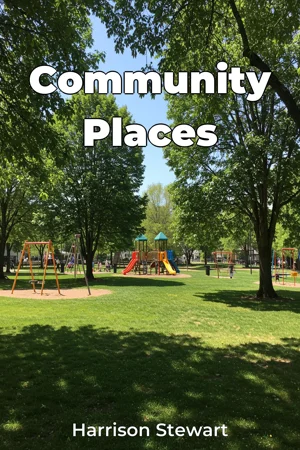
Have you ever wondered what makes a neighborhood a community? "Community Places" explores the vital role that specific locations play in shaping our lives and fostering a sense of belonging. This book delves into the significance of schools, hospitals, libraries, and parks as cornerstones of community life, examining how they contribute to education, health, knowledge, and recreation. These are not merely buildings or patches of land; they are hubs of activity that connect people, provide essential services, and promote collective well-being. This book argues that accessible and well-maintained community places are fundamental to a thriving society. Their presence enhances the quality of life for residents, fosters social cohesion, and supports individual development. Understanding the function and impact of these places is crucial for informed civic engagement and effective community planning. "Community Places" begins by defining the concept of a "community place" and tracing its historical evolution. This includes an examination of how the roles of schools, hospitals, libraries, and parks have changed over time, reflecting shifts in societal values and priorities. The book then dedicates individual sections to each of these four key community places. The section on schools examines their crucial role in education and socialization, considering the impact of school design, curriculum, and community involvement on student outcomes and neighborhood vitality. The book analyzes how schools serve as not only educational institutions but also as focal points for community events and activities. The exploration of hospitals focuses on their mission to provide healthcare services and promote public health. It analyzes how a hospital's accessibility, services, and community outreach programs affect the overall well-being of a neighborhood. The book discusses innovative models of healthcare delivery that integrate hospitals more closely with their communities. The section on libraries highlights their function as centers for knowledge, information, and cultural enrichment. It examines how libraries have adapted to the digital age, offering a wide range of resources and services that extend beyond traditional books. The book emphasizes the vital role that libraries play in promoting literacy, lifelong learning, and community engagement. The discussion of parks delves into their importance as spaces for recreation, relaxation, and social interaction. It analyzes how park design, maintenance, and programming affect their use and impact on community health and well-being. The book explores innovative approaches to park management that prioritize community involvement and environmental sustainability. Throughout the book, case studies and real-world examples will illustrate the concepts and arguments presented. This evidence is drawn from a range of sources, including academic research, government reports, and community surveys. "Community Places" also acknowledges the interdisciplinary nature of community building, drawing connections to fields such as urban planning, public health, education, and social work. By integrating insights from these diverse disciplines, the book provides a holistic perspective on the role of community places in shaping our lives. The tone and writing style are accessible and engaging, aimed at a broad audience including students, community leaders, policymakers, and anyone interested in understanding how communities function. The book deliberately avoids technical jargon, offering straightforward explanations of complex concepts. "Community Places" does not intend to be an exhaustive treatise on every aspect of community development but rather a focused examination of the crucial role played by schools, hospitals, libraries, and parks. Ultimately, this book provides readers with a deeper understanding of the significance of community places and empowers them to become more active and informed participants in shaping the future of their own neighborhoods. It is a call to action to invest in these vital resources and ensure that they are accessible and beneficial to all members of the community. Controversies surrounding funding and resource allocation for these community places, and differing community needs are also addressed.
Have you ever wondered what makes a neighborhood a community? "Community Places" explores the vital role that specific locations play in shaping our lives and fostering a sense of belonging. This book delves into the significance of schools, hospitals, libraries, and parks as cornerstones of community life, examining how they contribute to education, health, knowledge, and recreation. These are not merely buildings or patches of land; they are hubs of activity that connect people, provide essential services, and promote collective well-being. This book argues that accessible and well-maintained community places are fundamental to a thriving society. Their presence enhances the quality of life for residents, fosters social cohesion, and supports individual development. Understanding the function and impact of these places is crucial for informed civic engagement and effective community planning. "Community Places" begins by defining the concept of a "community place" and tracing its historical evolution. This includes an examination of how the roles of schools, hospitals, libraries, and parks have changed over time, reflecting shifts in societal values and priorities. The book then dedicates individual sections to each of these four key community places. The section on schools examines their crucial role in education and socialization, considering the impact of school design, curriculum, and community involvement on student outcomes and neighborhood vitality. The book analyzes how schools serve as not only educational institutions but also as focal points for community events and activities. The exploration of hospitals focuses on their mission to provide healthcare services and promote public health. It analyzes how a hospital's accessibility, services, and community outreach programs affect the overall well-being of a neighborhood. The book discusses innovative models of healthcare delivery that integrate hospitals more closely with their communities. The section on libraries highlights their function as centers for knowledge, information, and cultural enrichment. It examines how libraries have adapted to the digital age, offering a wide range of resources and services that extend beyond traditional books. The book emphasizes the vital role that libraries play in promoting literacy, lifelong learning, and community engagement. The discussion of parks delves into their importance as spaces for recreation, relaxation, and social interaction. It analyzes how park design, maintenance, and programming affect their use and impact on community health and well-being. The book explores innovative approaches to park management that prioritize community involvement and environmental sustainability. Throughout the book, case studies and real-world examples will illustrate the concepts and arguments presented. This evidence is drawn from a range of sources, including academic research, government reports, and community surveys. "Community Places" also acknowledges the interdisciplinary nature of community building, drawing connections to fields such as urban planning, public health, education, and social work. By integrating insights from these diverse disciplines, the book provides a holistic perspective on the role of community places in shaping our lives. The tone and writing style are accessible and engaging, aimed at a broad audience including students, community leaders, policymakers, and anyone interested in understanding how communities function. The book deliberately avoids technical jargon, offering straightforward explanations of complex concepts. "Community Places" does not intend to be an exhaustive treatise on every aspect of community development but rather a focused examination of the crucial role played by schools, hospitals, libraries, and parks. Ultimately, this book provides readers with a deeper understanding of the significance of community places and empowers them to become more active and informed participants in shaping the future of their own neighborhoods. It is a call to action to invest in these vital resources and ensure that they are accessible and beneficial to all members of the community. Controversies surrounding funding and resource allocation for these community places, and differing community needs are also addressed.
"Community Places" explores how essential locations shape neighborhoods and foster belonging, emphasizing schools, hospitals, libraries, and parks. These venues boost education, health, knowledge, and recreation, acting as vital community hubs. Accessible community places significantly enhance residents' lives, strengthening social cohesion. For example, schools often serve as focal points, hosting events beyond education. The text examines the historical evolution of these community places and their changing societal roles. Each chapter focuses on a specific type of venue, analyzing its function and impact. For instance, the book highlights how libraries adapt to the digital age by offering diverse resources, expanding beyond traditional books. Through case studies and interdisciplinary insights from urban planning, public health, and social work, "Community Places" adopts an accessible approach, avoiding technical jargon. The book progresses by defining "community places" and then dedicating sections to schools, hospitals, libraries, and parks, incorporating real-world examples. It addresses controversies linked to funding and differing community needs, encouraging readers to actively participate in shaping their neighborhoods by investing in these vital resources.
Book Details
ISBN
9788235254658
Publisher
Publifye AS
Your Licenses
You don't own any licenses for this book
Purchase a license below to unlock this book and download the EPUB.
Purchase License
Select a tier to unlock this book
Need bulk licensing?
Contact us for enterprise agreements.