
About This Book
Has fashion always been about aesthetics, or has it sometimes served as a reflection of societal anxieties, technological advancements, or even outright absurdity? "Absurd Fashion Trends" delves into the captivating history of clothing choices that defied logic, challenged norms, and often sparked controversy. This book explores the bizarre, the impractical, and the occasionally ingenious fashion trends that have marked human history, examining their underlying social influences and the reasons behind their temporary popularity. We will navigate through centuries of questionable sartorial decisions, focusing on two central themes: the power of fashion as a social communicator and the delicate balance between practicality and extravagance. Fashion, throughout history, has served as a potent indicator of wealth, status, and cultural allegiance, simultaneously capable of uniting and dividing societies. Equally important is understanding that fashion's trajectory is not always driven by functionality; sometimes, it's pure spectacle. To understand the context of these trends, we will consider the historical backdrop against which they emerged, including political climates, technological innovations, and prevailing social mores. The reader will gain insights into the often-unforeseen ways in which these factors interacted, shaping the garments people chose to wear. The central argument posits that seemingly ridiculous fashion trends are rarely arbitrary; they are almost always the result of complex social, economic, and technological forces at play. By dissecting these trends, we can gain a deeper understanding of the societies that embraced them. The book's structure is designed to facilitate this understanding. It begins by introducing fundamental concepts like the psychology of fashion and its role in social signaling. The subsequent chapters will examine specific eras and trends, such as the towering hairstyles of 18th-century Europe, the leg-mutton sleeves of the Victorian era, and the hobble skirts of the early 20th century. Each case study will explore the trend's origins, its social impact, and the reasons for its ultimate demise. The book culminates in an analysis of how these historical trends continue to influence contemporary fashion and offers insights into predicting future absurdities. The narrative will be supported by a wealth of primary and secondary sources, including historical fashion plates, contemporary accounts, and academic research in social history and cultural studies. "Absurd Fashion Trends" draws connections between clothing and diverse fields such as sociology, economics, and art history. The economic factors that drive fashion cycles and the sociological pressures to conform or rebel against norms will be discussed. Art history offers a lens through which to view the aesthetic values and artistic inspiration behind these trends. This book offers a unique perspective by refusing to dismiss outlandish fashion as mere frivolity. Instead, it treats these choices as valuable clues to understanding the human condition. Written in an accessible and engaging style, "Absurd Fashion Trends" is aimed at anyone with an interest in history, fashion, sociology, or cultural studies. It provides valuable insights into why we wear what we wear and how our clothing choices reflect the world around us. It adheres to the conventions of historical and social science writing by presenting well-researched facts and analysis and refraining from conjecture. The scope of the book is intentionally broad, covering a wide range of historical periods and geographical locations, but it does not provide an exhaustive catalog of every unusual fashion trend. Rather, it focuses on representative examples that best illustrate the central themes. Understanding the forces that shape fashion can help readers become more conscious consumers and more critical observers of the world around them. It can also help them appreciate the creativity and ingenuity that often lie hidden within even the most peculiar sartorial choices. While exploring history's strange fashion trends, controversies invariably surface. The role of fashion in enforcing social hierarchies and the ethical implications of its production will be addressed.
Has fashion always been about aesthetics, or has it sometimes served as a reflection of societal anxieties, technological advancements, or even outright absurdity? "Absurd Fashion Trends" delves into the captivating history of clothing choices that defied logic, challenged norms, and often sparked controversy. This book explores the bizarre, the impractical, and the occasionally ingenious fashion trends that have marked human history, examining their underlying social influences and the reasons behind their temporary popularity. We will navigate through centuries of questionable sartorial decisions, focusing on two central themes: the power of fashion as a social communicator and the delicate balance between practicality and extravagance. Fashion, throughout history, has served as a potent indicator of wealth, status, and cultural allegiance, simultaneously capable of uniting and dividing societies. Equally important is understanding that fashion's trajectory is not always driven by functionality; sometimes, it's pure spectacle. To understand the context of these trends, we will consider the historical backdrop against which they emerged, including political climates, technological innovations, and prevailing social mores. The reader will gain insights into the often-unforeseen ways in which these factors interacted, shaping the garments people chose to wear. The central argument posits that seemingly ridiculous fashion trends are rarely arbitrary; they are almost always the result of complex social, economic, and technological forces at play. By dissecting these trends, we can gain a deeper understanding of the societies that embraced them. The book's structure is designed to facilitate this understanding. It begins by introducing fundamental concepts like the psychology of fashion and its role in social signaling. The subsequent chapters will examine specific eras and trends, such as the towering hairstyles of 18th-century Europe, the leg-mutton sleeves of the Victorian era, and the hobble skirts of the early 20th century. Each case study will explore the trend's origins, its social impact, and the reasons for its ultimate demise. The book culminates in an analysis of how these historical trends continue to influence contemporary fashion and offers insights into predicting future absurdities. The narrative will be supported by a wealth of primary and secondary sources, including historical fashion plates, contemporary accounts, and academic research in social history and cultural studies. "Absurd Fashion Trends" draws connections between clothing and diverse fields such as sociology, economics, and art history. The economic factors that drive fashion cycles and the sociological pressures to conform or rebel against norms will be discussed. Art history offers a lens through which to view the aesthetic values and artistic inspiration behind these trends. This book offers a unique perspective by refusing to dismiss outlandish fashion as mere frivolity. Instead, it treats these choices as valuable clues to understanding the human condition. Written in an accessible and engaging style, "Absurd Fashion Trends" is aimed at anyone with an interest in history, fashion, sociology, or cultural studies. It provides valuable insights into why we wear what we wear and how our clothing choices reflect the world around us. It adheres to the conventions of historical and social science writing by presenting well-researched facts and analysis and refraining from conjecture. The scope of the book is intentionally broad, covering a wide range of historical periods and geographical locations, but it does not provide an exhaustive catalog of every unusual fashion trend. Rather, it focuses on representative examples that best illustrate the central themes. Understanding the forces that shape fashion can help readers become more conscious consumers and more critical observers of the world around them. It can also help them appreciate the creativity and ingenuity that often lie hidden within even the most peculiar sartorial choices. While exploring history's strange fashion trends, controversies invariably surface. The role of fashion in enforcing social hierarchies and the ethical implications of its production will be addressed.
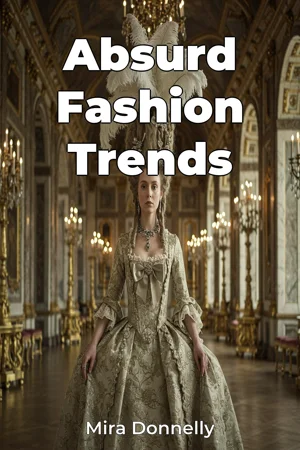
"Absurd Fashion Trends" explores the often-bizarre history of clothing, revealing how fashion choices reflect societal anxieties, technological advancements, and the enduring human quest for status. This journey through history examines the power of fashion as a social communicator, highlighting how clothing has united and divided societies. The book reveals that even seemingly ridiculous trends, like the towering hairstyles of 18th-century Europe, are rarely arbitrary, often stemming from complex social, economic, and technological forces. The book progresses chronologically, examining specific eras and trends, such as the leg-mutton sleeves of the Victorian era and the hobble skirts of the early 20th century. Each case study delves into the trend's origins, social impact, and eventual decline, enriched by historical fashion plates and accounts. By dissecting these historical trends, the book offers a unique perspective on understanding the human condition through the lens of fashion sociology, fashion economics, and cultural studies.
Book Details
ISBN
9788235254535
Publisher
Publifye AS
Your Licenses
You don't own any licenses for this book
Purchase a license below to unlock this book and download the EPUB.
Purchase License
Select a tier to unlock this book
Need bulk licensing?
Contact us for enterprise agreements.