
About This Book
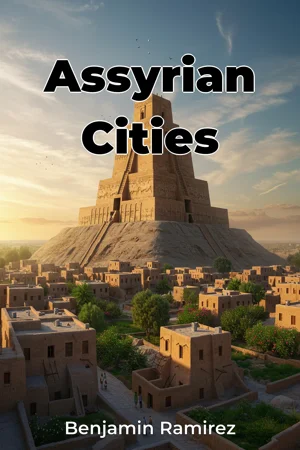
What if the secrets to urban planning and imperial power were etched in brick and stone thousands of years ago? *Assyrian Cities* unveils the architectural marvels and societal structures of the Assyrian Empire, demonstrating how its urban centers were not merely collections of buildings but carefully constructed engines of control, innovation, and cultural expression. This book explores the pivotal role of Assyrian cities in shaping a vast empire, providing insights into the empire's military dominance and administrative prowess. This exploration centers on two key themes: the architectural innovations employed by the Assyrians, and the reflection of Assyrian society and governance within the urban landscape. The Assyrians, renowned for their military strength, were equally adept at engineering and city planning. Their cities, such as Nineveh, Assur, and Nimrud, were testaments to their advanced understanding of construction, irrigation, and defensive strategies. Understanding these cities’ designs offers a crucial lens through which to examine Assyrian society, revealing hierarchies of power, religious beliefs, and the daily lives of its inhabitants. To fully appreciate the significance of these urban centers, a grasp of the historical context is essential. The Assyrian Empire, which flourished from the 25th century BC to 609 BC, exerted considerable influence over Mesopotamia and beyond. Its rise and fall were marked by periods of expansion, consolidation, and internal strife, all of which left their indelible marks on the empire's cities. The central argument of *Assyrian Cities* is that the physical form of Assyrian cities directly reflected and reinforced the empire's centralized authority and expansionist ambitions. By meticulously planning and constructing their urban centers, the Assyrian rulers projected their power, controlled their populations, and facilitated the extraction of resources from conquered territories. The book unfolds in three parts. First, it introduces the foundational aspects of Assyrian urbanism: the materials and techniques used in construction, the principles of city planning, and the key architectural features found in Assyrian cities. Second, it delves into the social and political dimensions of urban life, examining the roles of palaces, temples, administrative buildings, and residential areas in maintaining social order and projecting imperial authority. The third section analyzes the legacy of Assyrian urbanism, examining its influence on subsequent Mesopotamian and Near Eastern civilizations. The book draws on a wide range of evidence, including archaeological excavations, cuneiform texts, and iconographic sources. It incorporates recent discoveries and interpretations, offering a fresh perspective on the Assyrian Empire. *Assyrian Cities* is inherently interdisciplinary, connecting to the fields of archaeology, art history, Near Eastern studies, and political science. These connections illuminate the multifaceted nature of Assyrian urbanism, revealing its significance. This book adopts a thematic approach, organizing its analysis around key aspects of Assyrian urban life rather than presenting a purely chronological narrative. This allows for a more in-depth examination of the social, political, and economic forces that shaped the empire. The target audience includes students and scholars of ancient history, archaeology, and architecture, as well as general readers with an interest in the ancient world. The book provides a valuable resource for anyone seeking to understand the complexities of urban life in the Assyrian Empire. As a work of historical and architectural analysis, the book adheres to the conventions of non-fiction scholarship, providing clear evidence and balanced interpretations. While the book aims to offer a comprehensive overview of Assyrian cities, it acknowledges the limitations of the available evidence, particularly regarding the reconstruction of daily life in urban areas. The insights into urban planning, resource management, and imperial control offered in *Assyrian Cities* have relevance for understanding contemporary challenges in urban development and governance. By studying the successes and failures of the Assyrian Empire, we can gain valuable lessons for creating more sustainable and equitable cities in the modern world. The book also touches on debates surrounding the interpretation of archaeological evidence and the portrayal of the Assyrian Empire in popular culture.
What if the secrets to urban planning and imperial power were etched in brick and stone thousands of years ago? *Assyrian Cities* unveils the architectural marvels and societal structures of the Assyrian Empire, demonstrating how its urban centers were not merely collections of buildings but carefully constructed engines of control, innovation, and cultural expression. This book explores the pivotal role of Assyrian cities in shaping a vast empire, providing insights into the empire's military dominance and administrative prowess. This exploration centers on two key themes: the architectural innovations employed by the Assyrians, and the reflection of Assyrian society and governance within the urban landscape. The Assyrians, renowned for their military strength, were equally adept at engineering and city planning. Their cities, such as Nineveh, Assur, and Nimrud, were testaments to their advanced understanding of construction, irrigation, and defensive strategies. Understanding these cities’ designs offers a crucial lens through which to examine Assyrian society, revealing hierarchies of power, religious beliefs, and the daily lives of its inhabitants. To fully appreciate the significance of these urban centers, a grasp of the historical context is essential. The Assyrian Empire, which flourished from the 25th century BC to 609 BC, exerted considerable influence over Mesopotamia and beyond. Its rise and fall were marked by periods of expansion, consolidation, and internal strife, all of which left their indelible marks on the empire's cities. The central argument of *Assyrian Cities* is that the physical form of Assyrian cities directly reflected and reinforced the empire's centralized authority and expansionist ambitions. By meticulously planning and constructing their urban centers, the Assyrian rulers projected their power, controlled their populations, and facilitated the extraction of resources from conquered territories. The book unfolds in three parts. First, it introduces the foundational aspects of Assyrian urbanism: the materials and techniques used in construction, the principles of city planning, and the key architectural features found in Assyrian cities. Second, it delves into the social and political dimensions of urban life, examining the roles of palaces, temples, administrative buildings, and residential areas in maintaining social order and projecting imperial authority. The third section analyzes the legacy of Assyrian urbanism, examining its influence on subsequent Mesopotamian and Near Eastern civilizations. The book draws on a wide range of evidence, including archaeological excavations, cuneiform texts, and iconographic sources. It incorporates recent discoveries and interpretations, offering a fresh perspective on the Assyrian Empire. *Assyrian Cities* is inherently interdisciplinary, connecting to the fields of archaeology, art history, Near Eastern studies, and political science. These connections illuminate the multifaceted nature of Assyrian urbanism, revealing its significance. This book adopts a thematic approach, organizing its analysis around key aspects of Assyrian urban life rather than presenting a purely chronological narrative. This allows for a more in-depth examination of the social, political, and economic forces that shaped the empire. The target audience includes students and scholars of ancient history, archaeology, and architecture, as well as general readers with an interest in the ancient world. The book provides a valuable resource for anyone seeking to understand the complexities of urban life in the Assyrian Empire. As a work of historical and architectural analysis, the book adheres to the conventions of non-fiction scholarship, providing clear evidence and balanced interpretations. While the book aims to offer a comprehensive overview of Assyrian cities, it acknowledges the limitations of the available evidence, particularly regarding the reconstruction of daily life in urban areas. The insights into urban planning, resource management, and imperial control offered in *Assyrian Cities* have relevance for understanding contemporary challenges in urban development and governance. By studying the successes and failures of the Assyrian Empire, we can gain valuable lessons for creating more sustainable and equitable cities in the modern world. The book also touches on debates surrounding the interpretation of archaeological evidence and the portrayal of the Assyrian Empire in popular culture.
*Assyrian Cities* explores how urban centers in the Assyrian Empire served as strategic tools for imperial power, cultural expression, and innovation. The book examines the architectural history of cities like Nineveh, Assur, and Nimrud, revealing advanced urban planning and construction techniques. These ancient Mesopotamian cities were not just residential areas; their design reflected a sophisticated understanding of irrigation, defense, and social hierarchy. The book argues that the layout and infrastructure of Assyrian cities directly supported the empire's centralized authority and expansionist goals. By studying palaces, temples, and administrative buildings, one gains insight into the empire's social order and governance. The book progresses thematically, first introducing the materials and techniques used in construction, then exploring the social and political dimensions of urban life, and finally analyzing the legacy of Assyrian urbanism on subsequent civilizations in the Ancient Near East.
Book Details
ISBN
9788235254405
Publisher
Publifye AS
Your Licenses
You don't own any licenses for this book
Purchase a license below to unlock this book and download the EPUB.
Purchase License
Select a tier to unlock this book
Need bulk licensing?
Contact us for enterprise agreements.