
About This Book
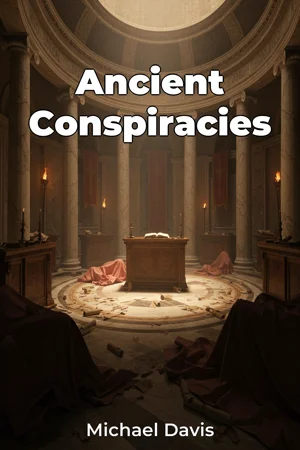
Did the course of ancient history truly unfold as we have been taught, or were hidden machinations at play, subtly shaping empires and destinies? "Ancient Conspiracies" delves into the shadowy world of political intrigue in antiquity, meticulously examining the clandestine objectives, secret alliances, and far-reaching consequences that stemmed from successful or exposed conspiracies. This book explores two fundamental themes: the anatomy of ancient conspiracies – how they were conceived, organized, and executed – and their lasting impact on the trajectory of civilizations. Understanding these shadowy plots is crucial because they offer an alternative perspective on traditional historical narratives, challenging established interpretations of events and power dynamics. Furthermore, studying ancient conspiracies provides valuable insights into recurring patterns of human behavior, political maneuvering, and the enduring allure of power. To fully grasp the significance of these conspiracies, the book provides a necessary historical and social context, covering key political structures, social hierarchies, and cultural norms prevalent in ancient societies such as Greece, Rome, Egypt, and others. Readers should be familiar with basic timelines and major political players from the ancient world. The central argument of "Ancient Conspiracies" is that conspiracies were not merely aberrations in ancient history but rather integral components of the political landscape, frequently employed as tools to achieve specific goals or consolidate power. This viewpoint challenges the conventional emphasis on open warfare and diplomacy as the primary drivers of historical change, arguing that subtle, covert actions often played a decisive role in shaping events. The book unfolds through a structured exploration: a) First, it introduces the core concepts of conspiracy, analyzing the psychological motivations of conspirators and the organizational structures that facilitated their activities. b) Second, it presents case studies across different regions and eras, such as the Pisonian conspiracy against Nero, the assassination of Julius Caesar, and potential plots within the Egyptian dynasties. Each case study examines the objectives of the conspiracy, the individuals involved, the methods employed, and the ultimate outcome. c) Third, the book analyzes the long-term consequences of both successful and failed conspiracies, assessing their impact on political stability, social structures, and cultural narratives. d) Finally, the book considers the practical implications of studying ancient conspiracies, exploring how these historical examples can inform our understanding of contemporary political dynamics and the challenges of safeguarding against covert threats. The book utilizes a range of historical evidence, including primary source accounts from ancient historians, archaeological findings, epigraphic inscriptions, and numismatic data. It also draws upon modern scholarship in history, political science, and sociology to provide a comprehensive analysis of each conspiracy. A key aspect of the research is the comparative analysis of different conspiracies across time and place, highlighting common patterns and unique features. "Ancient Conspiracies" also makes interdisciplinary connections, illustrating the relevance of conspiracy studies to areas such as psychology (understanding motivations), sociology (analyzing group dynamics), and political science (evaluating power structures). These connections enrich the analysis and offer a more holistic understanding of the phenomenon of conspiracy. This book stands out by offering a systematic and comparative analysis of ancient conspiracies, moving beyond anecdotal accounts to uncover underlying patterns and principles. It adopts a neutral and objective tone, presenting the available evidence and allowing readers to draw their own conclusions. The intended audience includes history enthusiasts, students of political science, and anyone interested in understanding the hidden forces that have shaped the past. The book will be valuable to them by providing a fresh perspective on ancient history and offering insights into the enduring nature of political intrigue. As a work of fact-based history, "Ancient Conspiracies" adheres to the conventions of rigorous scholarship, including meticulous source citations, balanced presentation of evidence, and avoidance of unsubstantiated claims. The book focuses primarily on political conspiracies within established states and empires, intentionally limiting its scope to exclude religious or purely social movements. "Ancient Conspiracies" offers readers a framework for critically analyzing historical narratives and understanding the complexities of political power. By examining the past, we gain a deeper appreciation for the forces that continue to shape our world today. The book acknowledges ongoing debates among historians regarding the interpretation of specific events and the extent to which conspiracies influenced historical outcomes. It presents different viewpoints and encourages readers to engage critically with the evidence.
Did the course of ancient history truly unfold as we have been taught, or were hidden machinations at play, subtly shaping empires and destinies? "Ancient Conspiracies" delves into the shadowy world of political intrigue in antiquity, meticulously examining the clandestine objectives, secret alliances, and far-reaching consequences that stemmed from successful or exposed conspiracies. This book explores two fundamental themes: the anatomy of ancient conspiracies – how they were conceived, organized, and executed – and their lasting impact on the trajectory of civilizations. Understanding these shadowy plots is crucial because they offer an alternative perspective on traditional historical narratives, challenging established interpretations of events and power dynamics. Furthermore, studying ancient conspiracies provides valuable insights into recurring patterns of human behavior, political maneuvering, and the enduring allure of power. To fully grasp the significance of these conspiracies, the book provides a necessary historical and social context, covering key political structures, social hierarchies, and cultural norms prevalent in ancient societies such as Greece, Rome, Egypt, and others. Readers should be familiar with basic timelines and major political players from the ancient world. The central argument of "Ancient Conspiracies" is that conspiracies were not merely aberrations in ancient history but rather integral components of the political landscape, frequently employed as tools to achieve specific goals or consolidate power. This viewpoint challenges the conventional emphasis on open warfare and diplomacy as the primary drivers of historical change, arguing that subtle, covert actions often played a decisive role in shaping events. The book unfolds through a structured exploration: a) First, it introduces the core concepts of conspiracy, analyzing the psychological motivations of conspirators and the organizational structures that facilitated their activities. b) Second, it presents case studies across different regions and eras, such as the Pisonian conspiracy against Nero, the assassination of Julius Caesar, and potential plots within the Egyptian dynasties. Each case study examines the objectives of the conspiracy, the individuals involved, the methods employed, and the ultimate outcome. c) Third, the book analyzes the long-term consequences of both successful and failed conspiracies, assessing their impact on political stability, social structures, and cultural narratives. d) Finally, the book considers the practical implications of studying ancient conspiracies, exploring how these historical examples can inform our understanding of contemporary political dynamics and the challenges of safeguarding against covert threats. The book utilizes a range of historical evidence, including primary source accounts from ancient historians, archaeological findings, epigraphic inscriptions, and numismatic data. It also draws upon modern scholarship in history, political science, and sociology to provide a comprehensive analysis of each conspiracy. A key aspect of the research is the comparative analysis of different conspiracies across time and place, highlighting common patterns and unique features. "Ancient Conspiracies" also makes interdisciplinary connections, illustrating the relevance of conspiracy studies to areas such as psychology (understanding motivations), sociology (analyzing group dynamics), and political science (evaluating power structures). These connections enrich the analysis and offer a more holistic understanding of the phenomenon of conspiracy. This book stands out by offering a systematic and comparative analysis of ancient conspiracies, moving beyond anecdotal accounts to uncover underlying patterns and principles. It adopts a neutral and objective tone, presenting the available evidence and allowing readers to draw their own conclusions. The intended audience includes history enthusiasts, students of political science, and anyone interested in understanding the hidden forces that have shaped the past. The book will be valuable to them by providing a fresh perspective on ancient history and offering insights into the enduring nature of political intrigue. As a work of fact-based history, "Ancient Conspiracies" adheres to the conventions of rigorous scholarship, including meticulous source citations, balanced presentation of evidence, and avoidance of unsubstantiated claims. The book focuses primarily on political conspiracies within established states and empires, intentionally limiting its scope to exclude religious or purely social movements. "Ancient Conspiracies" offers readers a framework for critically analyzing historical narratives and understanding the complexities of political power. By examining the past, we gain a deeper appreciation for the forces that continue to shape our world today. The book acknowledges ongoing debates among historians regarding the interpretation of specific events and the extent to which conspiracies influenced historical outcomes. It presents different viewpoints and encourages readers to engage critically with the evidence.
"Ancient Conspiracies" explores the hidden world of political intrigue in ancient history, examining how secret alliances and covert actions shaped empires. The book demonstrates how conspiracies were integral to the political landscape, challenging conventional views that emphasize open warfare and diplomacy. For instance, the Pisonian conspiracy against Nero reveals the ruthless pursuit of power, while the assassination of Julius Caesar underscores the fragility of political stability. The book investigates how conspiracies were conceived, organized, and executed, and assesses their lasting impact on civilizations. By analyzing case studies like potential plots within Egyptian dynasties, the book uncovers recurring patterns of human behavior and political maneuvering. It progresses by first introducing the core concepts of conspiracy, then presenting case studies across different regions and eras, and finally analyzing the long-term consequences. Offering a fresh perspective on ancient history, "Ancient Conspiracies" provides valuable insights into the enduring nature of political intrigue. By drawing connections to psychology, sociology, and political science, the book offers a holistic understanding of conspiracies and their relevance to contemporary political dynamics. This systematic, comparative analysis encourages readers to critically analyze historical narratives and understand the complexities of political power.
Book Details
ISBN
9788235254375
Publisher
Publifye AS
Your Licenses
You don't own any licenses for this book
Purchase a license below to unlock this book and download the EPUB.
Purchase License
Select a tier to unlock this book
Need bulk licensing?
Contact us for enterprise agreements.