
About This Book
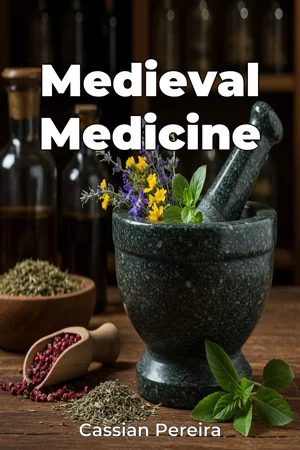
Have you ever wondered how illnesses were treated before modern medicine? "Medieval Medicine" unveils the elaborate and often surprising medical practices of Europe from roughly 500 to 1500 AD, a period marked by profound cultural shifts and the gradual development of medical knowledge. This book explores the intricate blend of empirical observation, religious beliefs, and classical learning that shaped medieval approaches to health and disease. This book delves into three core areas: herbal remedies, surgical techniques, and the prevailing theories of disease. Herbalism formed the backbone of treatment for common ailments, relying on readily available plants and traditional knowledge passed down through generations. Surgical interventions, though limited by the understanding of anatomy and the lack of effective anesthesia, were surprisingly sophisticated in some instances, ranging from wound care to cataract removal. Underpinning these practices were complex theories regarding the body's humors and the influence of astrological events on health. These topics are important because they reveal not only the limitations of medieval medicine but also the ingenuity and resourcefulness of practitioners in the face of significant challenges. Understanding medieval medicine requires a grasp of the social and intellectual environment of the time. The dominance of the Church, the rediscovery of classical texts, and the gradual development of universities all played crucial roles in shaping medical thought and practice. Lay healers, monastic physicians, and university-trained doctors coexisted, each contributing to the evolving medical landscape. The central argument of "Medieval Medicine" is that while medieval medical practices may seem primitive by modern standards, they represent a crucial stage in the development of medical science, laying the foundation for later advancements. This argument is important because it challenges simplistic notions of progress and highlights the complex interplay of tradition, innovation, and social context in the history of medicine. "Medieval Medicine" begins by introducing the key concepts of humoral theory, the role of religion in healing, and the various types of medical practitioners. The book then explores the use of herbal remedies in detail, examining specific plants, their applications, and the recipes used to prepare them. Subsequently, it examines surgical procedures, including the instruments used, the techniques employed, and the risks involved. Finally, the book culminates by analyzing the gradual shift toward more scientific approaches to medicine during the late medieval period, setting the stage for the Renaissance. The evidence presented in "Medieval Medicine" draws upon a wide range of primary sources, including medical treatises, herbals, surgical manuals, and personal letters. It also utilizes secondary scholarship to provide context and analysis. "Medieval Medicine" intersects significantly with other fields of study, including botany (through the study of herbal remedies), religious history (through the examination of faith healing), and social history (through the analysis of public health measures). These connections enrich the book's argument by demonstrating the interconnectedness of medicine with broader cultural and social forces. A unique aspect of this book is its focus on integrating social context with medical practice. Rather than simply describing treatments, it explains *why* these treatments were used and how they reflected the prevailing beliefs and values of the time. The tone of "Medieval Medicine" is academic yet accessible, aiming to inform and engage a broad audience. The writing style is clear and concise, prioritizing accuracy and clarity. The target audience includes anyone interested in the history of medicine, medieval history, or the history of science. It would be valuable to medical students, historians, and general readers alike. As a work of historical synthesis, "Medieval Medicine" adheres to the genre conventions of providing a comprehensive overview of the topic, drawing upon primary and secondary sources, and offering a balanced and nuanced perspective. The scope of "Medieval Medicine" is limited to Western Europe during the medieval period. While it acknowledges the existence of other medical traditions, its primary focus is on the development of medicine within the European context. The information in "Medieval Medicine" can be applied practically by readers seeking a deeper understanding of the historical roots of modern medical practices. It also offers insights into the enduring human quest to understand and control disease. While the efficacy of some medieval treatments is debated, "Medieval Medicine" approaches these practices with sensitivity and historical awareness, avoiding presentism and recognizing the limitations of scientific knowledge at the time.
Have you ever wondered how illnesses were treated before modern medicine? "Medieval Medicine" unveils the elaborate and often surprising medical practices of Europe from roughly 500 to 1500 AD, a period marked by profound cultural shifts and the gradual development of medical knowledge. This book explores the intricate blend of empirical observation, religious beliefs, and classical learning that shaped medieval approaches to health and disease. This book delves into three core areas: herbal remedies, surgical techniques, and the prevailing theories of disease. Herbalism formed the backbone of treatment for common ailments, relying on readily available plants and traditional knowledge passed down through generations. Surgical interventions, though limited by the understanding of anatomy and the lack of effective anesthesia, were surprisingly sophisticated in some instances, ranging from wound care to cataract removal. Underpinning these practices were complex theories regarding the body's humors and the influence of astrological events on health. These topics are important because they reveal not only the limitations of medieval medicine but also the ingenuity and resourcefulness of practitioners in the face of significant challenges. Understanding medieval medicine requires a grasp of the social and intellectual environment of the time. The dominance of the Church, the rediscovery of classical texts, and the gradual development of universities all played crucial roles in shaping medical thought and practice. Lay healers, monastic physicians, and university-trained doctors coexisted, each contributing to the evolving medical landscape. The central argument of "Medieval Medicine" is that while medieval medical practices may seem primitive by modern standards, they represent a crucial stage in the development of medical science, laying the foundation for later advancements. This argument is important because it challenges simplistic notions of progress and highlights the complex interplay of tradition, innovation, and social context in the history of medicine. "Medieval Medicine" begins by introducing the key concepts of humoral theory, the role of religion in healing, and the various types of medical practitioners. The book then explores the use of herbal remedies in detail, examining specific plants, their applications, and the recipes used to prepare them. Subsequently, it examines surgical procedures, including the instruments used, the techniques employed, and the risks involved. Finally, the book culminates by analyzing the gradual shift toward more scientific approaches to medicine during the late medieval period, setting the stage for the Renaissance. The evidence presented in "Medieval Medicine" draws upon a wide range of primary sources, including medical treatises, herbals, surgical manuals, and personal letters. It also utilizes secondary scholarship to provide context and analysis. "Medieval Medicine" intersects significantly with other fields of study, including botany (through the study of herbal remedies), religious history (through the examination of faith healing), and social history (through the analysis of public health measures). These connections enrich the book's argument by demonstrating the interconnectedness of medicine with broader cultural and social forces. A unique aspect of this book is its focus on integrating social context with medical practice. Rather than simply describing treatments, it explains *why* these treatments were used and how they reflected the prevailing beliefs and values of the time. The tone of "Medieval Medicine" is academic yet accessible, aiming to inform and engage a broad audience. The writing style is clear and concise, prioritizing accuracy and clarity. The target audience includes anyone interested in the history of medicine, medieval history, or the history of science. It would be valuable to medical students, historians, and general readers alike. As a work of historical synthesis, "Medieval Medicine" adheres to the genre conventions of providing a comprehensive overview of the topic, drawing upon primary and secondary sources, and offering a balanced and nuanced perspective. The scope of "Medieval Medicine" is limited to Western Europe during the medieval period. While it acknowledges the existence of other medical traditions, its primary focus is on the development of medicine within the European context. The information in "Medieval Medicine" can be applied practically by readers seeking a deeper understanding of the historical roots of modern medical practices. It also offers insights into the enduring human quest to understand and control disease. While the efficacy of some medieval treatments is debated, "Medieval Medicine" approaches these practices with sensitivity and historical awareness, avoiding presentism and recognizing the limitations of scientific knowledge at the time.
"Medieval Medicine" explores the evolution of medical practices in Europe from 500 to 1500 AD, revealing a world where herbal remedies, surgical techniques, and complex theories intertwined. The book highlights how medieval approaches to health were shaped by empirical observation, religious beliefs, and classical learning. Intriguingly, surgery, despite limitations in anesthesia and anatomical understanding, achieved surprising sophistication in areas like wound care and cataract removal. The book argues that medieval medicine, while seemingly primitive today, laid crucial groundwork for later medical advancements. It delves into the dominance of humoral theory, the role of religion in healing, and the diverse roles of lay healers, monastic physicians, and university doctors. Progressing through chapters, "Medieval Medicine" first introduces key concepts, then explores herbal remedies and surgical procedures in detail, culminating in an analysis of the shift toward more scientific approaches during the late medieval period. A distinctive aspect of this work is its integration of social context with medical practices, explaining why treatments were used and how they reflected contemporary beliefs. By examining primary sources like medical treatises and herbals, the book offers a balanced perspective on the ingenuity and resourcefulness of medieval practitioners, making it valuable for anyone interested in medical or medieval history.
Book Details
ISBN
9788235254368
Publisher
Publifye AS
Your Licenses
You don't own any licenses for this book
Purchase a license below to unlock this book and download the EPUB.
Purchase License
Select a tier to unlock this book
Need bulk licensing?
Contact us for enterprise agreements.