
About This Book
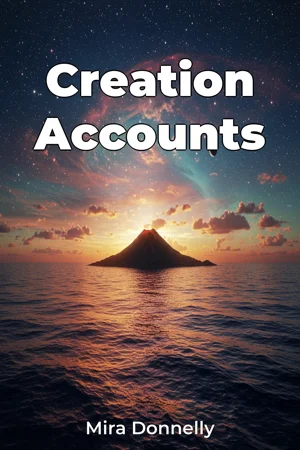
Across cultures and millennia, humanity has grappled with fundamental questions: Where did we come from? How was the world created? This book, "Creation Accounts," delves into these profound inquiries by comparing creation narratives from across the globe, grounding its analysis in linguistic and archaeological evidence. It explores not just the stories themselves, but also the cultural, historical, and societal contexts that shaped them. The core of this study lies in examining recurring motifs and structural similarities within creation myths. These motifs, such as the primordial void, the emergence of land from water, or the role of a divine creator, appear in cultures geographically and temporally distant from one another. Understanding these shared elements offers insights into the universal human need to explain our origins and make sense of the world. Furthermore, the book investigates how these accounts have evolved over time, reflecting shifts in societal values, technological advancements, and interactions with other cultures. To provide a solid foundation, the book begins with an overview of relevant linguistic and archaeological methodologies. Readers will gain an understanding of how language families can reveal connections between cultures and how archaeological findings can corroborate or challenge the narratives passed down through generations. Crucially, the book emphasizes the importance of interpreting these accounts within their specific cultural frameworks, avoiding a Eurocentric or overly simplistic comparative approach. The central argument of "Creation Accounts" is that while the specific details of creation stories vary significantly, underlying structural and thematic similarities point to shared cognitive patterns and fundamental human concerns. These parallels are not necessarily evidence of direct cultural transmission, but rather may reflect independent attempts to answer the same basic questions about existence. This argument is significant because it moves beyond a purely literal interpretation of myths, offering a deeper understanding of their psychological and cultural significance. The book is structured in three parts. The first introduces key concepts, including different types of creation myths (e.g., creation from chaos, creation from nothing, creation by divine parentage) and the methodologies used to analyze them. The second part focuses on in-depth case studies of creation accounts from various regions, including Mesopotamia, Egypt, ancient Greece, India, and Mesoamerica. Each case study examines the linguistic structure, archaeological context, and cultural significance of the stories. The third part synthesizes the findings, drawing conclusions about the prevalence of certain motifs, the evolution of creation narratives over time, and the implications for understanding human cognition and cultural development. The evidence presented in this book draws from a wide range of sources, including original texts (in translation), archaeological reports, and scholarly analyses of mythology and comparative religion. Particular attention is paid to the linguistic structure of the myths, examining the use of metaphor, symbolism, and narrative techniques. The book also incorporates recent archaeological discoveries that shed new light on the social and religious practices of the cultures that produced these myths. "Creation Accounts" connects to several other fields, including anthropology, psychology, and comparative literature. By examining creation narratives through an anthropological lens, we can gain insights into the social structures and belief systems of different cultures. Drawing on psychological theories, we can explore the underlying human needs and desires that are reflected in these stories. And by using comparative literature techniques, we can identify common themes and narrative patterns that transcend cultural boundaries. This book distinguishes itself by its rigorous methodology, interdisciplinary approach, comprehensive scope, and the emphasis on linguistic and archaeological evidence. The tone and writing style is academic, while striving to be accessible to a broad audience. The target audience includes students and scholars of world history, religion, mythology, and archaeology, as well as anyone interested in exploring the diverse ways in which humanity has sought to understand its origins. The book is valuable to them because it provides a comprehensive and nuanced analysis of creation accounts, moving beyond simplistic comparisons and offering a deeper understanding of their cultural and psychological significance. The book will cover a broad range of creation accounts, but it will necessarily be limited by the available linguistic and archaeological evidence. It will focus primarily on creation myths from literate societies, although it will also include examples from oral traditions where sufficient ethnographic data is available. "Creation Accounts" addresses ongoing debates about the relationship between myth and history, the origins of religion, and the universality of human cognitive structures. By presenting a rigorous and evidence-based analysis of creation narratives, this book contributes to these discussions and offers new perspectives on the enduring human quest to understand our place in the universe.
Across cultures and millennia, humanity has grappled with fundamental questions: Where did we come from? How was the world created? This book, "Creation Accounts," delves into these profound inquiries by comparing creation narratives from across the globe, grounding its analysis in linguistic and archaeological evidence. It explores not just the stories themselves, but also the cultural, historical, and societal contexts that shaped them. The core of this study lies in examining recurring motifs and structural similarities within creation myths. These motifs, such as the primordial void, the emergence of land from water, or the role of a divine creator, appear in cultures geographically and temporally distant from one another. Understanding these shared elements offers insights into the universal human need to explain our origins and make sense of the world. Furthermore, the book investigates how these accounts have evolved over time, reflecting shifts in societal values, technological advancements, and interactions with other cultures. To provide a solid foundation, the book begins with an overview of relevant linguistic and archaeological methodologies. Readers will gain an understanding of how language families can reveal connections between cultures and how archaeological findings can corroborate or challenge the narratives passed down through generations. Crucially, the book emphasizes the importance of interpreting these accounts within their specific cultural frameworks, avoiding a Eurocentric or overly simplistic comparative approach. The central argument of "Creation Accounts" is that while the specific details of creation stories vary significantly, underlying structural and thematic similarities point to shared cognitive patterns and fundamental human concerns. These parallels are not necessarily evidence of direct cultural transmission, but rather may reflect independent attempts to answer the same basic questions about existence. This argument is significant because it moves beyond a purely literal interpretation of myths, offering a deeper understanding of their psychological and cultural significance. The book is structured in three parts. The first introduces key concepts, including different types of creation myths (e.g., creation from chaos, creation from nothing, creation by divine parentage) and the methodologies used to analyze them. The second part focuses on in-depth case studies of creation accounts from various regions, including Mesopotamia, Egypt, ancient Greece, India, and Mesoamerica. Each case study examines the linguistic structure, archaeological context, and cultural significance of the stories. The third part synthesizes the findings, drawing conclusions about the prevalence of certain motifs, the evolution of creation narratives over time, and the implications for understanding human cognition and cultural development. The evidence presented in this book draws from a wide range of sources, including original texts (in translation), archaeological reports, and scholarly analyses of mythology and comparative religion. Particular attention is paid to the linguistic structure of the myths, examining the use of metaphor, symbolism, and narrative techniques. The book also incorporates recent archaeological discoveries that shed new light on the social and religious practices of the cultures that produced these myths. "Creation Accounts" connects to several other fields, including anthropology, psychology, and comparative literature. By examining creation narratives through an anthropological lens, we can gain insights into the social structures and belief systems of different cultures. Drawing on psychological theories, we can explore the underlying human needs and desires that are reflected in these stories. And by using comparative literature techniques, we can identify common themes and narrative patterns that transcend cultural boundaries. This book distinguishes itself by its rigorous methodology, interdisciplinary approach, comprehensive scope, and the emphasis on linguistic and archaeological evidence. The tone and writing style is academic, while striving to be accessible to a broad audience. The target audience includes students and scholars of world history, religion, mythology, and archaeology, as well as anyone interested in exploring the diverse ways in which humanity has sought to understand its origins. The book is valuable to them because it provides a comprehensive and nuanced analysis of creation accounts, moving beyond simplistic comparisons and offering a deeper understanding of their cultural and psychological significance. The book will cover a broad range of creation accounts, but it will necessarily be limited by the available linguistic and archaeological evidence. It will focus primarily on creation myths from literate societies, although it will also include examples from oral traditions where sufficient ethnographic data is available. "Creation Accounts" addresses ongoing debates about the relationship between myth and history, the origins of religion, and the universality of human cognitive structures. By presenting a rigorous and evidence-based analysis of creation narratives, this book contributes to these discussions and offers new perspectives on the enduring human quest to understand our place in the universe.
"Creation Accounts" explores humanity's enduring quest to understand our origins by examining creation narratives from diverse cultures. Grounded in linguistic and archaeological evidence, the book moves beyond simple storytelling to analyze the cultural, historical, and societal contexts that shaped these origin stories. Readers will discover recurring motifs, such as the emergence of land from water, which appear across geographically distant cultures, hinting at a universal human need to explain existence. The book uniquely emphasizes linguistic and archaeological methodologies, demonstrating how language families reveal connections between cultures and how archaeological findings can corroborate or challenge traditional narratives. It begins by introducing key concepts and methodologies, progresses through in-depth case studies of creation accounts from Mesopotamia, Egypt, Greece, India, and Mesoamerica and synthesizes findings to reveal the prevalence of certain motifs and the evolution of creation narratives across time. This approach provides a solid foundation for understanding the psychological and cultural significance of these myths. Ultimately, "Creation Accounts" argues that underlying structural and thematic similarities in creation stories point to shared cognitive patterns, offering insights into fundamental human concerns. This comprehensive study is valuable for anyone interested in world history, religion, and mythology, providing a nuanced analysis that moves beyond simplistic comparisons to offer a deeper understanding of our shared human story.
Book Details
ISBN
9788235254313
Publisher
Publifye AS
Your Licenses
You don't own any licenses for this book
Purchase a license below to unlock this book and download the EPUB.
Purchase License
Select a tier to unlock this book
Need bulk licensing?
Contact us for enterprise agreements.