
About This Book
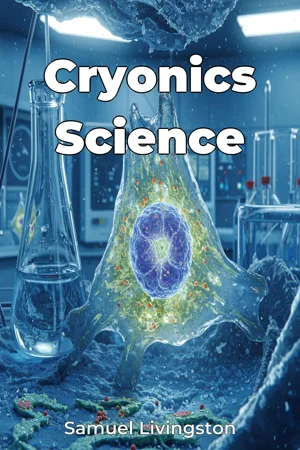
Could we one day cheat death through the science of cryonics? “Cryonics Science” delves into this provocative question, dissecting the scientific possibilities and practical realities of preserving human bodies at ultra-low temperatures with the hope of future revival. This book serves as a comprehensive, fact-based exploration of cryonics, moving beyond science fiction fantasies to examine the genuine science underpinning the concept. We begin by establishing a foundational understanding of the biological processes that lead to cellular damage and death, explaining how rapid cooling can minimize this damage compared to natural decomposition. We introduce the core principles of cryopreservation – the use of cryoprotective agents (CPAs) to prevent ice crystal formation and vitrification to achieve a glass-like state, halting biological decay. This section provides essential background knowledge in cell biology, thermodynamics, and the biophysics of water, ensuring readers possess the necessary scientific context to understand the complexities of cryonics. The central argument of "Cryonics Science" is that while the theoretical framework for successful cryopreservation and eventual revival exists, significant scientific and technological hurdles remain. We offer a realistic assessment of the current state of cryonics, emphasizing the limitations imposed by our present understanding of cellular repair mechanisms and nanotechnology. The book is structured in three primary sections. First, it examines the historical development of cryonics, tracing its origins from early experiments in low-temperature biology to the establishment of modern cryonics organizations. Second, it delves into the critical science of cryopreservation itself: the physiology of dying, the science of cooling, the types of cryoprotectants, and the challenges of achieving successful vitrification of a human brain and body. This section will cover the latest research, including the use of nanotechnology in cryopreservation and repair, and it also discusses the current protocols of cryonics providers, potential improvements, and where current techniques fall short. Third, the book will look to future scenarios and the science involved in resuscitation, including theoretical methods for repairing cellular damage, reversing the effects of cryoprotectants, and restoring brain function. The evidence presented comes from a broad range of sources, including peer-reviewed scientific publications in cryobiology, biophysics, and nanotechnology. In addition, the book analyses data from cryonics organizations themselves, providing a critical evaluation of their methods and results. Unique insights come from interviews with leading researchers in the field and detailed analyses of published case studies. “Cryonics Science” draws connections to other fields, including: regenerative medicine, which offers insights into cellular repair and tissue engineering; neuroscience which informs our understanding of brain preservation and restoration of consciousness; and nanotechnology, which holds potential for advanced repair mechanisms at the cellular level. These interdisciplinary links provide a richer and more nuanced understanding of the complexities of cryonics. Our approach is to present a balanced, evidence-based perspective, avoiding sensationalism and focusing on the scientific merits and challenges of cryonics. The tone is professional yet accessible, aimed at engaging both scientists and interested laypersons. The target audience includes students, researchers, medical professionals, and anyone curious about the scientific possibilities of extending human lifespan. The book would appeal to readers interested in biology, medicine, and the future of technology. In line with the conventions of scientific non-fiction, "Cryonics Science" prioritizes accuracy, clarity, and objectivity. The book will address the ethical and societal implications of cryonics, but the primary focus remains the underlying science. The scope of this exploration is limited to the scientific and technological aspects of cryonics. The book will emphasize the science, while acknowledging the philosophical and ethical questions raised, but it will not delve deeply into philosophical or legal debates. The information within this book could be used to inform discussion and debate on the future of medicine, and research priorities, and to help readers make informed decisions about their own healthcare choices. Controversies surrounding cryonics, such as skepticism about its feasibility and concerns about the ethics and cost, are directly addressed. The book seeks to provide a clear and balanced discussion of these issues, grounded in scientific evidence.
Could we one day cheat death through the science of cryonics? “Cryonics Science” delves into this provocative question, dissecting the scientific possibilities and practical realities of preserving human bodies at ultra-low temperatures with the hope of future revival. This book serves as a comprehensive, fact-based exploration of cryonics, moving beyond science fiction fantasies to examine the genuine science underpinning the concept. We begin by establishing a foundational understanding of the biological processes that lead to cellular damage and death, explaining how rapid cooling can minimize this damage compared to natural decomposition. We introduce the core principles of cryopreservation – the use of cryoprotective agents (CPAs) to prevent ice crystal formation and vitrification to achieve a glass-like state, halting biological decay. This section provides essential background knowledge in cell biology, thermodynamics, and the biophysics of water, ensuring readers possess the necessary scientific context to understand the complexities of cryonics. The central argument of "Cryonics Science" is that while the theoretical framework for successful cryopreservation and eventual revival exists, significant scientific and technological hurdles remain. We offer a realistic assessment of the current state of cryonics, emphasizing the limitations imposed by our present understanding of cellular repair mechanisms and nanotechnology. The book is structured in three primary sections. First, it examines the historical development of cryonics, tracing its origins from early experiments in low-temperature biology to the establishment of modern cryonics organizations. Second, it delves into the critical science of cryopreservation itself: the physiology of dying, the science of cooling, the types of cryoprotectants, and the challenges of achieving successful vitrification of a human brain and body. This section will cover the latest research, including the use of nanotechnology in cryopreservation and repair, and it also discusses the current protocols of cryonics providers, potential improvements, and where current techniques fall short. Third, the book will look to future scenarios and the science involved in resuscitation, including theoretical methods for repairing cellular damage, reversing the effects of cryoprotectants, and restoring brain function. The evidence presented comes from a broad range of sources, including peer-reviewed scientific publications in cryobiology, biophysics, and nanotechnology. In addition, the book analyses data from cryonics organizations themselves, providing a critical evaluation of their methods and results. Unique insights come from interviews with leading researchers in the field and detailed analyses of published case studies. “Cryonics Science” draws connections to other fields, including: regenerative medicine, which offers insights into cellular repair and tissue engineering; neuroscience which informs our understanding of brain preservation and restoration of consciousness; and nanotechnology, which holds potential for advanced repair mechanisms at the cellular level. These interdisciplinary links provide a richer and more nuanced understanding of the complexities of cryonics. Our approach is to present a balanced, evidence-based perspective, avoiding sensationalism and focusing on the scientific merits and challenges of cryonics. The tone is professional yet accessible, aimed at engaging both scientists and interested laypersons. The target audience includes students, researchers, medical professionals, and anyone curious about the scientific possibilities of extending human lifespan. The book would appeal to readers interested in biology, medicine, and the future of technology. In line with the conventions of scientific non-fiction, "Cryonics Science" prioritizes accuracy, clarity, and objectivity. The book will address the ethical and societal implications of cryonics, but the primary focus remains the underlying science. The scope of this exploration is limited to the scientific and technological aspects of cryonics. The book will emphasize the science, while acknowledging the philosophical and ethical questions raised, but it will not delve deeply into philosophical or legal debates. The information within this book could be used to inform discussion and debate on the future of medicine, and research priorities, and to help readers make informed decisions about their own healthcare choices. Controversies surrounding cryonics, such as skepticism about its feasibility and concerns about the ethics and cost, are directly addressed. The book seeks to provide a clear and balanced discussion of these issues, grounded in scientific evidence.
"Cryonics Science" explores the intriguing possibility of using cryopreservation to extend human lifespan by preserving bodies at extremely low temperatures, aiming for future revival. This book examines the science behind cryonics, distinguishing fact from fiction. Readers gain an understanding of how cryoprotective agents and vitrification work to minimize cellular damage, a critical aspect given that rapid cooling techniques are designed to prevent the kind of tissue damage that occurs during natural decomposition. The book navigates the historical development of cryonics, its scientific foundations, and future resuscitation scenarios. While acknowledging that the theoretical framework for cryonics exists, the book emphasizes the significant scientific and technological hurdles that remain. The current limitations involve cellular repair mechanisms and the application of nanotechnology. It also draws connections to regenerative medicine, neuroscience, and nanotechnology, providing a comprehensive perspective on the challenges and potential of cryonics. The book progresses by first reviewing the history and foundations, then dissecting critical cryopreservation science, and concluding with future scenarios for resuscitation. It presents a balanced, evidence-based perspective, evaluating methods and results from cryonics organizations and insights from leading researchers. By addressing controversies and ethical considerations, "Cryonics Science" offers readers a clear understanding of this cutting-edge field.
Book Details
ISBN
9788235254290
Publisher
Publifye AS
Your Licenses
You don't own any licenses for this book
Purchase a license below to unlock this book and download the EPUB.
Purchase License
Select a tier to unlock this book
Need bulk licensing?
Contact us for enterprise agreements.