
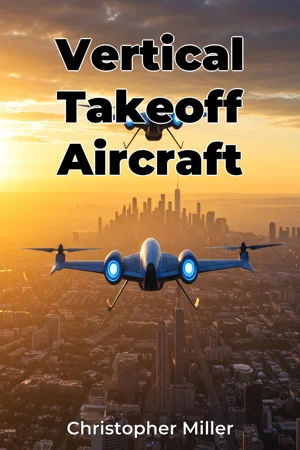
About This Book
Are vertical takeoff aircraft on the cusp of revolutionizing urban transportation, or are they merely a futuristic fantasy? "Vertical Takeoff Aircraft" delves into the rapidly evolving world of VTOL technology to explore its potential impact on business and urban mobility. This book examines the technological, economic, and regulatory factors that will determine whether these aircraft become a common sight in our cities. The book primarily addresses three key areas: the diverse engineering approaches to achieving vertical flight, the economic viability of VTOL operations, and the complex regulatory landscape governing their deployment. Why are these topics vital? Because the successful integration of VTOL aircraft into urban environments requires not only technological innovation, but also a sound business model and a supportive regulatory framework. The historical context of VTOL aircraft is crucial. From early experimental designs to the more recent advancements in electric propulsion and autonomous flight, the book traces the evolution of vertical flight technology. It examines past failures and successes, drawing lessons that inform current development efforts. Little prior knowledge is needed other than an interest in aviation, technology, or urban planning. The central argument posits that while significant technological hurdles remain, the primary barriers to VTOL adoption are economic and regulatory. The book demonstrates that overcoming these barriers hinges on establishing cost-effective operating models and developing clear, consistent safety regulations. The importance lies in the potential to alleviate urban congestion, reduce travel times, and create new economic opportunities. "Vertical Takeoff Aircraft" unfolds in a structured manner. It begins with an introduction to the fundamental principles of vertical flight and an overview of existing VTOL designs. Subsequent chapters delve into key areas such as electric propulsion systems, autonomous flight control, and air traffic management. The book then shifts its focus to the business aspects, analyzing manufacturing costs, operating expenses, and potential revenue streams. Finally, it examines the regulatory environment, exploring the challenges of certification, safety standards, and airspace management. The culmination of the argument is a comprehensive assessment of the factors that will determine the widespread adoption of VTOL aircraft. It also touches on the practical implications of VTOL technology, offering insights into potential use cases and investment opportunities. The book relies on a variety of sources to support its arguments, including technical specifications from aircraft manufacturers, economic data from market research firms, and regulatory documents from aviation authorities. It also incorporates case studies of existing VTOL programs and interviews with industry experts. The book intersects with several other fields, including urban planning, environmental science, and public policy. For example, the environmental impact of VTOL operations, particularly noise pollution and emissions, is a critical consideration for urban planners. Similarly, public policy decisions regarding airspace management and infrastructure investment will significantly shape the future of VTOL technology. This book adopts a balanced, analytical approach, presenting both the advantages and disadvantages of VTOL technology. It avoids overly optimistic or pessimistic predictions, opting instead for a realistic assessment of the challenges and opportunities. The writing style is professional and accessible, aimed at both technical and non-technical readers. The target audience includes engineers, business professionals, urban planners, policymakers, and investors who are interested in emerging transportation technologies. The book offers valuable insights for anyone seeking to understand the potential of VTOL aircraft and their impact on the future of urban mobility. As a non-fiction work, the book adheres to standards of accuracy, objectivity, and clear sourcing of information. The book's scope is limited to VTOL aircraft designed for urban transportation, excluding military applications and long-distance travel. This focus allows for a more in-depth examination of the specific challenges and opportunities associated with urban air mobility. The information can be applied to strategic planning, investment decisions, and policy development. For example, city planners can use the book's insights to assess the feasibility of integrating VTOL infrastructure into their urban environments. The book acknowledges ongoing debates about the safety and environmental impact of VTOL aircraft. It presents different perspectives on these issues, allowing readers to form their own informed opinions.
Are vertical takeoff aircraft on the cusp of revolutionizing urban transportation, or are they merely a futuristic fantasy? "Vertical Takeoff Aircraft" delves into the rapidly evolving world of VTOL technology to explore its potential impact on business and urban mobility. This book examines the technological, economic, and regulatory factors that will determine whether these aircraft become a common sight in our cities. The book primarily addresses three key areas: the diverse engineering approaches to achieving vertical flight, the economic viability of VTOL operations, and the complex regulatory landscape governing their deployment. Why are these topics vital? Because the successful integration of VTOL aircraft into urban environments requires not only technological innovation, but also a sound business model and a supportive regulatory framework. The historical context of VTOL aircraft is crucial. From early experimental designs to the more recent advancements in electric propulsion and autonomous flight, the book traces the evolution of vertical flight technology. It examines past failures and successes, drawing lessons that inform current development efforts. Little prior knowledge is needed other than an interest in aviation, technology, or urban planning. The central argument posits that while significant technological hurdles remain, the primary barriers to VTOL adoption are economic and regulatory. The book demonstrates that overcoming these barriers hinges on establishing cost-effective operating models and developing clear, consistent safety regulations. The importance lies in the potential to alleviate urban congestion, reduce travel times, and create new economic opportunities. "Vertical Takeoff Aircraft" unfolds in a structured manner. It begins with an introduction to the fundamental principles of vertical flight and an overview of existing VTOL designs. Subsequent chapters delve into key areas such as electric propulsion systems, autonomous flight control, and air traffic management. The book then shifts its focus to the business aspects, analyzing manufacturing costs, operating expenses, and potential revenue streams. Finally, it examines the regulatory environment, exploring the challenges of certification, safety standards, and airspace management. The culmination of the argument is a comprehensive assessment of the factors that will determine the widespread adoption of VTOL aircraft. It also touches on the practical implications of VTOL technology, offering insights into potential use cases and investment opportunities. The book relies on a variety of sources to support its arguments, including technical specifications from aircraft manufacturers, economic data from market research firms, and regulatory documents from aviation authorities. It also incorporates case studies of existing VTOL programs and interviews with industry experts. The book intersects with several other fields, including urban planning, environmental science, and public policy. For example, the environmental impact of VTOL operations, particularly noise pollution and emissions, is a critical consideration for urban planners. Similarly, public policy decisions regarding airspace management and infrastructure investment will significantly shape the future of VTOL technology. This book adopts a balanced, analytical approach, presenting both the advantages and disadvantages of VTOL technology. It avoids overly optimistic or pessimistic predictions, opting instead for a realistic assessment of the challenges and opportunities. The writing style is professional and accessible, aimed at both technical and non-technical readers. The target audience includes engineers, business professionals, urban planners, policymakers, and investors who are interested in emerging transportation technologies. The book offers valuable insights for anyone seeking to understand the potential of VTOL aircraft and their impact on the future of urban mobility. As a non-fiction work, the book adheres to standards of accuracy, objectivity, and clear sourcing of information. The book's scope is limited to VTOL aircraft designed for urban transportation, excluding military applications and long-distance travel. This focus allows for a more in-depth examination of the specific challenges and opportunities associated with urban air mobility. The information can be applied to strategic planning, investment decisions, and policy development. For example, city planners can use the book's insights to assess the feasibility of integrating VTOL infrastructure into their urban environments. The book acknowledges ongoing debates about the safety and environmental impact of VTOL aircraft. It presents different perspectives on these issues, allowing readers to form their own informed opinions.
"Vertical Takeoff Aircraft" explores the burgeoning field of VTOL (Vertical Takeoff and Landing) technology and its potential to revolutionize urban transportation and create new business opportunities. The book examines if VTOL aircraft are truly the future of urban mobility or just a futuristic concept. It carefully considers the technological advancements, such as electric propulsion and autonomous flight, necessary for VTOL aircraft to become a practical reality. A key insight is that while technology is advancing rapidly, economic viability and regulatory frameworks pose significant challenges to widespread adoption. The book progresses systematically, starting with the foundational principles of vertical flight and existing VTOL designs. It then delves into crucial areas like electric propulsion and air traffic management. Shifting focus, it analyzes the business aspects, including manufacturing costs and revenue streams, before addressing the complex regulatory landscape. This approach allows the book to present a comprehensive assessment of the factors determining VTOL aircraft's future. The book posits that overcoming economic and regulatory barriers is as important as technological innovation for VTOLs to alleviate urban congestion and transform urban transit.
Book Details
ISBN
9788235254054
Publisher
Publifye AS
Your Licenses
You don't own any licenses for this book
Purchase a license below to unlock this book and download the EPUB.
Purchase License
Select a tier to unlock this book
Need bulk licensing?
Contact us for enterprise agreements.