
About This Book
Did the ingenuity of precolonial societies extend to sophisticated metalworking practices, crafting not only tools and weapons, but also intricate jewelry and ceremonial objects? *Precolonial Metalwork* dives deep into the remarkable world of indigenous metallurgy, revealing a rich history of innovation and artistry that predates and exists independently of European contact. This book will explore the diverse techniques, regional variations, and cultural significance of metalwork across various precolonial societies. This exploration is vital for several reasons. First, it challenges Eurocentric views of technological advancement, demonstrating that complex metallurgical skills were developed and mastered independently in many parts of the world. Second, understanding precolonial metalwork provides critical insights into the social, economic, and spiritual lives of these societies. Third, the artistic achievements in metalwork challenge conventional notions of "primitive" art, revealing a sophisticated aesthetic sense and mastery of materials. The book primarily examines precolonial metalwork through the lens of archaeological findings, historical accounts from early travelers, and ethnographical studies of surviving traditions. The central argument of *Precolonial Metalwork* is that metalworking in these societies was not merely a functional craft, but a complex technology deeply intertwined with social status, ritual practices, and artistic expression. It challenges the narrative that metalworking skills were primarily or solely introduced by colonizers. The book is structured to first introduce the fundamental concepts of metallurgy as practiced in precolonial contexts, examining the sourcing of raw materials, smelting processes, and forging techniques. Chapters will then focus on specific geographical regions and cultural groups, showcasing the unique metalworking traditions of each. For example, one chapter will delve into West African bronze casting traditions, while another explores the goldwork of pre-Columbian South America, and a third the copper work of North American Indigenous populations. These case studies will highlight the diverse applications of metal in creating tools, weapons, regalia, and jewelry. The book culminates by exploring the cultural and symbolic meanings embedded in these metal artifacts, discussing their role in trade, warfare, and religious ceremonies, and contrasting their forms and uses. The evidence presented draws from a wide range of archaeological data, including excavated metal objects, metallurgical analyses, and site surveys. It also incorporates historical accounts from early explorers and missionaries, as well as contemporary ethnographical studies that document the continuity of certain metalworking traditions. Unique sources, such as oral histories and indigenous artistic interpretations of metal objects, are also considered where available. *Precolonial Metalwork* connects to several other disciplines, including archaeology, anthropology, art history, and materials science. The archaeological lens provides the physical evidence and context for understanding metalworking practices. Anthropology helps interpret the social and cultural meanings of metal objects within their original contexts. Art history examines the aesthetic qualities and stylistic variations of metalwork across different regions and time periods. Materials science provides the technical analysis of metal composition and manufacturing techniques. The book adopts a balanced and respectful tone, aiming to present a nuanced and accurate portrayal of precolonial metalworking traditions. It is written in a clear and accessible style, making it suitable for both academic and general audiences. The target audience includes students and scholars of archaeology, anthropology, art history, and African studies, as well as general readers interested in precolonial history, art, and technology. This book fulfills the expectations of non-fiction history and art genres by providing a well-researched, fact-based account of a significant aspect of precolonial societies. The scope of the book encompasses a broad geographical range, covering metalworking traditions across Africa, the Americas, Asia, and Oceania, prior to significant European colonization. However, it is limited to examining societies where metalworking developed independently or with minimal external influence. The information presented can be applied in practical ways, such as informing contemporary art practices, promoting cultural heritage preservation, and challenging Eurocentric biases in historical narratives. Finally, the book acknowledges ongoing debates in the field, such as the degree of cultural exchange between different regions and the dating of specific metalworking techniques. By presenting a balanced and evidence-based account, *Precolonial Metalwork* aims to contribute to a more nuanced understanding of the technological and artistic achievements of precolonial societies, and to the historical narratives that encompass global metalworking traditions.
Did the ingenuity of precolonial societies extend to sophisticated metalworking practices, crafting not only tools and weapons, but also intricate jewelry and ceremonial objects? *Precolonial Metalwork* dives deep into the remarkable world of indigenous metallurgy, revealing a rich history of innovation and artistry that predates and exists independently of European contact. This book will explore the diverse techniques, regional variations, and cultural significance of metalwork across various precolonial societies. This exploration is vital for several reasons. First, it challenges Eurocentric views of technological advancement, demonstrating that complex metallurgical skills were developed and mastered independently in many parts of the world. Second, understanding precolonial metalwork provides critical insights into the social, economic, and spiritual lives of these societies. Third, the artistic achievements in metalwork challenge conventional notions of "primitive" art, revealing a sophisticated aesthetic sense and mastery of materials. The book primarily examines precolonial metalwork through the lens of archaeological findings, historical accounts from early travelers, and ethnographical studies of surviving traditions. The central argument of *Precolonial Metalwork* is that metalworking in these societies was not merely a functional craft, but a complex technology deeply intertwined with social status, ritual practices, and artistic expression. It challenges the narrative that metalworking skills were primarily or solely introduced by colonizers. The book is structured to first introduce the fundamental concepts of metallurgy as practiced in precolonial contexts, examining the sourcing of raw materials, smelting processes, and forging techniques. Chapters will then focus on specific geographical regions and cultural groups, showcasing the unique metalworking traditions of each. For example, one chapter will delve into West African bronze casting traditions, while another explores the goldwork of pre-Columbian South America, and a third the copper work of North American Indigenous populations. These case studies will highlight the diverse applications of metal in creating tools, weapons, regalia, and jewelry. The book culminates by exploring the cultural and symbolic meanings embedded in these metal artifacts, discussing their role in trade, warfare, and religious ceremonies, and contrasting their forms and uses. The evidence presented draws from a wide range of archaeological data, including excavated metal objects, metallurgical analyses, and site surveys. It also incorporates historical accounts from early explorers and missionaries, as well as contemporary ethnographical studies that document the continuity of certain metalworking traditions. Unique sources, such as oral histories and indigenous artistic interpretations of metal objects, are also considered where available. *Precolonial Metalwork* connects to several other disciplines, including archaeology, anthropology, art history, and materials science. The archaeological lens provides the physical evidence and context for understanding metalworking practices. Anthropology helps interpret the social and cultural meanings of metal objects within their original contexts. Art history examines the aesthetic qualities and stylistic variations of metalwork across different regions and time periods. Materials science provides the technical analysis of metal composition and manufacturing techniques. The book adopts a balanced and respectful tone, aiming to present a nuanced and accurate portrayal of precolonial metalworking traditions. It is written in a clear and accessible style, making it suitable for both academic and general audiences. The target audience includes students and scholars of archaeology, anthropology, art history, and African studies, as well as general readers interested in precolonial history, art, and technology. This book fulfills the expectations of non-fiction history and art genres by providing a well-researched, fact-based account of a significant aspect of precolonial societies. The scope of the book encompasses a broad geographical range, covering metalworking traditions across Africa, the Americas, Asia, and Oceania, prior to significant European colonization. However, it is limited to examining societies where metalworking developed independently or with minimal external influence. The information presented can be applied in practical ways, such as informing contemporary art practices, promoting cultural heritage preservation, and challenging Eurocentric biases in historical narratives. Finally, the book acknowledges ongoing debates in the field, such as the degree of cultural exchange between different regions and the dating of specific metalworking techniques. By presenting a balanced and evidence-based account, *Precolonial Metalwork* aims to contribute to a more nuanced understanding of the technological and artistic achievements of precolonial societies, and to the historical narratives that encompass global metalworking traditions.
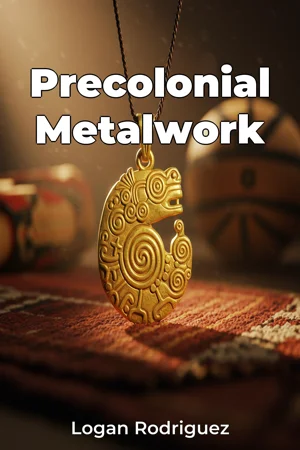
*Precolonial Metalwork* explores the fascinating history of indigenous metallurgy, revealing sophisticated artistic and technological achievements developed independently across the globe. Challenging Eurocentric perspectives, the book demonstrates that complex metalworking skills were mastered in many precolonial societies. Discover how metalwork was deeply intertwined with social status, ritual practices, and artistic expression, far beyond mere functional craft. The book examines diverse metalworking traditions through archaeological findings, historical accounts, and ethnographical studies. For example, the goldwork of pre-Columbian South America showcases an exquisite aesthetic sense and mastery of materials. The book progresses through chapters focusing on specific geographical regions, such as West African bronze casting, highlighting the unique metalworking traditions of each culture and their applications in tools, weapons, regalia, and jewelry. Finally, the book culminates by exploring the cultural and symbolic meanings embedded in these metal artifacts, discussing their role in trade, warfare, and religious ceremonies, and contrasting their forms and uses.
Book Details
ISBN
9788235253774
Publisher
Publifye AS
Your Licenses
You don't own any licenses for this book
Purchase a license below to unlock this book and download the EPUB.
Purchase License
Select a tier to unlock this book
Need bulk licensing?
Contact us for enterprise agreements.