
About This Book
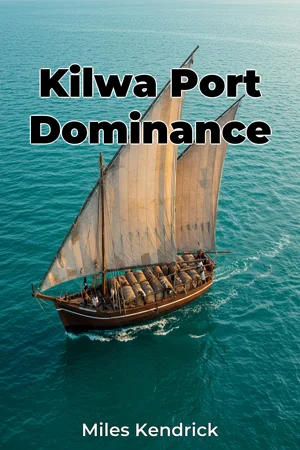
How did a small island settlement off the coast of East Africa become a linchpin in a vast Indian Ocean trading network? "Kilwa Port Dominance" explores the rise and influence of Kilwa, a medieval Swahili city-state, focusing on its strategic role in the Indian Ocean economy. This book examines Kilwa's dominance through its gold exports and the sophisticated coastal trading infrastructure it developed, revealing how it shaped regional trade dynamics for centuries. These topics are vital for understanding the complex economic and cultural exchanges that characterized pre-colonial East Africa and the broader Indian Ocean world. To fully appreciate Kilwa’s importance, the book provides historical context, detailing the Swahili civilization, its cultural synthesis of African and Islamic traditions, and the political landscape of the Western Indian Ocean. The reader will gain an understanding of monsoon winds dynamics, the importance of maritime trade routes, and the general trading practices prevalent during the medieval period. Our central argument posits that Kilwa’s prosperity and influence stemmed not merely from its access to gold from the interior, but more significantly from its proactive investment in and management of coastal trade networks. By controlling key ports and facilitating trade between the African interior, the Arabian Peninsula, India, and beyond, Kilwa established a commercial empire that exerted considerable economic and political leverage. This argument challenges conventional views that overemphasize external influences, instead underscoring the agency and ingenuity of Swahili merchants and rulers. "Kilwa Port Dominance" is structured to systematically unfold this argument. We begin by introducing Kilwa and its geographical setting, followed by an exploration of its early history and the development of its trading infrastructure. Subsequent chapters delve into the gold trade, tracing its routes and impact on Kilwa’s economy and social structure. We then analyze Kilwa’s maritime trade networks, examining the types of goods exchanged, the ships involved, and the role of Swahili merchants. The book culminates by assessing Kilwa’s legacy, exploring its decline, and its enduring impact on East African trade and culture. The book's analysis relies on a variety of evidence. We draw from archaeological excavations at Kilwa and other Swahili sites, analyzing material culture to understand trade patterns and economic activities. We also examine Arabic and Portuguese historical texts, which provide valuable insights into Kilwa’s political and economic relationships with other regions. The use of Swahili oral traditions offers a unique perspective, complementing written sources and revealing local perspectives on Kilwa’s history. "Kilwa Port Dominance" connects to several interdisciplinary fields. It links to economics by analyzing trade networks and market dynamics. It relates to archaeology through the examination of material culture and site analysis. It also intersects with anthropology by exploring the social and cultural dimensions of trade and exchange. These connections enrich the narrative, providing a holistic understanding of Kilwa's significance. This book distinguishes itself through its nuanced analysis of Kilwa’s agency in shaping regional trade. It moves beyond simplistic narratives of external domination, highlighting the proactive role of Swahili merchants and rulers. The work offers a fresh perspective on Swahili economic history, emphasizing the importance of internal dynamics and local initiatives. The book adopts a scholarly yet accessible tone, aiming to engage both academic and general audiences. The writing style is clear and concise, making complex economic and historical topics understandable to a broad readership. The target audience includes students and scholars of African history, economic history, and maritime history. It will also appeal to general readers interested in learning about pre-colonial Africa and the Indian Ocean world. The book provides valuable insights into the dynamics of trade, cultural exchange, and state formation in a non-Western context. As a work of economic and world history, this book carefully analyzes trade data, archaeological findings, and historical accounts to support its arguments. It avoids speculative claims, relying on solid evidence and rigorous analysis. The scope of "Kilwa Port Dominance" is intentionally focused on the period of Kilwa's ascendancy, roughly from the 11th to the 16th centuries. While we acknowledge the broader history of the Swahili coast, our primary focus is on analyzing the economic factors that contributed to Kilwa's dominance during this period. The insights from this book can be applied to contemporary discussions of globalization, trade, and development. By understanding how Kilwa successfully navigated the complexities of the Indian Ocean economy, we can gain valuable lessons for promoting sustainable economic growth and fostering cross-cultural exchange in today’s interconnected world. While Kilwa’s prominence is well-documented, there are ongoing debates about the precise nature of its political control over other Swahili city-states and the extent of its economic influence. This book addresses these controversies by carefully evaluating the available evidence and offering a nuanced interpretation of Kilwa’s role in the region.
How did a small island settlement off the coast of East Africa become a linchpin in a vast Indian Ocean trading network? "Kilwa Port Dominance" explores the rise and influence of Kilwa, a medieval Swahili city-state, focusing on its strategic role in the Indian Ocean economy. This book examines Kilwa's dominance through its gold exports and the sophisticated coastal trading infrastructure it developed, revealing how it shaped regional trade dynamics for centuries. These topics are vital for understanding the complex economic and cultural exchanges that characterized pre-colonial East Africa and the broader Indian Ocean world. To fully appreciate Kilwa’s importance, the book provides historical context, detailing the Swahili civilization, its cultural synthesis of African and Islamic traditions, and the political landscape of the Western Indian Ocean. The reader will gain an understanding of monsoon winds dynamics, the importance of maritime trade routes, and the general trading practices prevalent during the medieval period. Our central argument posits that Kilwa’s prosperity and influence stemmed not merely from its access to gold from the interior, but more significantly from its proactive investment in and management of coastal trade networks. By controlling key ports and facilitating trade between the African interior, the Arabian Peninsula, India, and beyond, Kilwa established a commercial empire that exerted considerable economic and political leverage. This argument challenges conventional views that overemphasize external influences, instead underscoring the agency and ingenuity of Swahili merchants and rulers. "Kilwa Port Dominance" is structured to systematically unfold this argument. We begin by introducing Kilwa and its geographical setting, followed by an exploration of its early history and the development of its trading infrastructure. Subsequent chapters delve into the gold trade, tracing its routes and impact on Kilwa’s economy and social structure. We then analyze Kilwa’s maritime trade networks, examining the types of goods exchanged, the ships involved, and the role of Swahili merchants. The book culminates by assessing Kilwa’s legacy, exploring its decline, and its enduring impact on East African trade and culture. The book's analysis relies on a variety of evidence. We draw from archaeological excavations at Kilwa and other Swahili sites, analyzing material culture to understand trade patterns and economic activities. We also examine Arabic and Portuguese historical texts, which provide valuable insights into Kilwa’s political and economic relationships with other regions. The use of Swahili oral traditions offers a unique perspective, complementing written sources and revealing local perspectives on Kilwa’s history. "Kilwa Port Dominance" connects to several interdisciplinary fields. It links to economics by analyzing trade networks and market dynamics. It relates to archaeology through the examination of material culture and site analysis. It also intersects with anthropology by exploring the social and cultural dimensions of trade and exchange. These connections enrich the narrative, providing a holistic understanding of Kilwa's significance. This book distinguishes itself through its nuanced analysis of Kilwa’s agency in shaping regional trade. It moves beyond simplistic narratives of external domination, highlighting the proactive role of Swahili merchants and rulers. The work offers a fresh perspective on Swahili economic history, emphasizing the importance of internal dynamics and local initiatives. The book adopts a scholarly yet accessible tone, aiming to engage both academic and general audiences. The writing style is clear and concise, making complex economic and historical topics understandable to a broad readership. The target audience includes students and scholars of African history, economic history, and maritime history. It will also appeal to general readers interested in learning about pre-colonial Africa and the Indian Ocean world. The book provides valuable insights into the dynamics of trade, cultural exchange, and state formation in a non-Western context. As a work of economic and world history, this book carefully analyzes trade data, archaeological findings, and historical accounts to support its arguments. It avoids speculative claims, relying on solid evidence and rigorous analysis. The scope of "Kilwa Port Dominance" is intentionally focused on the period of Kilwa's ascendancy, roughly from the 11th to the 16th centuries. While we acknowledge the broader history of the Swahili coast, our primary focus is on analyzing the economic factors that contributed to Kilwa's dominance during this period. The insights from this book can be applied to contemporary discussions of globalization, trade, and development. By understanding how Kilwa successfully navigated the complexities of the Indian Ocean economy, we can gain valuable lessons for promoting sustainable economic growth and fostering cross-cultural exchange in today’s interconnected world. While Kilwa’s prominence is well-documented, there are ongoing debates about the precise nature of its political control over other Swahili city-states and the extent of its economic influence. This book addresses these controversies by carefully evaluating the available evidence and offering a nuanced interpretation of Kilwa’s role in the region.
"Kilwa Port Dominance" investigates the influential role of Kilwa, a medieval Swahili city-state, within the Indian Ocean trade networks. The book explores how this East African settlement became a crucial hub, facilitating trade between the African interior, the Arabian Peninsula, and India. Kilwa's prosperity wasn't solely due to gold exports; its proactive management of coastal trade networks and control over key ports were vital to its economic and political leverage. The book challenges conventional views by underscoring the agency and ingenuity of Swahili merchants in shaping regional trade dynamics. The book unfolds systematically, beginning with Kilwa's geographical setting and early history. It then delves into the gold trade, maritime networks, and the roles of Swahili merchants. By drawing from archaeological findings, historical texts, and Swahili oral traditions, the book offers a nuanced perspective on Kilwa's rise and its lasting impact on East African trade and culture. The analysis connects to economics, archaeology, and anthropology, providing a holistic understanding of Kilwa's significance in pre-colonial Africa.
Book Details
ISBN
9788235253620
Publisher
Publifye AS
Your Licenses
You don't own any licenses for this book
Purchase a license below to unlock this book and download the EPUB.
Purchase License
Select a tier to unlock this book
Need bulk licensing?
Contact us for enterprise agreements.