
About This Book
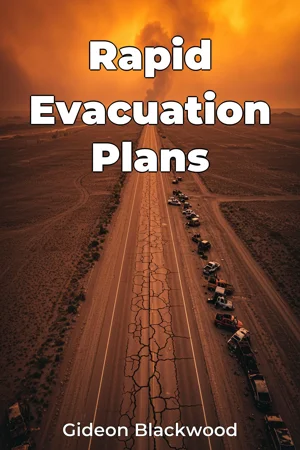
How do we ensure the safe and rapid evacuation of civilians when disaster strikes, whether from military action, natural catastrophes, or chemical releases in densely populated areas? *Rapid Evacuation Plans* addresses this critical question, offering a comprehensive examination of real-world strategies, challenges, and best practices in civilian evacuation planning. This book delves into the core elements of designing and implementing effective evacuation protocols, crucial for minimizing casualties and maximizing survival rates in crisis situations. The central argument revolves around the necessity for proactive, adaptable, and community-integrated evacuation strategies. This is explored through three key themes: firstly, the analysis of past evacuation successes and failures across different types of disasters; secondly, the detailed planning considerations for diverse environmental and demographic conditions; and thirdly, the crucial role of community engagement and public communication in ensuring effective execution. The book contends that successful evacuations are not merely logistical exercises but fundamentally involve understanding human behavior under duress, fostering public trust, and tailoring plans to specific local contexts. Providing necessary historical and social context, *Rapid Evacuation Plans* examines case studies ranging from wartime evacuations to responses to natural disasters like hurricanes and industrial accidents involving hazardous materials. Understanding the limitations and successes of past events is paramount to developing more resilient strategies for the future. We avoid simplistic narratives, acknowledging the complex interplay of factors that influence evacuation outcomes. Readers will gain insights into the socio-economic, infrastructural, and political elements that often determine the success or failure of these operations. The book is structured to guide the reader from fundamental concepts to actionable strategies. It begins by introducing various types of threats necessitating evacuation, followed by an overview of the legal and ethical frameworks governing civilian protection. The core sections then delve into planning specifics, covering topics such as risk assessment, route selection, transportation logistics, sheltering strategies, and communication protocols. The culmination focuses on implementation, evaluation, and continuous improvement, emphasizing the need for regular drills, community feedback, and adaptation based on evolving threats and circumstances. *Rapid Evacuation Plans* draws upon a wide range of sources, including government reports, academic studies, after-action reviews, and interviews with emergency management professionals and affected communities. Unique data sources include geographic information system (GIS) analyses of evacuation routes, simulations of crowd behavior, and social media data used to track information dissemination during crises. We employ quantitative and qualitative research methods to provide a balanced and evidence-based analysis. The book also forges interdisciplinary connections, linking emergency management with fields such as urban planning, public health, and behavioral psychology. For instance, understanding urban sprawl patterns informs route selection, while insights from behavioral psychology help design more effective communication strategies to encourage compliance. Considering public health concerns is critical in shelter management to prevent the spread of disease. *Rapid Evacuation Plans* stands out by offering a holistic, multi-faceted approach. Rather than focusing solely on logistical aspects, it integrates considerations of human behavior, community resilience, and ethical obligations. The tone is informative and analytical, avoiding sensationalism while maintaining a sense of urgency. The primary audience includes emergency management professionals, urban planners, policymakers, military personnel involved in civil affairs, and researchers in related fields. Additionally, concerned citizens and community leaders will find valuable insights into how to prepare for and respond to evacuation orders. In line with conventions of military history, history military, and current events genres, the book provides factual accounts, detailed analysis, and practical recommendations relevant to contemporary challenges. The scope is intentionally broad, encompassing a wide range of disaster scenarios and geographical contexts, but it acknowledges limitations in providing highly specific guidance for every conceivable situation. *Rapid Evacuation Plans* can be applied to improve existing evacuation plans, inform policy decisions, enhance training programs for emergency responders, and empower communities to prepare for potential disasters. The book will address debates surrounding mandatory versus voluntary evacuation orders, resource allocation during mass movements, and the balance between security concerns and individual liberties.
How do we ensure the safe and rapid evacuation of civilians when disaster strikes, whether from military action, natural catastrophes, or chemical releases in densely populated areas? *Rapid Evacuation Plans* addresses this critical question, offering a comprehensive examination of real-world strategies, challenges, and best practices in civilian evacuation planning. This book delves into the core elements of designing and implementing effective evacuation protocols, crucial for minimizing casualties and maximizing survival rates in crisis situations. The central argument revolves around the necessity for proactive, adaptable, and community-integrated evacuation strategies. This is explored through three key themes: firstly, the analysis of past evacuation successes and failures across different types of disasters; secondly, the detailed planning considerations for diverse environmental and demographic conditions; and thirdly, the crucial role of community engagement and public communication in ensuring effective execution. The book contends that successful evacuations are not merely logistical exercises but fundamentally involve understanding human behavior under duress, fostering public trust, and tailoring plans to specific local contexts. Providing necessary historical and social context, *Rapid Evacuation Plans* examines case studies ranging from wartime evacuations to responses to natural disasters like hurricanes and industrial accidents involving hazardous materials. Understanding the limitations and successes of past events is paramount to developing more resilient strategies for the future. We avoid simplistic narratives, acknowledging the complex interplay of factors that influence evacuation outcomes. Readers will gain insights into the socio-economic, infrastructural, and political elements that often determine the success or failure of these operations. The book is structured to guide the reader from fundamental concepts to actionable strategies. It begins by introducing various types of threats necessitating evacuation, followed by an overview of the legal and ethical frameworks governing civilian protection. The core sections then delve into planning specifics, covering topics such as risk assessment, route selection, transportation logistics, sheltering strategies, and communication protocols. The culmination focuses on implementation, evaluation, and continuous improvement, emphasizing the need for regular drills, community feedback, and adaptation based on evolving threats and circumstances. *Rapid Evacuation Plans* draws upon a wide range of sources, including government reports, academic studies, after-action reviews, and interviews with emergency management professionals and affected communities. Unique data sources include geographic information system (GIS) analyses of evacuation routes, simulations of crowd behavior, and social media data used to track information dissemination during crises. We employ quantitative and qualitative research methods to provide a balanced and evidence-based analysis. The book also forges interdisciplinary connections, linking emergency management with fields such as urban planning, public health, and behavioral psychology. For instance, understanding urban sprawl patterns informs route selection, while insights from behavioral psychology help design more effective communication strategies to encourage compliance. Considering public health concerns is critical in shelter management to prevent the spread of disease. *Rapid Evacuation Plans* stands out by offering a holistic, multi-faceted approach. Rather than focusing solely on logistical aspects, it integrates considerations of human behavior, community resilience, and ethical obligations. The tone is informative and analytical, avoiding sensationalism while maintaining a sense of urgency. The primary audience includes emergency management professionals, urban planners, policymakers, military personnel involved in civil affairs, and researchers in related fields. Additionally, concerned citizens and community leaders will find valuable insights into how to prepare for and respond to evacuation orders. In line with conventions of military history, history military, and current events genres, the book provides factual accounts, detailed analysis, and practical recommendations relevant to contemporary challenges. The scope is intentionally broad, encompassing a wide range of disaster scenarios and geographical contexts, but it acknowledges limitations in providing highly specific guidance for every conceivable situation. *Rapid Evacuation Plans* can be applied to improve existing evacuation plans, inform policy decisions, enhance training programs for emergency responders, and empower communities to prepare for potential disasters. The book will address debates surrounding mandatory versus voluntary evacuation orders, resource allocation during mass movements, and the balance between security concerns and individual liberties.
*Rapid Evacuation Plans* examines the critical need for effective civilian evacuation strategies in the face of military action, natural disasters, or industrial accidents. It emphasizes proactive, adaptable, and community-integrated plans to minimize casualties and maximize survival. The book analyzes past evacuation successes and failures, highlighting planning considerations for diverse conditions and the vital role of community engagement. It acknowledges that successful evacuations require understanding human behavior under duress and tailoring plans to local contexts. Interestingly, effective strategies aren't just logistical exercises, they require understanding human behavior when people are stressed. The book guides readers from fundamental concepts to actionable strategies, including risk assessment, route selection, transportation logistics, sheltering strategies, and communication protocols. Case studies range from wartime evacuations to responses to hurricanes and industrial accidents, providing historical and social context. Drawing upon government reports, academic studies, and interviews, *Rapid Evacuation Plans* connects emergency management with urban planning, public health, and behavioral psychology. This comprehensive approach integrates considerations of human behavior, community resilience, and ethical obligations.
Book Details
ISBN
9788235253552
Publisher
Publifye AS
Your Licenses
You don't own any licenses for this book
Purchase a license below to unlock this book and download the EPUB.
Purchase License
Select a tier to unlock this book
Need bulk licensing?
Contact us for enterprise agreements.