
About This Book
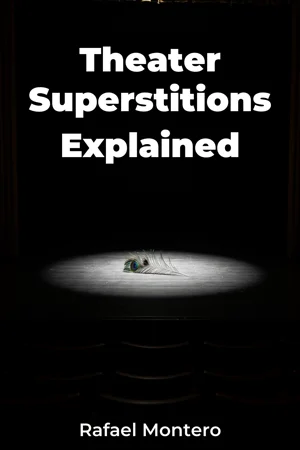
Have you ever wondered why actors avoid saying "Macbeth" inside a theater, or why a peacock feather is considered unlucky onstage? "Theater Superstitions Explained" delves into the fascinating and often bizarre world of theatrical customs, uncovering the origins and meanings behind the rituals, beliefs, and taboos that permeate the performing arts. This book will explore the historical, psychological, and cultural forces that have shaped these enduring superstitions, providing a comprehensive understanding of their significance. We will examine the core topics of linguistic taboos, prop and costume beliefs, and pre-performance rituals. These elements are crucial to understanding the performer’s mindset and the unique environment of the theater, where tradition and anxiety often intertwine. These superstitions are more than just quirky practices; they reflect deep-seated anxieties about performance, success, and the potential for disruption. Understanding these superstitions requires exploring theater history from ancient Greece to the modern stage. We will see how societal beliefs, religious practices, and even accidents contributed to the development of these customs. No prior knowledge of theater is required; the book will provide necessary context and definitions. The central argument is that theater superstitions, despite their often irrational nature, serve vital functions in managing anxiety, building camaraderie, and maintaining a sense of control within the unpredictable world of performance. By meticulously tracing their origins and analyzing their psychological underpinnings, we reveal their essential role in theatrical culture. The book is structured in three parts. First, we introduce core superstitions, categorizing them and providing anecdotal examples. Second, we delve into the historical context of each superstition, tracing its evolution through different eras and theatrical traditions. This section will also address the psychological factors that contribute to these beliefs. Third, we examine the practical implications and continued relevance of these superstitions in contemporary theater. The book culminates with a discussion of how these traditions contribute to the identity and cohesion of theater communities. Our research draws upon a variety of sources, including historical theater archives, folklore studies, psychological analyses of ritualistic behavior, and interviews with contemporary theater professionals. We will analyze play scripts, stage directions, and personal accounts to uncover the roots and evolution of these superstitions. This book also makes connections to other fields, notably psychology, anthropology, and folklore. By understanding the psychological need for ritual and the anthropological study of cultural taboos, we gain a richer understanding of theater superstitions. The study of folklore provides insight into how these beliefs are transmitted and adapted over time. A unique aspect of this book is its examination of the psychological function of superstitions in high-pressure environments. We provide a balanced view, acknowledging both the potential benefits and drawbacks of these beliefs. The tone is informative and accessible, aiming to engage both theater enthusiasts and anyone interested in cultural history. While based on thorough research, the writing avoids jargon and prioritizes clarity and engaging storytelling. The primary audience includes theater students, actors, directors, stage managers, and anyone with an interest in the performing arts and cultural history. It is also valuable for those interested in the psychology of belief and ritual. As a work of non-fiction, the book maintains a high standard of accuracy and objectivity. Sources are meticulously cited, and arguments are supported by evidence. It acknowledges differing perspectives and avoids sensationalism. The book's scope is broad, covering a wide range of theater superstitions from various cultures and historical periods. However, it does not delve into specific regional variations in extreme detail, focusing instead on common themes and underlying principles. Understanding these superstitions can help performers manage their anxieties and build stronger connections with their fellow artists. Recognizing the psychological needs that fuel these beliefs can lead to a more supportive and understanding theater environment. While superstitions are often treated as harmless quirks, some raise questions about cultural appropriation and the potential reinforcement of negative stereotypes. These issues are addressed in the context of promoting inclusivity and respect within the theater community.
Have you ever wondered why actors avoid saying "Macbeth" inside a theater, or why a peacock feather is considered unlucky onstage? "Theater Superstitions Explained" delves into the fascinating and often bizarre world of theatrical customs, uncovering the origins and meanings behind the rituals, beliefs, and taboos that permeate the performing arts. This book will explore the historical, psychological, and cultural forces that have shaped these enduring superstitions, providing a comprehensive understanding of their significance. We will examine the core topics of linguistic taboos, prop and costume beliefs, and pre-performance rituals. These elements are crucial to understanding the performer’s mindset and the unique environment of the theater, where tradition and anxiety often intertwine. These superstitions are more than just quirky practices; they reflect deep-seated anxieties about performance, success, and the potential for disruption. Understanding these superstitions requires exploring theater history from ancient Greece to the modern stage. We will see how societal beliefs, religious practices, and even accidents contributed to the development of these customs. No prior knowledge of theater is required; the book will provide necessary context and definitions. The central argument is that theater superstitions, despite their often irrational nature, serve vital functions in managing anxiety, building camaraderie, and maintaining a sense of control within the unpredictable world of performance. By meticulously tracing their origins and analyzing their psychological underpinnings, we reveal their essential role in theatrical culture. The book is structured in three parts. First, we introduce core superstitions, categorizing them and providing anecdotal examples. Second, we delve into the historical context of each superstition, tracing its evolution through different eras and theatrical traditions. This section will also address the psychological factors that contribute to these beliefs. Third, we examine the practical implications and continued relevance of these superstitions in contemporary theater. The book culminates with a discussion of how these traditions contribute to the identity and cohesion of theater communities. Our research draws upon a variety of sources, including historical theater archives, folklore studies, psychological analyses of ritualistic behavior, and interviews with contemporary theater professionals. We will analyze play scripts, stage directions, and personal accounts to uncover the roots and evolution of these superstitions. This book also makes connections to other fields, notably psychology, anthropology, and folklore. By understanding the psychological need for ritual and the anthropological study of cultural taboos, we gain a richer understanding of theater superstitions. The study of folklore provides insight into how these beliefs are transmitted and adapted over time. A unique aspect of this book is its examination of the psychological function of superstitions in high-pressure environments. We provide a balanced view, acknowledging both the potential benefits and drawbacks of these beliefs. The tone is informative and accessible, aiming to engage both theater enthusiasts and anyone interested in cultural history. While based on thorough research, the writing avoids jargon and prioritizes clarity and engaging storytelling. The primary audience includes theater students, actors, directors, stage managers, and anyone with an interest in the performing arts and cultural history. It is also valuable for those interested in the psychology of belief and ritual. As a work of non-fiction, the book maintains a high standard of accuracy and objectivity. Sources are meticulously cited, and arguments are supported by evidence. It acknowledges differing perspectives and avoids sensationalism. The book's scope is broad, covering a wide range of theater superstitions from various cultures and historical periods. However, it does not delve into specific regional variations in extreme detail, focusing instead on common themes and underlying principles. Understanding these superstitions can help performers manage their anxieties and build stronger connections with their fellow artists. Recognizing the psychological needs that fuel these beliefs can lead to a more supportive and understanding theater environment. While superstitions are often treated as harmless quirks, some raise questions about cultural appropriation and the potential reinforcement of negative stereotypes. These issues are addressed in the context of promoting inclusivity and respect within the theater community.
"Theater Superstitions Explained" explores the captivating world of theatrical customs, unveiling the origins and meanings behind the rituals and taboos that shape the performing arts. It examines why certain phrases, like mentioning "Macbeth" in a theater, are considered unlucky, and why peacock feathers are often shunned onstage. Delving into theater history, the book reveals how accidents, societal beliefs, and religious practices have shaped these traditions. The book approaches its subject by categorizing core superstitions, tracing their historical evolution, and analyzing their psychological underpinnings. It highlights how these superstitions manage anxiety, foster camaraderie, and provide a sense of control in the unpredictable realm of performance. The book progresses by first introducing common superstitions, then delving into their historical context and psychological factors, and finally examining their relevance in contemporary theater.
Book Details
ISBN
9788235253538
Publisher
Publifye AS
Your Licenses
You don't own any licenses for this book
Purchase a license below to unlock this book and download the EPUB.
Purchase License
Select a tier to unlock this book
Need bulk licensing?
Contact us for enterprise agreements.