
About This Book
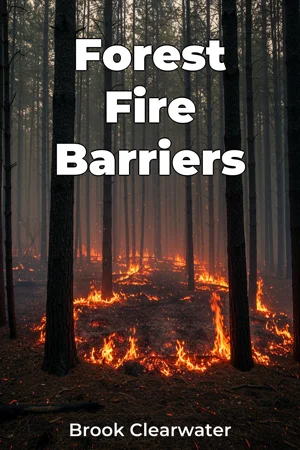
Can a line of carefully managed fire truly save a forest from an uncontrolled blaze? "Forest Fire Barriers" delves into the science and practice of wildfire containment, shifting the focus from reactive firefighting to proactive landscape management. This book elucidates the critical role of controlled fire lines, strategically designed fuel breaks, and the exploitation of topographic advantages in not only halting the spread of wildfires but also in safeguarding human movement corridors in fire-prone regions. The book examines two key topics: the engineering and implementation of effective fire barriers, and the integration of these strategies within broader ecological and community-based planning initiatives. Understanding the interaction between fire behavior and landscape features is paramount. This book serves that purpose by providing a comprehensive exploration of how specific landscape characteristics can be leveraged to create resilient and strategic defenses against wildfires. Readers will gain an understanding of the historical context of wildfire management, from early indigenous practices to modern scientific approaches. A basic understanding of fire ecology and geographic information systems (GIS) will be helpful, though not required, as the book builds from fundamental principles. "Forest Fire Barriers" argues that a proactive, landscape-level approach to wildfire management, centered on the strategic deployment of fire barriers, is essential for building resilient ecosystems and protecting human communities in an era of increasing fire risk. This argument is crucial because traditional suppression-only strategies are proving insufficient in the face of climate change and expanding wildland-urban interfaces. The book begins with an introduction to the fundamental principles of fire behavior and the ecological role of fire in various ecosystems. It then explores the design and construction of different types of fire barriers, including: 1. **Controlled Fire Lines:** Examining the techniques and safety protocols involved in creating and maintaining controlled burns as a defensive strategy. 2. **Fuel Breaks:** Analyzing the effectiveness of removing or modifying vegetation to reduce fuel loads and slow fire spread as well as the environmental impact of the fuel break. 3. **Topographic Advantages:** Illustrating how natural features like ridges, rivers, and changes in slope can be incorporated into fire containment strategies. Each section will provide case studies and examples from different geographic regions, highlighting best practices and lessons learned. The book culminates in a discussion of how fire barrier strategies can be integrated into broader landscape management plans, considering factors such as community involvement, economic constraints, and long-term ecological goals. The evidence presented in "Forest Fire Barriers" draws from a range of sources, including field studies, experimental burns, remote sensing data, and GIS analysis. The book also incorporates insights from fire behavior models and simulations. Data will be presented through maps, charts, and photographs, demonstrating the practical application of the concepts discussed. This book intersects with several other disciplines, including forestry, ecology, urban planning, and disaster management. For instance, the design of fuel breaks must consider ecological impacts on wildlife habitat, while the location of fire lines must be coordinated with urban evacuation routes. "Forest Fire Barriers" offers a unique perspective by integrating traditional ecological knowledge with modern scientific methods. It emphasizes a holistic approach to wildfire management rather than relying solely on suppression tactics. The style of writing is technical but accessible, aimed at a broad audience of professionals, students, and engaged citizens. The primary target audience includes foresters, land managers, fire scientists, urban planners, and policymakers involved in wildfire prevention and mitigation. It also appeals to students in related fields and to anyone interested in learning more about the science and practice of wildfire management. As a non-fiction book within the Earth Sciences and Geography genres, "Forest Fire Barriers" maintains a commitment to accuracy, objectivity, and clear communication. The scope of the book is limited to the technical and strategic aspects of designing and implementing fire barriers. It does not delve into the social, political, or economic factors that influence wildfire management decisions, though these issues are acknowledged. The information presented in "Forest Fire Barriers" can be applied directly to improve wildfire preparedness and resilience in fire-prone communities. Land managers can use the book to guide the design and implementation of fire barrier systems, while policymakers can use it to inform land-use planning and fire management regulations. While most agree on the importance of wildfire management, there are still debates about the most effective strategies. For example, the use of prescribed burns is often controversial due to concerns about air quality and potential escape. "Forest Fire Barriers" addresses these debates by presenting evidence-based arguments and providing a balanced perspective on different approaches.
Can a line of carefully managed fire truly save a forest from an uncontrolled blaze? "Forest Fire Barriers" delves into the science and practice of wildfire containment, shifting the focus from reactive firefighting to proactive landscape management. This book elucidates the critical role of controlled fire lines, strategically designed fuel breaks, and the exploitation of topographic advantages in not only halting the spread of wildfires but also in safeguarding human movement corridors in fire-prone regions. The book examines two key topics: the engineering and implementation of effective fire barriers, and the integration of these strategies within broader ecological and community-based planning initiatives. Understanding the interaction between fire behavior and landscape features is paramount. This book serves that purpose by providing a comprehensive exploration of how specific landscape characteristics can be leveraged to create resilient and strategic defenses against wildfires. Readers will gain an understanding of the historical context of wildfire management, from early indigenous practices to modern scientific approaches. A basic understanding of fire ecology and geographic information systems (GIS) will be helpful, though not required, as the book builds from fundamental principles. "Forest Fire Barriers" argues that a proactive, landscape-level approach to wildfire management, centered on the strategic deployment of fire barriers, is essential for building resilient ecosystems and protecting human communities in an era of increasing fire risk. This argument is crucial because traditional suppression-only strategies are proving insufficient in the face of climate change and expanding wildland-urban interfaces. The book begins with an introduction to the fundamental principles of fire behavior and the ecological role of fire in various ecosystems. It then explores the design and construction of different types of fire barriers, including: 1. **Controlled Fire Lines:** Examining the techniques and safety protocols involved in creating and maintaining controlled burns as a defensive strategy. 2. **Fuel Breaks:** Analyzing the effectiveness of removing or modifying vegetation to reduce fuel loads and slow fire spread as well as the environmental impact of the fuel break. 3. **Topographic Advantages:** Illustrating how natural features like ridges, rivers, and changes in slope can be incorporated into fire containment strategies. Each section will provide case studies and examples from different geographic regions, highlighting best practices and lessons learned. The book culminates in a discussion of how fire barrier strategies can be integrated into broader landscape management plans, considering factors such as community involvement, economic constraints, and long-term ecological goals. The evidence presented in "Forest Fire Barriers" draws from a range of sources, including field studies, experimental burns, remote sensing data, and GIS analysis. The book also incorporates insights from fire behavior models and simulations. Data will be presented through maps, charts, and photographs, demonstrating the practical application of the concepts discussed. This book intersects with several other disciplines, including forestry, ecology, urban planning, and disaster management. For instance, the design of fuel breaks must consider ecological impacts on wildlife habitat, while the location of fire lines must be coordinated with urban evacuation routes. "Forest Fire Barriers" offers a unique perspective by integrating traditional ecological knowledge with modern scientific methods. It emphasizes a holistic approach to wildfire management rather than relying solely on suppression tactics. The style of writing is technical but accessible, aimed at a broad audience of professionals, students, and engaged citizens. The primary target audience includes foresters, land managers, fire scientists, urban planners, and policymakers involved in wildfire prevention and mitigation. It also appeals to students in related fields and to anyone interested in learning more about the science and practice of wildfire management. As a non-fiction book within the Earth Sciences and Geography genres, "Forest Fire Barriers" maintains a commitment to accuracy, objectivity, and clear communication. The scope of the book is limited to the technical and strategic aspects of designing and implementing fire barriers. It does not delve into the social, political, or economic factors that influence wildfire management decisions, though these issues are acknowledged. The information presented in "Forest Fire Barriers" can be applied directly to improve wildfire preparedness and resilience in fire-prone communities. Land managers can use the book to guide the design and implementation of fire barrier systems, while policymakers can use it to inform land-use planning and fire management regulations. While most agree on the importance of wildfire management, there are still debates about the most effective strategies. For example, the use of prescribed burns is often controversial due to concerns about air quality and potential escape. "Forest Fire Barriers" addresses these debates by presenting evidence-based arguments and providing a balanced perspective on different approaches.
"Forest Fire Barriers" explores proactive wildfire management through strategic landscape design. It shifts from reactive firefighting to utilizing controlled fire lines, fuel breaks, and topographic advantages for wildfire containment. The book highlights how understanding fire behavior in relation to landscape features is crucial for resilient defense strategies. For instance, leveraging natural barriers like rivers or ridges can significantly enhance fire containment efforts. The book begins with the fundamentals of fire behavior and ecology, progressing to the design and construction of various fire barriers. Case studies from different geographic regions illustrate best practices. You'll discover how controlled burns, when carefully managed, can act as a defensive strategy, and how removing vegetation to create fuel breaks can slow a fire's spread. The book emphasizes integrating these strategies into broader landscape management plans, considering community involvement and ecological goals, and presents data through maps, charts, and photographs. This book stands out by integrating traditional ecological knowledge with modern science for a holistic approach to wildfire management. It's valuable for foresters, land managers, and anyone interested in wildfire prevention, offering practical guidance for improving wildfire preparedness in fire-prone areas.
Book Details
ISBN
9788235253439
Publisher
Publifye AS
Your Licenses
You don't own any licenses for this book
Purchase a license below to unlock this book and download the EPUB.
Purchase License
Select a tier to unlock this book
Need bulk licensing?
Contact us for enterprise agreements.