
About This Book
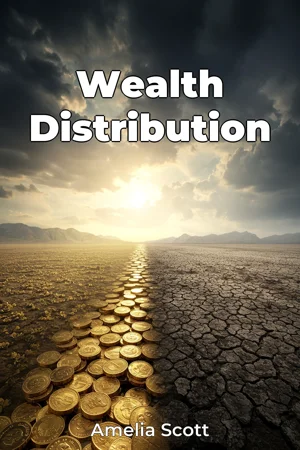
Why does wealth accumulate in some hands while remaining scarce for others? This book, "Wealth Distribution," investigates the multifaceted processes through which wealth is concentrated, transferred across generations, and potentially redistributed in modern economies, providing crucial insights into the economic and political forces shaping our world. This book grapples with two key topics: the mechanisms of wealth concentration and the efficacy of various redistribution policies. Understanding these dynamics is critical because wealth inequality impacts social mobility, political stability, and overall economic prosperity. Ignoring these factors leads to flawed policy decisions and a perpetuation of disparities. We begin by establishing a historical context, tracing the evolution of wealth distribution from pre-industrial societies to the complex financial landscapes of today. Readers will need a basic understanding of economic principles like supply and demand, as well as familiarity with different economic systems, namely capitalism, socialism, and their mixed forms. The central argument advanced is that wealth distribution is not a natural or inevitable outcome but rather a product of specific policy choices, institutional structures, and historical contingencies. We demonstrate that seemingly neutral mechanisms, such as tax laws or property rights regimes, can have profound and disproportionate effects on wealth accumulation at the top and economic opportunities at the bottom. The book is structured as follows: First, it introduces the fundamental concepts of wealth, income, and inequality, exploring different methods for measuring and analyzing wealth distribution. Second, it examines the primary drivers of wealth concentration, looking at factors like returns to capital, inheritance, entrepreneurship, and access to financial markets. Third, it analyzes the policies and mechanisms designed to redistribute wealth, including progressive taxation, social welfare programs, and inheritance taxes. Finally, it culminates with a discussion of the political and ethical implications of different wealth distribution patterns, offering potential policy recommendations. The evidence presented throughout the book relies on a combination of quantitative and qualitative data, drawing from sources such as national wealth accounts, income tax statistics, surveys of household wealth, and case studies of specific policies and institutions, alongside economic models for predictive analyses. We use publicly available data from organizations such as the World Bank, the OECD, and national statistical agencies. This book connects to other fields like sociology, analyzing the social stratification and mobility impacts of wealth, and political science, assessing the influence of wealth on political power and policy outcomes. Ethical philosophy is integrated to evaluate the normative dimensions of wealth inequality and justice. A unique aspect of this book is its holistic approach, integrating economic analysis with political and sociological perspectives to provide a more nuanced understanding of wealth dynamics. It moves beyond purely technical economic models to consider the role of power, institutions, and social norms in shaping wealth distribution. The tone is academic yet accessible, aiming to provide a rigorous analysis without overwhelming the reader with technical jargon. The writing style is clear and concise, emphasizing empirical evidence and logical argumentation. The target audience includes students and researchers in economics, political science, and sociology, as well as policymakers, journalists, and anyone interested in understanding the forces shaping wealth inequality in the 21st century. It would be valuable to readers seeking a comprehensive and evidence-based analysis of wealth distribution and its policy implications. As a work in economics and politics, this book adheres to the conventions of rigorous scholarship, emphasizing empirical evidence, theoretical clarity, and policy relevance. The scope of the book is broad, covering a wide range of countries and historical periods, but it focuses primarily on developed economies in the late 20th and early 21st centuries. Limitations include data availability for certain countries and the inherent difficulty of measuring wealth accurately. The information contained within "Wealth Distribution" can equip readers to critically evaluate policy proposals related to taxation, social welfare, and economic regulation. It provides a framework for understanding the potential impacts of these policies on wealth inequality and economic opportunity. The book addresses ongoing debates regarding the optimal level of wealth inequality, the role of government intervention in the economy, and the trade-offs between efficiency and equity. It provides a balanced and nuanced perspective on these complex issues, acknowledging the different viewpoints and presenting evidence to support informed decision-making.
Why does wealth accumulate in some hands while remaining scarce for others? This book, "Wealth Distribution," investigates the multifaceted processes through which wealth is concentrated, transferred across generations, and potentially redistributed in modern economies, providing crucial insights into the economic and political forces shaping our world. This book grapples with two key topics: the mechanisms of wealth concentration and the efficacy of various redistribution policies. Understanding these dynamics is critical because wealth inequality impacts social mobility, political stability, and overall economic prosperity. Ignoring these factors leads to flawed policy decisions and a perpetuation of disparities. We begin by establishing a historical context, tracing the evolution of wealth distribution from pre-industrial societies to the complex financial landscapes of today. Readers will need a basic understanding of economic principles like supply and demand, as well as familiarity with different economic systems, namely capitalism, socialism, and their mixed forms. The central argument advanced is that wealth distribution is not a natural or inevitable outcome but rather a product of specific policy choices, institutional structures, and historical contingencies. We demonstrate that seemingly neutral mechanisms, such as tax laws or property rights regimes, can have profound and disproportionate effects on wealth accumulation at the top and economic opportunities at the bottom. The book is structured as follows: First, it introduces the fundamental concepts of wealth, income, and inequality, exploring different methods for measuring and analyzing wealth distribution. Second, it examines the primary drivers of wealth concentration, looking at factors like returns to capital, inheritance, entrepreneurship, and access to financial markets. Third, it analyzes the policies and mechanisms designed to redistribute wealth, including progressive taxation, social welfare programs, and inheritance taxes. Finally, it culminates with a discussion of the political and ethical implications of different wealth distribution patterns, offering potential policy recommendations. The evidence presented throughout the book relies on a combination of quantitative and qualitative data, drawing from sources such as national wealth accounts, income tax statistics, surveys of household wealth, and case studies of specific policies and institutions, alongside economic models for predictive analyses. We use publicly available data from organizations such as the World Bank, the OECD, and national statistical agencies. This book connects to other fields like sociology, analyzing the social stratification and mobility impacts of wealth, and political science, assessing the influence of wealth on political power and policy outcomes. Ethical philosophy is integrated to evaluate the normative dimensions of wealth inequality and justice. A unique aspect of this book is its holistic approach, integrating economic analysis with political and sociological perspectives to provide a more nuanced understanding of wealth dynamics. It moves beyond purely technical economic models to consider the role of power, institutions, and social norms in shaping wealth distribution. The tone is academic yet accessible, aiming to provide a rigorous analysis without overwhelming the reader with technical jargon. The writing style is clear and concise, emphasizing empirical evidence and logical argumentation. The target audience includes students and researchers in economics, political science, and sociology, as well as policymakers, journalists, and anyone interested in understanding the forces shaping wealth inequality in the 21st century. It would be valuable to readers seeking a comprehensive and evidence-based analysis of wealth distribution and its policy implications. As a work in economics and politics, this book adheres to the conventions of rigorous scholarship, emphasizing empirical evidence, theoretical clarity, and policy relevance. The scope of the book is broad, covering a wide range of countries and historical periods, but it focuses primarily on developed economies in the late 20th and early 21st centuries. Limitations include data availability for certain countries and the inherent difficulty of measuring wealth accurately. The information contained within "Wealth Distribution" can equip readers to critically evaluate policy proposals related to taxation, social welfare, and economic regulation. It provides a framework for understanding the potential impacts of these policies on wealth inequality and economic opportunity. The book addresses ongoing debates regarding the optimal level of wealth inequality, the role of government intervention in the economy, and the trade-offs between efficiency and equity. It provides a balanced and nuanced perspective on these complex issues, acknowledging the different viewpoints and presenting evidence to support informed decision-making.
"Wealth Distribution" explores the complex mechanisms behind wealth concentration and the effectiveness of redistribution policies, highlighting the profound impact of wealth inequality on social mobility and political stability. The book challenges the notion that wealth distribution is a natural outcome, arguing instead that it's shaped by policy choices, institutional structures, and historical events. For example, seemingly neutral tax laws can significantly affect wealth accumulation. The book progresses by first introducing fundamental concepts of wealth and inequality, then examines the key drivers of wealth concentration such as returns to capital, inheritance, and access to financial markets. It delves into policies like progressive taxation and social welfare programs designed to redistribute wealth. A unique aspect of this book is that it combines economic analysis with political and sociological perspectives, offering a comprehensive understanding of how power dynamics and social norms influence wealth distribution. Drawing on quantitative and qualitative data from sources like the World Bank and OECD, the book connects economics with fields like sociology and political science. By integrating these diverse perspectives, "Wealth Distribution" provides readers with a nuanced understanding of the ongoing debates surrounding economic policy, economic regulation, and the ethical dimensions of wealth inequality, equipping them to critically evaluate policy proposals and their potential impacts.
Book Details
ISBN
9788235253330
Publisher
Publifye AS
Your Licenses
You don't own any licenses for this book
Purchase a license below to unlock this book and download the EPUB.
Purchase License
Select a tier to unlock this book
Need bulk licensing?
Contact us for enterprise agreements.