
About This Book
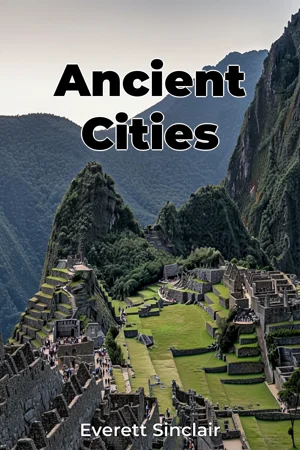
What secrets lie buried beneath our feet, waiting to be unearthed from the ruins of civilizations long past? "Ancient Cities" delves into the captivating world of archaeology and architectural history to reveal the stories of remarkable urban centers, brought to light through meticulous excavation and research. This book explores the enduring legacy of ancient cities, examining how their architecture, infrastructure, and daily life reflect the societies that built them and what their rediscovery teaches us about our shared human story. We embark on a journey through time, visiting iconic sites such as Machu Picchu, Pompeii, and other significant urban centers from around the globe. The book emphasizes two primary areas: first, the architectural ingenuity of these cities, from the sophisticated urban planning of the Roman Empire to the intricate stonework of the Inca civilization. Second, we explore the methods archaeologists use to painstakingly uncover and interpret the physical remains, piecing together the puzzle of daily life, societal structures, and technological advancements. Understanding these long-lost cities provides valuable insights into the trajectory of human development and the cyclical nature of civilization. The historical and social context is essential to understanding these cities. We address relevant historical periods for each featured city, discussing the prevailing political climates, social hierarchies, religious beliefs, and economic systems. For example, the sudden destruction of Pompeii by Mount Vesuvius in 79 AD provides a unique snapshot of Roman life, preserved in ash. Similarly, the strategic location and innovative agricultural techniques of Machu Picchu reveal the ingenuity and resilience of the Inca civilization. We examine how these factors influenced the design, construction, and function of these urban spaces. The central argument of "Ancient Cities" is that the study of urban ruins offers a tangible connection to the past, enabling us to understand the challenges and triumphs of previous societies. By carefully examining architectural remains and material culture, we can gain a deeper understanding of human innovation, adaptation, and the forces that shape urban development. The book's structure begins with an introduction to the principles of archaeological investigation. Then, we present detailed case studies of selected ancient cities, each chapter focusing on a specific location and its unique features. These chapters examine architectural styles, urban planning principles, and the discoveries made through archaeological excavation. The culmination of the book synthesizes the lessons learned from these diverse examples, offering insight into the universal themes of urban life and how ancient cities continue to influence contemporary society. The findings presented are supported by a wide range of evidence, including archaeological reports, architectural surveys, ancient texts, and scientific analyses of artifacts. We draw upon the latest research in the field, incorporating data obtained through innovative techniques such as ground-penetrating radar, LiDAR scanning, and carbon dating. This multidisciplinary approach ensures a comprehensive and accurate account of each city's history. "Ancient Cities" draws connections between archaeology, architecture, and history. The insights extend to other disciplines, such as anthropology, sociology, and environmental studies. By considering the interplay between these fields, we gain a more holistic understanding of the factors that shaped ancient urban life and influenced each city’s rise and fall. This book offers a comprehensive overview of ancient urbanization that will appeal to a broad audience. The writing style balances scholarly rigor with accessibility, aiming to engage both enthusiasts and those new to the topic. The book is visually rich, incorporating photographs, maps, and architectural reconstructions to enhance the reader's understanding. The scope of "Ancient Cities" is intentionally broad, covering a geographically diverse selection of urban sites spanning different historical periods. While we focus on major archaeological discoveries and architectural achievements, we also acknowledge the limitations of our current knowledge and the ongoing nature of archaeological research. We acknowledge the limitations of archaeological interpretation based on the available evidence. The insights gained can be applied in several practical ways. Architects and urban planners can learn from the successes and failures of past urban designs. Historians and social scientists can use the book to gain a deeper understanding of ancient societies. Additionally, the book promotes cultural heritage awareness and responsible tourism, encouraging readers to appreciate and protect these valuable archaeological sites. "Ancient Cities" is intended for a wide audience, including students, history buffs, architecture enthusiasts, and anyone interested in exploring the mysteries of the past. It offers a valuable resource for those seeking a deeper understanding of the origins of urban life and the enduring legacy of ancient civilizations.
What secrets lie buried beneath our feet, waiting to be unearthed from the ruins of civilizations long past? "Ancient Cities" delves into the captivating world of archaeology and architectural history to reveal the stories of remarkable urban centers, brought to light through meticulous excavation and research. This book explores the enduring legacy of ancient cities, examining how their architecture, infrastructure, and daily life reflect the societies that built them and what their rediscovery teaches us about our shared human story. We embark on a journey through time, visiting iconic sites such as Machu Picchu, Pompeii, and other significant urban centers from around the globe. The book emphasizes two primary areas: first, the architectural ingenuity of these cities, from the sophisticated urban planning of the Roman Empire to the intricate stonework of the Inca civilization. Second, we explore the methods archaeologists use to painstakingly uncover and interpret the physical remains, piecing together the puzzle of daily life, societal structures, and technological advancements. Understanding these long-lost cities provides valuable insights into the trajectory of human development and the cyclical nature of civilization. The historical and social context is essential to understanding these cities. We address relevant historical periods for each featured city, discussing the prevailing political climates, social hierarchies, religious beliefs, and economic systems. For example, the sudden destruction of Pompeii by Mount Vesuvius in 79 AD provides a unique snapshot of Roman life, preserved in ash. Similarly, the strategic location and innovative agricultural techniques of Machu Picchu reveal the ingenuity and resilience of the Inca civilization. We examine how these factors influenced the design, construction, and function of these urban spaces. The central argument of "Ancient Cities" is that the study of urban ruins offers a tangible connection to the past, enabling us to understand the challenges and triumphs of previous societies. By carefully examining architectural remains and material culture, we can gain a deeper understanding of human innovation, adaptation, and the forces that shape urban development. The book's structure begins with an introduction to the principles of archaeological investigation. Then, we present detailed case studies of selected ancient cities, each chapter focusing on a specific location and its unique features. These chapters examine architectural styles, urban planning principles, and the discoveries made through archaeological excavation. The culmination of the book synthesizes the lessons learned from these diverse examples, offering insight into the universal themes of urban life and how ancient cities continue to influence contemporary society. The findings presented are supported by a wide range of evidence, including archaeological reports, architectural surveys, ancient texts, and scientific analyses of artifacts. We draw upon the latest research in the field, incorporating data obtained through innovative techniques such as ground-penetrating radar, LiDAR scanning, and carbon dating. This multidisciplinary approach ensures a comprehensive and accurate account of each city's history. "Ancient Cities" draws connections between archaeology, architecture, and history. The insights extend to other disciplines, such as anthropology, sociology, and environmental studies. By considering the interplay between these fields, we gain a more holistic understanding of the factors that shaped ancient urban life and influenced each city’s rise and fall. This book offers a comprehensive overview of ancient urbanization that will appeal to a broad audience. The writing style balances scholarly rigor with accessibility, aiming to engage both enthusiasts and those new to the topic. The book is visually rich, incorporating photographs, maps, and architectural reconstructions to enhance the reader's understanding. The scope of "Ancient Cities" is intentionally broad, covering a geographically diverse selection of urban sites spanning different historical periods. While we focus on major archaeological discoveries and architectural achievements, we also acknowledge the limitations of our current knowledge and the ongoing nature of archaeological research. We acknowledge the limitations of archaeological interpretation based on the available evidence. The insights gained can be applied in several practical ways. Architects and urban planners can learn from the successes and failures of past urban designs. Historians and social scientists can use the book to gain a deeper understanding of ancient societies. Additionally, the book promotes cultural heritage awareness and responsible tourism, encouraging readers to appreciate and protect these valuable archaeological sites. "Ancient Cities" is intended for a wide audience, including students, history buffs, architecture enthusiasts, and anyone interested in exploring the mysteries of the past. It offers a valuable resource for those seeking a deeper understanding of the origins of urban life and the enduring legacy of ancient civilizations.
"Ancient Cities" explores the fascinating world of archaeology and architectural history, revealing the stories of ancient urban centers like Pompeii and Machu Picchu. Through meticulous excavation and research, the book delves into the architectural ingenuity and urban planning of past civilizations. For instance, Pompeii's preservation offers a unique glimpse into Roman daily life, while Machu Picchu showcases the Inca civilization's innovative agricultural techniques. The book examines the historical and social contexts of these cities, detailing prevailing political climates, social hierarchies, and economic systems. By studying architectural remains and material culture, readers gain a tangible connection to the past. Beginning with an introduction to archaeological investigation, "Ancient Cities" progresses through detailed case studies, each focusing on a specific location and its unique features, ultimately synthesizing lessons learned from diverse examples to offer insights into universal themes of urban life.
Book Details
ISBN
9788235253309
Publisher
Publifye AS
Your Licenses
You don't own any licenses for this book
Purchase a license below to unlock this book and download the EPUB.
Purchase License
Select a tier to unlock this book
Need bulk licensing?
Contact us for enterprise agreements.