
About This Book
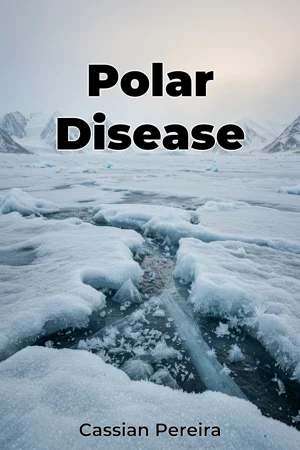
What lurks beneath the ice? *Polar Disease* delves into the chilling reality of infectious diseases in Earth's coldest regions, exploring both ancient threats preserved in permafrost and the contemporary health challenges facing those who inhabit or explore these extreme environments. This book is vital because it addresses a growing concern: as climate change accelerates the thawing of previously frozen landscapes, humanity faces the potential re-emergence of long-dormant pathogens, alongside unique epidemiological challenges in isolated polar communities. This book will provide the historical, scientific, and social context necessary to understand the complexities of polar diseases. No prior expertise in virology or epidemiology is required; we will carefully build the reader's knowledge from foundational principles. Our central argument is that the convergence of climate change, increased human activity in polar regions, and the unique physiology of cold-adapted pathogens creates a significant and understudied threat to global health security. The book is structured in four parts. Part one introduces the basics of virology, microbiology, and epidemiology, specifically focusing on how these fields apply to cold environments. Part two dissects the historical perspective, examining cases of past outbreaks in polar regions and exploring the science behind pathogen preservation in ice and permafrost, presenting research on viruses trapped for centuries. Chapter three addresses the risk of re-emergence, presenting evidence from paleovirology, microbiology, and climate science, assessing the likelihood and potential impact of ancient diseases being released into the modern world. Part three shifts focus to present-day challenges, including respiratory illnesses, zoonotic diseases transmitted from Arctic wildlife, and the mental health impacts of living in isolated, harsh conditions and the impacts on the immune system. Detailed case studies from research stations and indigenous communities will illustrate these points. In the final part, we explore the practical implications of the research, discussing mitigation strategies, public health preparedness, and the ethical considerations surrounding scientific research in vulnerable polar regions. The evidence presented in this book will be drawn from a wide range of sources, including peer-reviewed scientific literature, epidemiological databases, historical records of past expeditions and outbreaks, and original research conducted in collaboration with polar research institutions. We will also incorporate findings from interviews with scientists, healthcare professionals, and indigenous community members. Our approach is inherently interdisciplinary, connecting fields such as virology, climatology, history, public health, and anthropology to create a holistic understanding of polar diseases. For instance, understanding the effects of specific climate models is crucial for predicting the release of pathogens, and anthropological insights into indigenous health practices help shape culturally sensitive public health interventions. A unique aspect of this book is its emphasis on the interplay between ancient and modern threats. While discussions of thawing permafrost often focus on the potential release of methane, leading to further climate change, we highlight the equally concerning possibility of re-emerging pathogens. Similarly, our discussion of modern diseases in polar regions considers not only the direct biological effects of pathogens but also the social determinants of health, such as access to healthcare, nutrition, and mental health support. The writing style is accessible and engaging, aiming to bridge the gap between complex scientific concepts and a broader audience. The target audience includes scientists, policymakers, public health professionals, students, and anyone interested in climate change, infectious diseases, or the Arctic and Antarctic regions. This book offers valuable insights into a critical and timely issue, providing readers with the knowledge they need to understand and address the challenges of polar diseases. While the book offers a broad overview of the subject, it is important to acknowledge certain limitations. The study of polar diseases is an emerging field, and there are many aspects that remain poorly understood. We will focus primarily on viral and bacterial pathogens, with limited coverage of parasitic diseases or fungal infections. Furthermore, the geographical scope will be primarily focused on the Arctic and Antarctic, with less attention to subpolar regions. The information presented in this book has real-world applications for public health officials developing preparedness plans, researchers designing studies on emerging infectious diseases, and policymakers making decisions about climate change mitigation and adaptation. Understanding the risks posed by polar diseases is crucial for protecting the health of both polar communities and the global population. Ongoing debates exist regarding the level of risk posed by thawing permafrost and the most effective strategies for managing the health challenges in remote polar regions. This book aims to provide a balanced and informed perspective on these controversies, encouraging further discussion and research.
What lurks beneath the ice? *Polar Disease* delves into the chilling reality of infectious diseases in Earth's coldest regions, exploring both ancient threats preserved in permafrost and the contemporary health challenges facing those who inhabit or explore these extreme environments. This book is vital because it addresses a growing concern: as climate change accelerates the thawing of previously frozen landscapes, humanity faces the potential re-emergence of long-dormant pathogens, alongside unique epidemiological challenges in isolated polar communities. This book will provide the historical, scientific, and social context necessary to understand the complexities of polar diseases. No prior expertise in virology or epidemiology is required; we will carefully build the reader's knowledge from foundational principles. Our central argument is that the convergence of climate change, increased human activity in polar regions, and the unique physiology of cold-adapted pathogens creates a significant and understudied threat to global health security. The book is structured in four parts. Part one introduces the basics of virology, microbiology, and epidemiology, specifically focusing on how these fields apply to cold environments. Part two dissects the historical perspective, examining cases of past outbreaks in polar regions and exploring the science behind pathogen preservation in ice and permafrost, presenting research on viruses trapped for centuries. Chapter three addresses the risk of re-emergence, presenting evidence from paleovirology, microbiology, and climate science, assessing the likelihood and potential impact of ancient diseases being released into the modern world. Part three shifts focus to present-day challenges, including respiratory illnesses, zoonotic diseases transmitted from Arctic wildlife, and the mental health impacts of living in isolated, harsh conditions and the impacts on the immune system. Detailed case studies from research stations and indigenous communities will illustrate these points. In the final part, we explore the practical implications of the research, discussing mitigation strategies, public health preparedness, and the ethical considerations surrounding scientific research in vulnerable polar regions. The evidence presented in this book will be drawn from a wide range of sources, including peer-reviewed scientific literature, epidemiological databases, historical records of past expeditions and outbreaks, and original research conducted in collaboration with polar research institutions. We will also incorporate findings from interviews with scientists, healthcare professionals, and indigenous community members. Our approach is inherently interdisciplinary, connecting fields such as virology, climatology, history, public health, and anthropology to create a holistic understanding of polar diseases. For instance, understanding the effects of specific climate models is crucial for predicting the release of pathogens, and anthropological insights into indigenous health practices help shape culturally sensitive public health interventions. A unique aspect of this book is its emphasis on the interplay between ancient and modern threats. While discussions of thawing permafrost often focus on the potential release of methane, leading to further climate change, we highlight the equally concerning possibility of re-emerging pathogens. Similarly, our discussion of modern diseases in polar regions considers not only the direct biological effects of pathogens but also the social determinants of health, such as access to healthcare, nutrition, and mental health support. The writing style is accessible and engaging, aiming to bridge the gap between complex scientific concepts and a broader audience. The target audience includes scientists, policymakers, public health professionals, students, and anyone interested in climate change, infectious diseases, or the Arctic and Antarctic regions. This book offers valuable insights into a critical and timely issue, providing readers with the knowledge they need to understand and address the challenges of polar diseases. While the book offers a broad overview of the subject, it is important to acknowledge certain limitations. The study of polar diseases is an emerging field, and there are many aspects that remain poorly understood. We will focus primarily on viral and bacterial pathogens, with limited coverage of parasitic diseases or fungal infections. Furthermore, the geographical scope will be primarily focused on the Arctic and Antarctic, with less attention to subpolar regions. The information presented in this book has real-world applications for public health officials developing preparedness plans, researchers designing studies on emerging infectious diseases, and policymakers making decisions about climate change mitigation and adaptation. Understanding the risks posed by polar diseases is crucial for protecting the health of both polar communities and the global population. Ongoing debates exist regarding the level of risk posed by thawing permafrost and the most effective strategies for managing the health challenges in remote polar regions. This book aims to provide a balanced and informed perspective on these controversies, encouraging further discussion and research.
*Polar Disease* explores the intersection of infectious diseases and Earth's polar regions, highlighting the risks posed by both ancient pathogens and contemporary health challenges. As climate change thaws permafrost, there's a growing concern about the re-emergence of viruses and bacteria trapped for centuries. The book uniquely emphasizes the interplay between these ancient threats and the modern diseases impacting isolated Arctic and Antarctic communities, illustrating how factors like climate change and increased human activity contribute to global health security risks. The book progresses from foundational principles of virology and epidemiology to historical outbreaks and present-day challenges, including respiratory and zoonotic diseases, alongside the mental health impacts of living in harsh, isolated conditions. It presents evidence from diverse sources, such as scientific literature, historical records, and interviews with scientists and indigenous community members. A key insight is the exploration of paleovirology, revealing the potential for long-dormant pathogens to re-emerge and impact the modern world. Finally, the book addresses mitigation strategies, public health preparedness, and ethical considerations for research in vulnerable polar regions.
Book Details
ISBN
9788235253019
Publisher
Publifye AS
Your Licenses
You don't own any licenses for this book
Purchase a license below to unlock this book and download the EPUB.
Purchase License
Select a tier to unlock this book
Need bulk licensing?
Contact us for enterprise agreements.