
About This Book
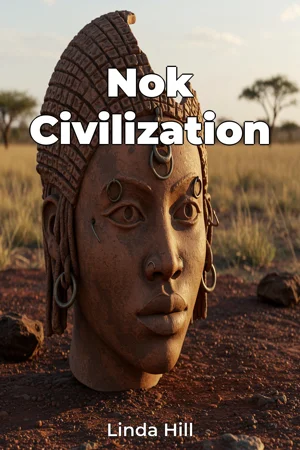
Imagine a civilization flourishing in West Africa over two thousand years ago, masters of ironworking and creators of terracotta sculptures of striking realism and detail, only to seemingly vanish from the historical record. Who were the Nok people, and what accounts for their remarkable rise and eventual decline? This book, *Nok Civilization*, delves into the heart of this enigmatic culture, exploring its technological prowess, artistic achievements, and the lingering mystery surrounding its disappearance. This book focuses on three key areas: the origins and development of Nok culture, their sophisticated iron metallurgy, and the unique characteristics of their terracotta artistry. Understanding the Nok civilization is critical, as it provides invaluable insights into the pre-colonial history of West Africa, challenging prevailing narratives and offering a more nuanced view of early African societies. Furthermore, the study of their ironworking techniques contributes significantly to our understanding of the history of technology and its independent development in different parts of the world. Finally, the exceptional quality of Nok terracotta sculptures provides a crucial window into their social structures, belief systems, and artistic sensibilities. To fully appreciate the Nok phenomenon, we will first establish the geographical and chronological context. This includes an overview of the environmental conditions of the Jos Plateau in Nigeria, the primary location of Nok finds, and a discussion of the radiocarbon dating techniques used to establish their timeline (roughly 1500 BCE to 500 CE). Essential to understanding the Nok is an awareness of the broader cultural landscape of West Africa during this period, including the presence of other contemporary societies and the potential for interaction or influence. *Nok Civilization* posits that the Nok culture represents a significant and independent development of social complexity and technological innovation in West Africa. We argue that the Nok possessed a level of centralized organization necessary for large-scale iron production and artistic specialization, indicating a more hierarchical society than previously assumed. This argument challenges simplistic models of African history that often portray pre-colonial societies as lacking in sophisticated technologies or complex social structures. The book is structured in three parts. The first section introduces the discovery of Nok artifacts, the debate surrounding their origins, and the challenges of archaeological research in the region. The second section examines the technology of Nok ironworking, including the evidence for smelting furnaces, iron tools, and the implications for agricultural productivity and warfare. The third section provides an in-depth analysis of Nok terracotta sculptures, exploring their stylistic features, potential functions (e.g., ritual objects, portraits), and the social context of their creation. The conclusion synthesizes the evidence to reconstruct a portrait of Nok society, considers possible explanations for their decline, and discusses the ongoing legacy of their artistic and technological achievements. The evidence presented in this book draws from a variety of sources, including archaeological excavations, stylistic analysis of terracotta sculptures, and scientific analysis of iron artifacts. We examine the spatial distribution of Nok sites, the types of artifacts found at each site, and the radiocarbon dates associated with these finds. We also incorporate ethnographic data from contemporary Nigerian societies to provide possible interpretations of Nok cultural practices. This book connects to various fields, including archaeology, art history, and materials science. The archaeological evidence provides the foundation for reconstructing Nok society. Art historical analysis reveals the aesthetic principles and symbolic meanings embedded in Nok terracotta. Materials science provides insights into the technological processes involved in Nok ironworking. Furthermore, discussions of climate change connect environmental science to the potential reasons behind the decline of this culture. This book adopts a multidisciplinary approach, combining archaeological evidence with art historical analysis and scientific data to create a comprehensive portrait of Nok civilization. The tone is academic yet accessible, aiming to engage both specialists and general readers interested in African history and archaeology. The target audience for this book includes students and scholars of African history, archaeology, and art history, as well as general readers interested in learning about ancient civilizations and the history of technology. It would be valuable to anyone seeking a comprehensive and up-to-date overview of Nok culture, its place in the history of West Africa, and the ongoing debates surrounding its interpretation. As a work of history, this book strives for accuracy and objectivity in its presentation of evidence and interpretations. However, it also acknowledges the limitations of the available data and the inherent challenges of reconstructing the past. The scope of the book is limited to the Nok culture itself, with only brief comparisons to other contemporary societies. The lessons learned from studying the Nok civilization can be applied to our understanding of other early iron-using societies and the factors that contribute to the rise and fall of civilizations. It demonstrates the importance of interdisciplinary research for reconstructing the past and highlights the need to challenge Eurocentric narratives of history. The book also addresses the ongoing controversies surrounding the dating of Nok artifacts, the interpretation of their artistic symbolism, and the extent of their influence on later African cultures. It presents different viewpoints on these issues and encourages readers to critically evaluate the evidence and draw their own conclusions.
Imagine a civilization flourishing in West Africa over two thousand years ago, masters of ironworking and creators of terracotta sculptures of striking realism and detail, only to seemingly vanish from the historical record. Who were the Nok people, and what accounts for their remarkable rise and eventual decline? This book, *Nok Civilization*, delves into the heart of this enigmatic culture, exploring its technological prowess, artistic achievements, and the lingering mystery surrounding its disappearance. This book focuses on three key areas: the origins and development of Nok culture, their sophisticated iron metallurgy, and the unique characteristics of their terracotta artistry. Understanding the Nok civilization is critical, as it provides invaluable insights into the pre-colonial history of West Africa, challenging prevailing narratives and offering a more nuanced view of early African societies. Furthermore, the study of their ironworking techniques contributes significantly to our understanding of the history of technology and its independent development in different parts of the world. Finally, the exceptional quality of Nok terracotta sculptures provides a crucial window into their social structures, belief systems, and artistic sensibilities. To fully appreciate the Nok phenomenon, we will first establish the geographical and chronological context. This includes an overview of the environmental conditions of the Jos Plateau in Nigeria, the primary location of Nok finds, and a discussion of the radiocarbon dating techniques used to establish their timeline (roughly 1500 BCE to 500 CE). Essential to understanding the Nok is an awareness of the broader cultural landscape of West Africa during this period, including the presence of other contemporary societies and the potential for interaction or influence. *Nok Civilization* posits that the Nok culture represents a significant and independent development of social complexity and technological innovation in West Africa. We argue that the Nok possessed a level of centralized organization necessary for large-scale iron production and artistic specialization, indicating a more hierarchical society than previously assumed. This argument challenges simplistic models of African history that often portray pre-colonial societies as lacking in sophisticated technologies or complex social structures. The book is structured in three parts. The first section introduces the discovery of Nok artifacts, the debate surrounding their origins, and the challenges of archaeological research in the region. The second section examines the technology of Nok ironworking, including the evidence for smelting furnaces, iron tools, and the implications for agricultural productivity and warfare. The third section provides an in-depth analysis of Nok terracotta sculptures, exploring their stylistic features, potential functions (e.g., ritual objects, portraits), and the social context of their creation. The conclusion synthesizes the evidence to reconstruct a portrait of Nok society, considers possible explanations for their decline, and discusses the ongoing legacy of their artistic and technological achievements. The evidence presented in this book draws from a variety of sources, including archaeological excavations, stylistic analysis of terracotta sculptures, and scientific analysis of iron artifacts. We examine the spatial distribution of Nok sites, the types of artifacts found at each site, and the radiocarbon dates associated with these finds. We also incorporate ethnographic data from contemporary Nigerian societies to provide possible interpretations of Nok cultural practices. This book connects to various fields, including archaeology, art history, and materials science. The archaeological evidence provides the foundation for reconstructing Nok society. Art historical analysis reveals the aesthetic principles and symbolic meanings embedded in Nok terracotta. Materials science provides insights into the technological processes involved in Nok ironworking. Furthermore, discussions of climate change connect environmental science to the potential reasons behind the decline of this culture. This book adopts a multidisciplinary approach, combining archaeological evidence with art historical analysis and scientific data to create a comprehensive portrait of Nok civilization. The tone is academic yet accessible, aiming to engage both specialists and general readers interested in African history and archaeology. The target audience for this book includes students and scholars of African history, archaeology, and art history, as well as general readers interested in learning about ancient civilizations and the history of technology. It would be valuable to anyone seeking a comprehensive and up-to-date overview of Nok culture, its place in the history of West Africa, and the ongoing debates surrounding its interpretation. As a work of history, this book strives for accuracy and objectivity in its presentation of evidence and interpretations. However, it also acknowledges the limitations of the available data and the inherent challenges of reconstructing the past. The scope of the book is limited to the Nok culture itself, with only brief comparisons to other contemporary societies. The lessons learned from studying the Nok civilization can be applied to our understanding of other early iron-using societies and the factors that contribute to the rise and fall of civilizations. It demonstrates the importance of interdisciplinary research for reconstructing the past and highlights the need to challenge Eurocentric narratives of history. The book also addresses the ongoing controversies surrounding the dating of Nok artifacts, the interpretation of their artistic symbolism, and the extent of their influence on later African cultures. It presents different viewpoints on these issues and encourages readers to critically evaluate the evidence and draw their own conclusions.
"Nok Civilization" explores the fascinating yet mysterious Nok culture of West Africa, flourishing from around 1500 BCE to 500 CE. Renowned for their advanced ironworking and striking terracotta sculptures, the Nok present a compelling case for independent technological and artistic development in pre-colonial Africa. The book delves into the intricacies of Nok society, examining how their mastery of iron metallurgy may have enabled agricultural advancements and even influenced warfare, indicating a complex social structure. The book's approach is multidisciplinary, integrating archaeological findings, art historical analysis, and scientific data to paint a comprehensive picture. It begins by establishing the geographical and chronological context, then explores Nok ironworking technology and the stylistic features of their terracotta sculptures. The analysis of Nok terracotta, known for their expressive realism, offers insights into their belief systems and social structures. Organized into three distinct sections, the book first introduces the discovery of Nok artifacts and the challenges of research. Second, it examines their ironworking technology, and finally, analyzes their terracotta sculptures. It challenges simplistic views of African history and encourages critical evaluation of the evidence surrounding this influential, ancient civilization.
Book Details
ISBN
9788235252906
Publisher
Publifye AS
Your Licenses
You don't own any licenses for this book
Purchase a license below to unlock this book and download the EPUB.
Purchase License
Select a tier to unlock this book
Need bulk licensing?
Contact us for enterprise agreements.