
About This Book
Why did our ancestors venture into the darkness of caves to perform their most sacred rituals? "Sacred Cave Rituals" delves into this question, exploring the spiritual ceremonies enacted within caves across diverse cultures, their profound significance in indigenous belief systems, and the tangible artifacts left as echoes of these ancient practices. This book examines the intersection of history and religion, focusing on how caves served as potent symbolic spaces, connecting the earthly realm with the spiritual world. This study is crucial because it sheds light on the cognitive and spiritual development of early humans and offers insights into the enduring power of ritual and symbolism. Understanding these cave rituals provides a window into the belief systems that shaped past societies and continue to influence many cultures today. The book provides historical, anthropological, and archaeological context. Familiarity with basic concepts of religious studies and archaeology will enhance the reading experience, though no prior specialized knowledge is required. The central argument of "Sacred Cave Rituals" is that cave rituals were not random acts but carefully orchestrated performances designed to interact with perceived supernatural forces and reinforce communal bonds. The evidence supports the idea that caves were deliberately chosen for their unique acoustic properties, geological features, and symbolic associations. This argument highlights the deep interconnectedness between the physical environment and the spiritual lives of ancient people. The book begins by introducing the concept of "sacred space" and its role in shaping religious practices. The initial chapters explore the cross-cultural significance of caves as places of creation, transformation, and access to the underworld. Subsequent sections delve into specific case studies from around the world, examining cave rituals in Paleolithic Europe, Mesoamerica, and Oceania. These case studies analyze the archaeological evidence, including rock art, modified cave formations, and ritual deposits. The book culminates by exploring the legacy of cave rituals in contemporary spiritual practices and discussing the ethical considerations surrounding the study and preservation of these important sites. The evidence presented includes archaeological finds, ethnographic accounts, and analyses of cave art. Unique data sources include detailed acoustic surveys of select caves, revealing how sound may have been used to enhance ritual experiences. "Sacred Cave Rituals" connects to other fields, including cognitive archaeology, environmental psychology, and art history. Cognitive archaeology provides frameworks for understanding the mental processes underlying ritual behavior. Environmental psychology illuminates how the physical characteristics of caves influenced human perceptions and experiences. Art history contributes to the interpretation of rock art and other visual symbols found in cave settings. This book takes a multidisciplinary approach, integrating archaeological data with insights from religious studies, anthropology, and acoustics to provide a holistic understanding of cave rituals. This perspective moves beyond purely descriptive accounts to explore the underlying motivations and meanings behind these practices. The writing style is academic yet accessible, aiming to engage both scholars and general readers interested in the history of religion and archaeology. The intended readership includes students, researchers, and anyone fascinated by the spiritual lives of ancient people. This book will appeal to those interested in understanding how humans have historically interacted with the environment to create meaning and purpose. As a work of non-fiction, "Sacred Cave Rituals" adheres to the conventions of scholarly research, including rigorous sourcing, clear argumentation, and objective analysis. The scope of the book encompasses cave rituals from prehistory to the present day, drawing examples from diverse geographical regions. However, the focus is primarily on cultures where caves played a central role in religious practices. The insights in "Sacred Cave Rituals" can be applied to contemporary discussions about sacred space, environmental ethics, and the preservation of cultural heritage. Understanding the importance of caves to past societies can inform efforts to protect these fragile environments and promote respectful engagement with indigenous cultures. While this book focuses on interpreting known rituals, the exact meaning and intent behind all cave ceremonies remain a topic of debate among scholars. Different interpretations of rock art, artifact placement, and the overall function of caves continue to generate discussion and research.
Why did our ancestors venture into the darkness of caves to perform their most sacred rituals? "Sacred Cave Rituals" delves into this question, exploring the spiritual ceremonies enacted within caves across diverse cultures, their profound significance in indigenous belief systems, and the tangible artifacts left as echoes of these ancient practices. This book examines the intersection of history and religion, focusing on how caves served as potent symbolic spaces, connecting the earthly realm with the spiritual world. This study is crucial because it sheds light on the cognitive and spiritual development of early humans and offers insights into the enduring power of ritual and symbolism. Understanding these cave rituals provides a window into the belief systems that shaped past societies and continue to influence many cultures today. The book provides historical, anthropological, and archaeological context. Familiarity with basic concepts of religious studies and archaeology will enhance the reading experience, though no prior specialized knowledge is required. The central argument of "Sacred Cave Rituals" is that cave rituals were not random acts but carefully orchestrated performances designed to interact with perceived supernatural forces and reinforce communal bonds. The evidence supports the idea that caves were deliberately chosen for their unique acoustic properties, geological features, and symbolic associations. This argument highlights the deep interconnectedness between the physical environment and the spiritual lives of ancient people. The book begins by introducing the concept of "sacred space" and its role in shaping religious practices. The initial chapters explore the cross-cultural significance of caves as places of creation, transformation, and access to the underworld. Subsequent sections delve into specific case studies from around the world, examining cave rituals in Paleolithic Europe, Mesoamerica, and Oceania. These case studies analyze the archaeological evidence, including rock art, modified cave formations, and ritual deposits. The book culminates by exploring the legacy of cave rituals in contemporary spiritual practices and discussing the ethical considerations surrounding the study and preservation of these important sites. The evidence presented includes archaeological finds, ethnographic accounts, and analyses of cave art. Unique data sources include detailed acoustic surveys of select caves, revealing how sound may have been used to enhance ritual experiences. "Sacred Cave Rituals" connects to other fields, including cognitive archaeology, environmental psychology, and art history. Cognitive archaeology provides frameworks for understanding the mental processes underlying ritual behavior. Environmental psychology illuminates how the physical characteristics of caves influenced human perceptions and experiences. Art history contributes to the interpretation of rock art and other visual symbols found in cave settings. This book takes a multidisciplinary approach, integrating archaeological data with insights from religious studies, anthropology, and acoustics to provide a holistic understanding of cave rituals. This perspective moves beyond purely descriptive accounts to explore the underlying motivations and meanings behind these practices. The writing style is academic yet accessible, aiming to engage both scholars and general readers interested in the history of religion and archaeology. The intended readership includes students, researchers, and anyone fascinated by the spiritual lives of ancient people. This book will appeal to those interested in understanding how humans have historically interacted with the environment to create meaning and purpose. As a work of non-fiction, "Sacred Cave Rituals" adheres to the conventions of scholarly research, including rigorous sourcing, clear argumentation, and objective analysis. The scope of the book encompasses cave rituals from prehistory to the present day, drawing examples from diverse geographical regions. However, the focus is primarily on cultures where caves played a central role in religious practices. The insights in "Sacred Cave Rituals" can be applied to contemporary discussions about sacred space, environmental ethics, and the preservation of cultural heritage. Understanding the importance of caves to past societies can inform efforts to protect these fragile environments and promote respectful engagement with indigenous cultures. While this book focuses on interpreting known rituals, the exact meaning and intent behind all cave ceremonies remain a topic of debate among scholars. Different interpretations of rock art, artifact placement, and the overall function of caves continue to generate discussion and research.
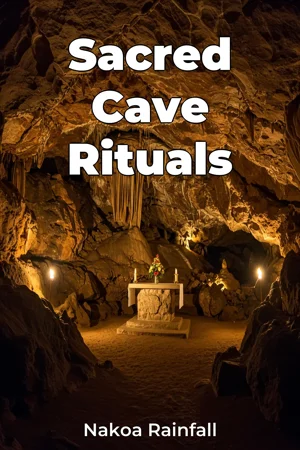
"Sacred Cave Rituals" explores why ancient civilizations performed sacred ceremonies deep within caves, uncovering the spiritual significance of these practices across various cultures. It examines how caves functioned as "sacred spaces," connecting the physical world to the spiritual realm. The book argues that these rituals weren't random, but carefully planned events meant to engage with the supernatural and strengthen community bonds. Interestingly, caves may have been chosen for their acoustic properties, enhancing the ritual experience. The book begins by establishing the concept of sacred space, then moves to case studies from Paleolithic Europe, Mesoamerica, and Oceania, analyzing rock art and other archaeological evidence. This multidisciplinary approach combines archaeology, religious studies, and anthropology. It provides a unique perspective on the motivations behind these ancient religious practices, offering insights into the enduring power of ritual and symbolism. "Sacred Cave Rituals" offers a fascinating look into the past, revealing how ancient people interacted with their environment to create meaning and purpose. It ultimately provides a holistic understanding of cave rituals and their lasting impact, even touching on the ethical considerations of preserving these sites.
Book Details
ISBN
9788235252708
Publisher
Publifye AS
Your Licenses
You don't own any licenses for this book
Purchase a license below to unlock this book and download the EPUB.
Purchase License
Select a tier to unlock this book
Need bulk licensing?
Contact us for enterprise agreements.