
About This Book
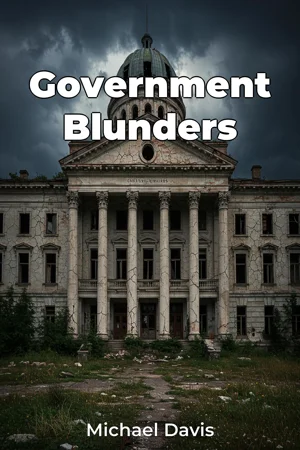
Have you ever wondered how seemingly intelligent leaders could make decisions that defy logic and common sense, leading to governmental failures that border on the absurd? "Government Blunders" explores the historical landscape of political missteps, revealing the often-comical and always-instructive errors in judgment that have shaped our world. This book delves into three core areas: the anatomy of flawed policy development, the financial repercussions of governmental miscalculations, and the sociological impact of ill-conceived initiatives. These topics are crucial because understanding past failures is essential for preventing future catastrophes and fostering more effective governance. Ignoring these lessons condemns societies to repeat the same mistakes, squandering resources and eroding public trust. To provide context, "Government Blunders" examines the historical and social environments in which these errors occurred, shedding light on the prevailing attitudes, misinformation, and political pressures that contributed to the blunders. Prior knowledge of basic political systems and historical events is helpful but not required, as the book provides sufficient background information for each case study. The central argument is that recurring patterns of cognitive biases, groupthink, and a lack of informed decision-making are consistently present within governmental failures across different eras and political systems. By identifying these patterns, we can develop strategies to mitigate their influence and improve governmental processes. This argument is vital for policymakers, historians, and engaged citizens seeking to understand and improve the functioning of their governments. The book’s structure begins by introducing the key concepts of cognitive biases, bureaucratic inertia, and political opportunism. It then proceeds with detailed analyses of specific historical cases. One segment examines the failed economic policies of various nations, highlighting misjudgments that led to market crashes and economic depressions. Another explores public works projects that spiraled out of control, costing taxpayers exorbitant sums while failing to achieve their intended goals. Finally, the book analyzes instances where social engineering projects backfired, creating unintended and often detrimental consequences for the populations they were designed to help. The book culminates by offering practical recommendations for avoiding similar blunders in the future, emphasizing transparency, accountability, and rigorous impact assessments. The book's evidence is drawn from primary sources such as government documents, legislative records, and contemporaneous news reports, as well as secondary scholarly analyses. Where available, economic data sets and sociological studies are used to quantify the impact of the blunders. "Government Blunders" connects to other fields like behavioral economics, political science, and sociology. Behavioral economics provides insights into the psychological biases that affect decision-making. Political science offers frameworks for understanding power dynamics and institutional structures. Sociology helps analyze the social consequences of governmental actions. These interdisciplinary connections enrich the book's analysis and broaden its appeal. The book stands out through its focus on the comedic aspects of governmental failures. While the consequences are often serious, the underlying illogical nature of the decisions provides a unique and engaging perspective. The tone of the book is analytical and informative, yet accessible to a broad audience. The writing style aims to be clear, concise, and engaging, making complex political and historical events understandable and relatable. The target audience includes students of history, political science, and public policy, as well as anyone interested in understanding how governments work and why they sometimes fail. The book offers valuable lessons for policymakers, academics, and informed citizens seeking to improve governance. As a work of non-fiction, "Government Blunders" adheres to the standards of accuracy and objectivity. It presents factual information supported by evidence and avoids partisan bias. The scope of the book is limited to civilian governmental actions, intentionally excluding military strategies and intelligence operations. This focus allows for a more in-depth analysis of policy decisions and their consequences. The information in "Government Blunders" can be applied practically by readers in various ways. It can inform their voting decisions, encourage them to engage in civic activism, and provide them with a critical perspective on governmental policies. The book addresses ongoing debates about the role of government, the limits of regulation, and the balance between individual liberty and collective responsibility. It contributes to these discussions by providing historical context and evidence-based analysis.
Have you ever wondered how seemingly intelligent leaders could make decisions that defy logic and common sense, leading to governmental failures that border on the absurd? "Government Blunders" explores the historical landscape of political missteps, revealing the often-comical and always-instructive errors in judgment that have shaped our world. This book delves into three core areas: the anatomy of flawed policy development, the financial repercussions of governmental miscalculations, and the sociological impact of ill-conceived initiatives. These topics are crucial because understanding past failures is essential for preventing future catastrophes and fostering more effective governance. Ignoring these lessons condemns societies to repeat the same mistakes, squandering resources and eroding public trust. To provide context, "Government Blunders" examines the historical and social environments in which these errors occurred, shedding light on the prevailing attitudes, misinformation, and political pressures that contributed to the blunders. Prior knowledge of basic political systems and historical events is helpful but not required, as the book provides sufficient background information for each case study. The central argument is that recurring patterns of cognitive biases, groupthink, and a lack of informed decision-making are consistently present within governmental failures across different eras and political systems. By identifying these patterns, we can develop strategies to mitigate their influence and improve governmental processes. This argument is vital for policymakers, historians, and engaged citizens seeking to understand and improve the functioning of their governments. The book’s structure begins by introducing the key concepts of cognitive biases, bureaucratic inertia, and political opportunism. It then proceeds with detailed analyses of specific historical cases. One segment examines the failed economic policies of various nations, highlighting misjudgments that led to market crashes and economic depressions. Another explores public works projects that spiraled out of control, costing taxpayers exorbitant sums while failing to achieve their intended goals. Finally, the book analyzes instances where social engineering projects backfired, creating unintended and often detrimental consequences for the populations they were designed to help. The book culminates by offering practical recommendations for avoiding similar blunders in the future, emphasizing transparency, accountability, and rigorous impact assessments. The book's evidence is drawn from primary sources such as government documents, legislative records, and contemporaneous news reports, as well as secondary scholarly analyses. Where available, economic data sets and sociological studies are used to quantify the impact of the blunders. "Government Blunders" connects to other fields like behavioral economics, political science, and sociology. Behavioral economics provides insights into the psychological biases that affect decision-making. Political science offers frameworks for understanding power dynamics and institutional structures. Sociology helps analyze the social consequences of governmental actions. These interdisciplinary connections enrich the book's analysis and broaden its appeal. The book stands out through its focus on the comedic aspects of governmental failures. While the consequences are often serious, the underlying illogical nature of the decisions provides a unique and engaging perspective. The tone of the book is analytical and informative, yet accessible to a broad audience. The writing style aims to be clear, concise, and engaging, making complex political and historical events understandable and relatable. The target audience includes students of history, political science, and public policy, as well as anyone interested in understanding how governments work and why they sometimes fail. The book offers valuable lessons for policymakers, academics, and informed citizens seeking to improve governance. As a work of non-fiction, "Government Blunders" adheres to the standards of accuracy and objectivity. It presents factual information supported by evidence and avoids partisan bias. The scope of the book is limited to civilian governmental actions, intentionally excluding military strategies and intelligence operations. This focus allows for a more in-depth analysis of policy decisions and their consequences. The information in "Government Blunders" can be applied practically by readers in various ways. It can inform their voting decisions, encourage them to engage in civic activism, and provide them with a critical perspective on governmental policies. The book addresses ongoing debates about the role of government, the limits of regulation, and the balance between individual liberty and collective responsibility. It contributes to these discussions by providing historical context and evidence-based analysis.
"Government Blunders" explores the often-absurd missteps in political history, offering valuable lessons for preventing future governmental failures. It examines flawed policy development, financial repercussions, and sociological impacts, arguing that recurring patterns like cognitive biases and groupthink contribute to these blunders. Understanding these patterns is crucial for fostering effective governance and avoiding repeated mistakes. The book analyzes specific historical cases, such as failed economic policies that led to market crashes and public works projects that spiraled out of control. It also delves into instances where social engineering backfired, creating unintended consequences. By drawing from government documents, legislative records, and economic data, the book highlights the importance of transparency, accountability, and rigorous impact assessments in policy development. Structured to introduce key concepts before diving into detailed analyses, "Government Blunders" connects to fields like behavioral economics, political science, and sociology to enrich its analysis. Its unique approach focuses on the comedic aspects of governmental failures, making complex political and historical events understandable and relatable for students, policymakers, and engaged citizens alike.
Book Details
ISBN
9788235252692
Publisher
Publifye AS
Your Licenses
You don't own any licenses for this book
Purchase a license below to unlock this book and download the EPUB.
Purchase License
Select a tier to unlock this book
Need bulk licensing?
Contact us for enterprise agreements.