
About This Book
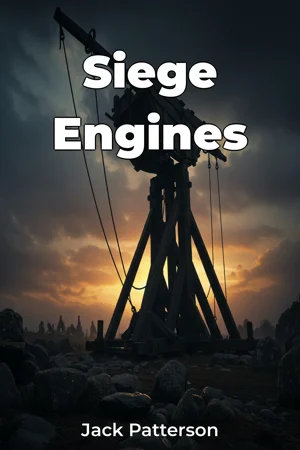
How did ancient armies overcome seemingly impenetrable fortifications? This book, "Siege Engines," delves into the mechanics, history, and impact of the powerful siege weaponry that shaped the course of ancient and medieval warfare. We will explore the ingenuity behind devices such as trebuchets, battering rams, and catapults, revealing how they were designed, constructed, and deployed to breach enemy defenses. This investigation spans from rudimentary siege tactics to the complex engineering feats that defined the era. This book addresses the critical role siege engines played in military history, and their significance extends beyond mere destruction. They drove innovation in mechanical engineering, influenced strategic thinking, and ultimately altered the balance of power between kingdoms and empires. Understanding their evolution provides insight into the technological capabilities and societal priorities of past civilizations. It is crucial to examine not only their mechanics but also the social and economic resources required to produce and maintain these war machines. Our central argument is that the development and effective use of siege engines were pivotal in determining the outcome of conflicts and the reshaping of political landscapes. These machines represent a tangible intersection of military strategy, engineering prowess, and socio-economic factors. This book comprehensively examines this interplay, demonstrating how siege warfare was not simply a matter of brute force, but a complex endeavor requiring careful planning, resource management, and technological expertise. "Siege Engines" is structured to provide a comprehensive understanding of the subject. First, we introduce the fundamental principles of siege warfare, examining the earliest attempts to overcome fortifications. Second, the book dedicates specific chapters to the major types of siege engines: trebuchets, catapults (including ballistae and onagers), and battering rams. These chapters detail their design variations, operational mechanics, and tactical deployment, using historical examples and diagrams. Third, we explore the logistics and resource management essential for sustaining siege operations, including quarrying stone, transporting materials, and maintaining a skilled workforce. Finally, the book culminates with an analysis of the impact of siege engines on military strategy, architectural design of fortifications, and broader societal developments. The book draws on a range of historical sources, including primary accounts from sieges, archaeological findings of siege engine components, and secondary analyses by military historians and engineers. Diagrams and reconstructions of siege engines are presented, alongside assessments of their performance based on historical accounts and modern engineering principles. The research methodologies include comparative analysis of different siege engine designs, examination of their effectiveness in specific historical contexts, and consideration of the social and economic factors that influenced their production and use. "Siege Engines" connects to several other fields of study. It intersects with archaeology through the examination of physical remains of siege engines and fortifications. It connects with social history by exploring the experiences of soldiers and civilians involved in sieges. It also closely links with mechanical engineering as it investigates the design principles and technological innovations behind these machines. This book distinguishes itself by offering a holistic perspective on siege engines, considering their mechanical aspects and their broader historical and societal context. It moves beyond simplistic descriptions to provide a detailed analysis of their impact on military strategy, technological development, and the evolution of fortifications. The tone of "Siege Engines" is informative and accessible, aiming to engage both general readers interested in military history and students of engineering or archaeology. The writing style is clear and concise, avoiding technical jargon where possible and providing explanations of key concepts. "Siege Engines" is intended for anyone interested in military history, medieval studies, or the history of engineering. It offers a valuable resource for understanding the technological and strategic aspects of warfare in the pre-modern era. Regarding genre conventions, the book adheres to the standards of military history by providing accurate historical accounts, detailed analyses of events, and clear explanations of military technologies and strategies. It acknowledges that scope does not allow for exhaustive detail on every siege engine variation or siege in history, but it focuses on the most significant examples to illustrate key concepts and trends. The information in "Siege Engines" can be applied practically by readers who are interested in historical reenactment, model building, or those seeking a deeper understanding of the technological innovations that shaped past civilizations. While the effectiveness of specific siege tactics is well-documented, ongoing debates exist regarding the relative importance of siege engines compared to other factors, such as logistics, diplomacy, and disease, in determining the outcome of sieges. This book acknowledges these debates and presents balanced assessments of the various factors involved.
How did ancient armies overcome seemingly impenetrable fortifications? This book, "Siege Engines," delves into the mechanics, history, and impact of the powerful siege weaponry that shaped the course of ancient and medieval warfare. We will explore the ingenuity behind devices such as trebuchets, battering rams, and catapults, revealing how they were designed, constructed, and deployed to breach enemy defenses. This investigation spans from rudimentary siege tactics to the complex engineering feats that defined the era. This book addresses the critical role siege engines played in military history, and their significance extends beyond mere destruction. They drove innovation in mechanical engineering, influenced strategic thinking, and ultimately altered the balance of power between kingdoms and empires. Understanding their evolution provides insight into the technological capabilities and societal priorities of past civilizations. It is crucial to examine not only their mechanics but also the social and economic resources required to produce and maintain these war machines. Our central argument is that the development and effective use of siege engines were pivotal in determining the outcome of conflicts and the reshaping of political landscapes. These machines represent a tangible intersection of military strategy, engineering prowess, and socio-economic factors. This book comprehensively examines this interplay, demonstrating how siege warfare was not simply a matter of brute force, but a complex endeavor requiring careful planning, resource management, and technological expertise. "Siege Engines" is structured to provide a comprehensive understanding of the subject. First, we introduce the fundamental principles of siege warfare, examining the earliest attempts to overcome fortifications. Second, the book dedicates specific chapters to the major types of siege engines: trebuchets, catapults (including ballistae and onagers), and battering rams. These chapters detail their design variations, operational mechanics, and tactical deployment, using historical examples and diagrams. Third, we explore the logistics and resource management essential for sustaining siege operations, including quarrying stone, transporting materials, and maintaining a skilled workforce. Finally, the book culminates with an analysis of the impact of siege engines on military strategy, architectural design of fortifications, and broader societal developments. The book draws on a range of historical sources, including primary accounts from sieges, archaeological findings of siege engine components, and secondary analyses by military historians and engineers. Diagrams and reconstructions of siege engines are presented, alongside assessments of their performance based on historical accounts and modern engineering principles. The research methodologies include comparative analysis of different siege engine designs, examination of their effectiveness in specific historical contexts, and consideration of the social and economic factors that influenced their production and use. "Siege Engines" connects to several other fields of study. It intersects with archaeology through the examination of physical remains of siege engines and fortifications. It connects with social history by exploring the experiences of soldiers and civilians involved in sieges. It also closely links with mechanical engineering as it investigates the design principles and technological innovations behind these machines. This book distinguishes itself by offering a holistic perspective on siege engines, considering their mechanical aspects and their broader historical and societal context. It moves beyond simplistic descriptions to provide a detailed analysis of their impact on military strategy, technological development, and the evolution of fortifications. The tone of "Siege Engines" is informative and accessible, aiming to engage both general readers interested in military history and students of engineering or archaeology. The writing style is clear and concise, avoiding technical jargon where possible and providing explanations of key concepts. "Siege Engines" is intended for anyone interested in military history, medieval studies, or the history of engineering. It offers a valuable resource for understanding the technological and strategic aspects of warfare in the pre-modern era. Regarding genre conventions, the book adheres to the standards of military history by providing accurate historical accounts, detailed analyses of events, and clear explanations of military technologies and strategies. It acknowledges that scope does not allow for exhaustive detail on every siege engine variation or siege in history, but it focuses on the most significant examples to illustrate key concepts and trends. The information in "Siege Engines" can be applied practically by readers who are interested in historical reenactment, model building, or those seeking a deeper understanding of the technological innovations that shaped past civilizations. While the effectiveness of specific siege tactics is well-documented, ongoing debates exist regarding the relative importance of siege engines compared to other factors, such as logistics, diplomacy, and disease, in determining the outcome of sieges. This book acknowledges these debates and presents balanced assessments of the various factors involved.
"Siege Engines" explores the history, mechanics, and impact of siege weaponry in ancient and medieval warfare. It details how machines like trebuchets and battering rams were vital in overcoming fortifications, influencing military strategy, and driving mechanical engineering innovations. For example, the book demonstrates how the construction of these engines required not only engineering knowledge but also significant social and economic resources. The book uniquely combines military history with mechanical engineering, revealing how siege engines were more than just tools of destruction. It examines their design, construction, and deployment, highlighting their role in reshaping political landscapes. The narrative begins with early siege tactics, progresses into detailed chapters on trebuchets, catapults, and battering rams, and concludes with an analysis of the impact of siege engines on military strategy, architecture, and society.
Book Details
ISBN
9788235252654
Publisher
Publifye AS
Your Licenses
You don't own any licenses for this book
Purchase a license below to unlock this book and download the EPUB.
Purchase License
Select a tier to unlock this book
Need bulk licensing?
Contact us for enterprise agreements.