
About This Book
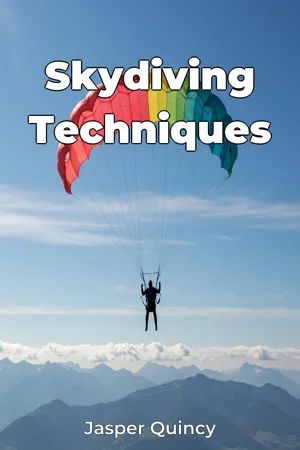
Have you ever wondered how skydivers transform a terrifying freefall into a graceful dance in the sky? This book, "Skydiving Techniques," delves into the science, skill, and artistry behind controlled aerial maneuvers and safe parachute deployment. We explore not just the act of jumping, but the intricate methods used to navigate the air, perform breathtaking formations, and ensure a secure landing. The central argument of this book is that skydiving is a discipline mastered through a combination of rigorous training, understanding aerodynamic principles, and employing precise control inputs. We demonstrate how these elements work in harmony to allow skydivers to defy gravity and achieve remarkable feats. This understanding is crucial, not only for aspiring skydivers but also for anyone interested in the physics of flight or the psychology of extreme sports. "Skydiving Techniques" begins with a brief history of skydiving, tracing its evolution from early parachute experiments to its modern-day form as both a recreational activity and a competitive sport. We then introduce fundamental concepts, including aerodynamics, body positioning, and the mechanics of parachute deployment. The book’s structure moves logically through the skydiving experience: from pre-jump preparation and aircraft exit techniques, to freefall control and canopy piloting, culminating in landing procedures and emergency protocols. A significant portion of the book is dedicated to the development of freefall skills. We examine how subtle adjustments to body posture can dramatically alter a skydiver's speed and direction. Detailed diagrams and photographs illustrate techniques for achieving stability, performing turns, and executing complex formations. Furthermore, we explore the science behind relative work, where multiple skydivers coordinate their movements to create intricate patterns in the sky. The second major area of focus is parachute handling. This section covers everything from inspecting and packing a parachute to mastering advanced canopy control techniques. We explain the different types of parachutes used in skydiving, their aerodynamic properties, and how to optimize their performance for different conditions. Emphasis is placed on safe landing procedures, including strategies for dealing with wind, obstacles, and other potential hazards. Throughout the book, theoretical explanations are supported by practical examples and case studies. We draw upon data from skydiving instructors, professional skydivers, and accident reports to illustrate key concepts and highlight the importance of safety protocols. Furthermore, we reference relevant research in fluid dynamics, materials science, and human factors to provide a comprehensive understanding of the sport. "Skydiving Techniques" also touches upon the interdisciplinary connections between skydiving and other fields. For example, the principles of aerodynamics are relevant to aviation engineering and meteorology. The study of human performance under extreme stress relates to psychology and sports medicine. The development of innovative parachute materials connects to textile engineering and materials science. This book distinguishes itself by providing a holistic and technically detailed yet accessible overview of skydiving. The tone is informative and educational, aiming to empower readers with the knowledge and understanding necessary to appreciate the complexities of the sport. The target audience includes aspiring skydivers, experienced jumpers seeking to refine their skills, and anyone with a general interest in aviation, extreme sports, or the science of flight. This book would also be valuable for instructors, coaches, and safety officers. The scope of "Skydiving Techniques" is limited to the core skills and knowledge required for safe and proficient skydiving. While we touch upon advanced techniques, such as wingsuit flying and BASE jumping, these topics are not covered in detail. This book, however, provides a solid foundation for pursuing these advanced disciplines. The information presented has numerous real-world applications. Skydivers can use the techniques described to improve their performance, enhance their safety, and pursue advanced qualifications. Instructors can use the book as a training aid and reference manual. Researchers can use the data and analysis to further their understanding of human performance and aerodynamic principles. While skydiving is generally considered a safe sport when practiced with proper training and adherence to safety regulations, ongoing debates surround issues, such as the use of advanced equipment and the regulation of drop zones. These controversies are addressed in the book in a thorough and unbiased way. "Skydiving Techniques" is more than just a guide to skydiving; it is an exploration of the science, skill, and human spirit that make this sport so captivating.
Have you ever wondered how skydivers transform a terrifying freefall into a graceful dance in the sky? This book, "Skydiving Techniques," delves into the science, skill, and artistry behind controlled aerial maneuvers and safe parachute deployment. We explore not just the act of jumping, but the intricate methods used to navigate the air, perform breathtaking formations, and ensure a secure landing. The central argument of this book is that skydiving is a discipline mastered through a combination of rigorous training, understanding aerodynamic principles, and employing precise control inputs. We demonstrate how these elements work in harmony to allow skydivers to defy gravity and achieve remarkable feats. This understanding is crucial, not only for aspiring skydivers but also for anyone interested in the physics of flight or the psychology of extreme sports. "Skydiving Techniques" begins with a brief history of skydiving, tracing its evolution from early parachute experiments to its modern-day form as both a recreational activity and a competitive sport. We then introduce fundamental concepts, including aerodynamics, body positioning, and the mechanics of parachute deployment. The book’s structure moves logically through the skydiving experience: from pre-jump preparation and aircraft exit techniques, to freefall control and canopy piloting, culminating in landing procedures and emergency protocols. A significant portion of the book is dedicated to the development of freefall skills. We examine how subtle adjustments to body posture can dramatically alter a skydiver's speed and direction. Detailed diagrams and photographs illustrate techniques for achieving stability, performing turns, and executing complex formations. Furthermore, we explore the science behind relative work, where multiple skydivers coordinate their movements to create intricate patterns in the sky. The second major area of focus is parachute handling. This section covers everything from inspecting and packing a parachute to mastering advanced canopy control techniques. We explain the different types of parachutes used in skydiving, their aerodynamic properties, and how to optimize their performance for different conditions. Emphasis is placed on safe landing procedures, including strategies for dealing with wind, obstacles, and other potential hazards. Throughout the book, theoretical explanations are supported by practical examples and case studies. We draw upon data from skydiving instructors, professional skydivers, and accident reports to illustrate key concepts and highlight the importance of safety protocols. Furthermore, we reference relevant research in fluid dynamics, materials science, and human factors to provide a comprehensive understanding of the sport. "Skydiving Techniques" also touches upon the interdisciplinary connections between skydiving and other fields. For example, the principles of aerodynamics are relevant to aviation engineering and meteorology. The study of human performance under extreme stress relates to psychology and sports medicine. The development of innovative parachute materials connects to textile engineering and materials science. This book distinguishes itself by providing a holistic and technically detailed yet accessible overview of skydiving. The tone is informative and educational, aiming to empower readers with the knowledge and understanding necessary to appreciate the complexities of the sport. The target audience includes aspiring skydivers, experienced jumpers seeking to refine their skills, and anyone with a general interest in aviation, extreme sports, or the science of flight. This book would also be valuable for instructors, coaches, and safety officers. The scope of "Skydiving Techniques" is limited to the core skills and knowledge required for safe and proficient skydiving. While we touch upon advanced techniques, such as wingsuit flying and BASE jumping, these topics are not covered in detail. This book, however, provides a solid foundation for pursuing these advanced disciplines. The information presented has numerous real-world applications. Skydivers can use the techniques described to improve their performance, enhance their safety, and pursue advanced qualifications. Instructors can use the book as a training aid and reference manual. Researchers can use the data and analysis to further their understanding of human performance and aerodynamic principles. While skydiving is generally considered a safe sport when practiced with proper training and adherence to safety regulations, ongoing debates surround issues, such as the use of advanced equipment and the regulation of drop zones. These controversies are addressed in the book in a thorough and unbiased way. "Skydiving Techniques" is more than just a guide to skydiving; it is an exploration of the science, skill, and human spirit that make this sport so captivating.
"Skydiving Techniques" offers a deep dive into the exhilarating world of skydiving, revealing the blend of science and skill required to transform freefall into a controlled aerial experience. It explores everything from the physics of aerodynamics impacting body positioning to understanding how subtle adjustments can dramatically alter a skydiver's speed and direction. Discover how skydivers master freefall skills and ensure safe parachute deployment, turning what appears to be a terrifying plunge into an elegant dance. The book progresses logically, beginning with the history of skydiving and fundamental concepts, before moving onto aircraft exit techniques, freefall control, and canopy piloting. A significant portion focuses on developing freefall skills and mastering parachute handling, including inspecting, packing, and optimizing parachute performance for various conditions. Theoretical explanations are reinforced with practical examples and case studies, drawing on insights from instructors, professional skydivers, and even accident reports. This approach ensures readers gain a comprehensive and technically detailed, yet accessible, understanding of this extreme sport.
Book Details
ISBN
9788235252548
Publisher
Publifye AS
Your Licenses
You don't own any licenses for this book
Purchase a license below to unlock this book and download the EPUB.
Purchase License
Select a tier to unlock this book
Need bulk licensing?
Contact us for enterprise agreements.