
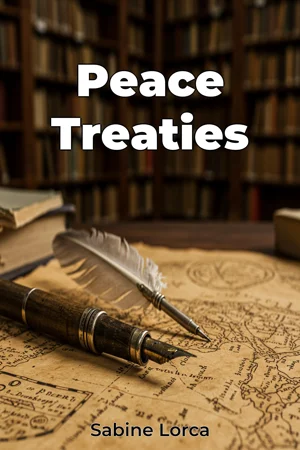
About This Book
Why do some peace treaties lead to lasting stability while others sow the seeds of future conflict? "Peace Treaties" delves into the intricate world of diplomatic agreements that have shaped the course of history, examining the negotiations, terms, and consequences of treaties designed to end wars and reshape international relations. This book analyzes how these agreements have succeeded or failed in creating enduring peace. This study centers on three pivotal areas: the dynamics of treaty negotiations, the specific terms included in peace agreements, and the long-term ramifications of these treaties on international relations. Understanding these elements is crucial for policymakers, historians, and anyone seeking to comprehend the complexities of conflict resolution and international stability. To fully understand the impact of peace treaties, a foundational knowledge of military history, world history, and international relations is helpful. The book draws upon these disciplines to provide a comprehensive analysis of the historical, political, and social factors that influence the success or failure of peace agreements. The central argument posits that the durability of a peace treaty is directly proportional to its ability to address the underlying causes of conflict, ensure equitable outcomes for all parties involved, and establish mechanisms for ongoing cooperation and dispute resolution. Treaties that ignore these critical elements are often destined to fail, leading to renewed hostilities or prolonged instability. The book is structured to methodically explore this argument. It begins by introducing key concepts and theories related to conflict resolution and treaty-making. It then examines several significant peace treaties throughout history, such as the Treaty of Westphalia, the Treaty of Versailles, and the Dayton Agreement – each chosen to illustrate different aspects of the negotiation process, the impact of specific terms, and the long-term consequences for the international order. Each case study will analyze the pre-war conditions, the negotiation strategies employed by the involved parties, the specific clauses of the treaty, and the subsequent political, economic, and social effects. The book culminates in a synthesis of these case studies, offering practical insights and policy recommendations for crafting more effective and enduring peace agreements. The analysis relies on a wide range of primary and secondary sources, including archival documents, diplomatic correspondence, military records, and scholarly publications. It also incorporates quantitative data, where available, to assess the economic and social impact of peace treaties on the affected regions. "Peace Treaties" bridges military history, world history, and international relations, offering insights relevant to political science. It demonstrates how the outcomes of military conflicts are ultimately shaped by political decisions and diplomatic negotiations; It connects historical events to contemporary challenges in international relations, such as conflict prevention and peacebuilding. The book adopts a rigorous yet accessible approach, presenting complex historical information in a clear and engaging manner. The goal is to provide a balanced and nuanced analysis of peace treaties, acknowledging both their successes and failures. The target audience includes students of history, political science, and international relations, as well as policymakers, diplomats, and anyone interested in understanding the dynamics of conflict resolution and the pursuit of peace. This book provides valuable insights into the challenges and opportunities of building a more stable and peaceful world. As a work of non-fiction, "Peace Treaties" adheres to the highest standards of historical accuracy and scholarly rigor. It presents a balanced and objective account of the events and issues discussed, avoiding partisan or ideological bias. The scope of this book is limited to major peace treaties that have had a significant impact on international relations. While it acknowledges the importance of other forms of conflict resolution, its primary focus is on the formal agreements that mark the end of wars and the beginning of a new era. The lessons learned from the study of peace treaties have practical applications for contemporary conflict resolution efforts. By understanding the factors that contribute to the success or failure of peace agreements, policymakers and diplomats can improve their ability to negotiate and implement durable solutions to conflicts around the world. The book also addresses ongoing debates about the effectiveness of different approaches to conflict resolution, such as power-sharing agreements, transitional justice mechanisms, and economic development programs. By examining the historical record, it provides a basis for informed discussion and evidence-based policymaking in this critical area.
Why do some peace treaties lead to lasting stability while others sow the seeds of future conflict? "Peace Treaties" delves into the intricate world of diplomatic agreements that have shaped the course of history, examining the negotiations, terms, and consequences of treaties designed to end wars and reshape international relations. This book analyzes how these agreements have succeeded or failed in creating enduring peace. This study centers on three pivotal areas: the dynamics of treaty negotiations, the specific terms included in peace agreements, and the long-term ramifications of these treaties on international relations. Understanding these elements is crucial for policymakers, historians, and anyone seeking to comprehend the complexities of conflict resolution and international stability. To fully understand the impact of peace treaties, a foundational knowledge of military history, world history, and international relations is helpful. The book draws upon these disciplines to provide a comprehensive analysis of the historical, political, and social factors that influence the success or failure of peace agreements. The central argument posits that the durability of a peace treaty is directly proportional to its ability to address the underlying causes of conflict, ensure equitable outcomes for all parties involved, and establish mechanisms for ongoing cooperation and dispute resolution. Treaties that ignore these critical elements are often destined to fail, leading to renewed hostilities or prolonged instability. The book is structured to methodically explore this argument. It begins by introducing key concepts and theories related to conflict resolution and treaty-making. It then examines several significant peace treaties throughout history, such as the Treaty of Westphalia, the Treaty of Versailles, and the Dayton Agreement – each chosen to illustrate different aspects of the negotiation process, the impact of specific terms, and the long-term consequences for the international order. Each case study will analyze the pre-war conditions, the negotiation strategies employed by the involved parties, the specific clauses of the treaty, and the subsequent political, economic, and social effects. The book culminates in a synthesis of these case studies, offering practical insights and policy recommendations for crafting more effective and enduring peace agreements. The analysis relies on a wide range of primary and secondary sources, including archival documents, diplomatic correspondence, military records, and scholarly publications. It also incorporates quantitative data, where available, to assess the economic and social impact of peace treaties on the affected regions. "Peace Treaties" bridges military history, world history, and international relations, offering insights relevant to political science. It demonstrates how the outcomes of military conflicts are ultimately shaped by political decisions and diplomatic negotiations; It connects historical events to contemporary challenges in international relations, such as conflict prevention and peacebuilding. The book adopts a rigorous yet accessible approach, presenting complex historical information in a clear and engaging manner. The goal is to provide a balanced and nuanced analysis of peace treaties, acknowledging both their successes and failures. The target audience includes students of history, political science, and international relations, as well as policymakers, diplomats, and anyone interested in understanding the dynamics of conflict resolution and the pursuit of peace. This book provides valuable insights into the challenges and opportunities of building a more stable and peaceful world. As a work of non-fiction, "Peace Treaties" adheres to the highest standards of historical accuracy and scholarly rigor. It presents a balanced and objective account of the events and issues discussed, avoiding partisan or ideological bias. The scope of this book is limited to major peace treaties that have had a significant impact on international relations. While it acknowledges the importance of other forms of conflict resolution, its primary focus is on the formal agreements that mark the end of wars and the beginning of a new era. The lessons learned from the study of peace treaties have practical applications for contemporary conflict resolution efforts. By understanding the factors that contribute to the success or failure of peace agreements, policymakers and diplomats can improve their ability to negotiate and implement durable solutions to conflicts around the world. The book also addresses ongoing debates about the effectiveness of different approaches to conflict resolution, such as power-sharing agreements, transitional justice mechanisms, and economic development programs. By examining the historical record, it provides a basis for informed discussion and evidence-based policymaking in this critical area.
"Peace Treaties" examines the complex realm of diplomatic agreements, analyzing how treaties designed to end wars either foster lasting stability or sow the seeds of future conflict. It explores the dynamics of treaty negotiations, the specific terms included in peace agreements, and their long-term ramifications on international relations. The book argues that a treaty's durability hinges on its ability to address the root causes of conflict, ensure equitable outcomes, and establish mechanisms for ongoing cooperation. The book stands out by bridging military history, world history, and international relations, providing insights applicable to political science. It analyzes key peace treaties throughout history, such as the Treaty of Westphalia and the Treaty of Versailles, to illustrate different facets of the negotiation process and the impact of specific terms. By examining these case studies, the book offers valuable lessons for contemporary conflict resolution efforts, demonstrating how outcomes of military conflicts are ultimately shaped by political decisions and diplomatic negotiations. Structured to methodically explore its central argument, the book begins by introducing key concepts and theories related to conflict resolution and treaty-making. It then delves into significant peace treaties throughout history, culminating in a synthesis of these case studies. This approach provides practical insights and policy recommendations for crafting more effective and enduring peace agreements, making it a valuable resource for students, policymakers, and anyone interested in understanding the pursuit of peace.
Book Details
ISBN
9788235252463
Publisher
Publifye AS
Your Licenses
You don't own any licenses for this book
Purchase a license below to unlock this book and download the EPUB.
Purchase License
Select a tier to unlock this book
Need bulk licensing?
Contact us for enterprise agreements.