
About This Book
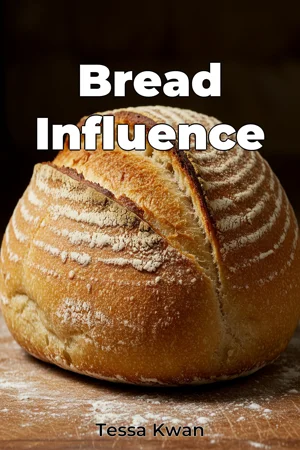
Have you ever considered the profound influence of something as simple as bread? "Bread Influence" explores the captivating journey of bread, from its humble origins as rudimentary flatbreads in ancient civilizations to its modern-day status as a staple food and artisanal delicacy. This book delves into the multifaceted story of bread, examining not only its culinary evolution but also its significant cultural, social, and economic impact throughout history. This book is structured around three key concepts: the origins and diversification of bread-making techniques, the socio-cultural role of bread in different societies, and the modern resurgence of artisanal baking. Understanding these topics is crucial because bread has acted as a consistent thread connecting disparate cultures, shaping traditions, impacting economies, and reflecting societal values. To fully appreciate bread's journey, we will explore the historical context of early agriculture, the development of milling technologies, and the rise of settled societies. No prior knowledge of culinary history is required; the book provides all necessary background information. The central argument of "Bread Influence" is that bread is far more than just a foodstuff; it is a dynamic cultural artifact that mirrors and shapes human civilization. By examining bread's evolution, we gain insights into the development of agriculture, trade, social structures, and even religious practices. This argument is important because it challenges the often-overlooked significance of everyday foods in understanding human history. The book unfolds in a logical progression. First, it establishes the fundamental role of grains in early human diets and traces the invention of the first flatbreads in ancient Mesopotamia and Egypt. Then, it follows bread's diversification across different cultures, examining the evolution of leavened breads in Europe, the unique bread-making traditions of Asia, and the role of bread in religious rituals. Finally, the book analyzes the impact of industrialization on bread production, the subsequent decline in quality, and the recent revival of artisanal baking methods. The evidence presented in "Bread Influence" is drawn from a diverse range of sources, including archaeological findings, historical texts, ethnographic studies, and culinary analyses. Unique data sources include ancient grain samples, medieval bakery records, and interviews with contemporary bakers. Interdisciplinary connections enhance the book's argument. Firstly, history provides the chronological framework for understanding bread's evolution. Secondly, sociology illuminates bread's role in social rituals, class structures, and cultural identity. Thirdly, economics explains bread's influence on trade, food security, and agricultural policies. "Bread Influence" stands out due to its comprehensive scope and its interdisciplinary approach. It goes beyond a simple recounting of bread recipes and instead offers a nuanced analysis of bread's cultural, social, and economic significance. The overall tone is informative and engaging, blending historical accuracy with accessible prose. This makes the book appealing to a broad audience while maintaining scholarly rigor. The intended readership includes food enthusiasts, history buffs, culinary students, and anyone interested in the cultural significance of food. This book offers valuable insights into the history of food, cultural exchange, and the evolution of human civilization. As a work of non-fiction, "Bread Influence" adheres to principles of accuracy, objectivity, and evidence-based analysis. It distinguishes itself from cookbooks by focusing on the historical, social, and cultural context of bread rather than providing recipes. The book's scope is deliberately broad, covering several millennia and numerous cultures. However, it does not delve into specific regional variations of bread-making within each culture due to space constraints. Readers can apply the information in "Bread Influence" to better understand the cultural significance of food in their own lives and to appreciate the rich history behind everyday staples. Furthermore, bakers and culinary professionals can draw inspiration from historical techniques and traditions to enhance their craft. While "Bread Influence" aims to present a balanced perspective, it acknowledges ongoing debates surrounding the health impacts of modern processed bread and the sustainability of industrial agriculture. These debates are addressed in the context of broader discussions about food systems and cultural values.
Have you ever considered the profound influence of something as simple as bread? "Bread Influence" explores the captivating journey of bread, from its humble origins as rudimentary flatbreads in ancient civilizations to its modern-day status as a staple food and artisanal delicacy. This book delves into the multifaceted story of bread, examining not only its culinary evolution but also its significant cultural, social, and economic impact throughout history. This book is structured around three key concepts: the origins and diversification of bread-making techniques, the socio-cultural role of bread in different societies, and the modern resurgence of artisanal baking. Understanding these topics is crucial because bread has acted as a consistent thread connecting disparate cultures, shaping traditions, impacting economies, and reflecting societal values. To fully appreciate bread's journey, we will explore the historical context of early agriculture, the development of milling technologies, and the rise of settled societies. No prior knowledge of culinary history is required; the book provides all necessary background information. The central argument of "Bread Influence" is that bread is far more than just a foodstuff; it is a dynamic cultural artifact that mirrors and shapes human civilization. By examining bread's evolution, we gain insights into the development of agriculture, trade, social structures, and even religious practices. This argument is important because it challenges the often-overlooked significance of everyday foods in understanding human history. The book unfolds in a logical progression. First, it establishes the fundamental role of grains in early human diets and traces the invention of the first flatbreads in ancient Mesopotamia and Egypt. Then, it follows bread's diversification across different cultures, examining the evolution of leavened breads in Europe, the unique bread-making traditions of Asia, and the role of bread in religious rituals. Finally, the book analyzes the impact of industrialization on bread production, the subsequent decline in quality, and the recent revival of artisanal baking methods. The evidence presented in "Bread Influence" is drawn from a diverse range of sources, including archaeological findings, historical texts, ethnographic studies, and culinary analyses. Unique data sources include ancient grain samples, medieval bakery records, and interviews with contemporary bakers. Interdisciplinary connections enhance the book's argument. Firstly, history provides the chronological framework for understanding bread's evolution. Secondly, sociology illuminates bread's role in social rituals, class structures, and cultural identity. Thirdly, economics explains bread's influence on trade, food security, and agricultural policies. "Bread Influence" stands out due to its comprehensive scope and its interdisciplinary approach. It goes beyond a simple recounting of bread recipes and instead offers a nuanced analysis of bread's cultural, social, and economic significance. The overall tone is informative and engaging, blending historical accuracy with accessible prose. This makes the book appealing to a broad audience while maintaining scholarly rigor. The intended readership includes food enthusiasts, history buffs, culinary students, and anyone interested in the cultural significance of food. This book offers valuable insights into the history of food, cultural exchange, and the evolution of human civilization. As a work of non-fiction, "Bread Influence" adheres to principles of accuracy, objectivity, and evidence-based analysis. It distinguishes itself from cookbooks by focusing on the historical, social, and cultural context of bread rather than providing recipes. The book's scope is deliberately broad, covering several millennia and numerous cultures. However, it does not delve into specific regional variations of bread-making within each culture due to space constraints. Readers can apply the information in "Bread Influence" to better understand the cultural significance of food in their own lives and to appreciate the rich history behind everyday staples. Furthermore, bakers and culinary professionals can draw inspiration from historical techniques and traditions to enhance their craft. While "Bread Influence" aims to present a balanced perspective, it acknowledges ongoing debates surrounding the health impacts of modern processed bread and the sustainability of industrial agriculture. These debates are addressed in the context of broader discussions about food systems and cultural values.
"Bread Influence" explores the captivating history of bread, revealing its profound impact on culture, society, and the economy. From its ancient origins as simple flatbreads to its modern-day artisanal forms, bread has been a consistent thread connecting civilizations. The book highlights how bread acted as a reflection of societal values and shaped traditions across the globe. The book examines the origins of bread-making, its socio-cultural roles, and the resurgence of artisanal baking. Did you know that bread played a significant role in early agriculture and the development of settled societies? Or that it has been a key element in religious rituals across different cultures? By exploring these aspects, "Bread Influence" demonstrates that bread is more than just sustenance; it is a dynamic cultural artifact. The book progresses logically, starting with the invention of flatbreads in ancient Mesopotamia and Egypt, and then following bread's diversification across cultures and its evolution through industrialization to the artisanal renaissance. Drawing from archaeological findings, historical texts, and ethnographic studies, "Bread Influence" provides a comprehensive and interdisciplinary analysis that will appeal to food enthusiasts, history buffs, and anyone interested in the cultural significance of food.
Book Details
ISBN
9788235252395
Publisher
Publifye AS
Your Licenses
You don't own any licenses for this book
Purchase a license below to unlock this book and download the EPUB.
Purchase License
Select a tier to unlock this book
Need bulk licensing?
Contact us for enterprise agreements.