
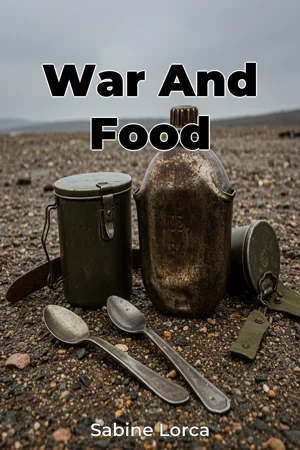
About This Book
How has the quest for sustenance shaped the outcomes of military campaigns throughout history? "War and Food" delves into the intricate relationship between food shortages, rationing practices, food preservation techniques, and their profound impact on military history. This book offers a comprehensive examination of how access to, or the deprivation of, food has dictated military strategy, influenced troop morale, and ultimately determined the fate of nations in times of war. The central argument posits that food supply chains, agricultural policies, and the innovative solutions developed to feed armies represent critical, yet often overlooked, factors in understanding the trajectory of military conflicts. This perspective challenges traditional military histories that primarily focus on battlefield tactics and leadership, instead emphasizing the logistical and societal underpinnings of warfare. The book is structured to explore this argument through several key stages. First, the introductory chapters establish the fundamental concepts of wartime food economics, examining the historical reliance on local food resources and the gradual shift toward complex supply lines. Subsequent sections investigate specific case studies across different eras and geographical locations. One major section analyzes the impact of food scarcity on troop morale and combat effectiveness during the Napoleonic Wars, highlighting the consequences of disrupted supply routes and the rise of foraging as a survival strategy. Another section focuses on the technological advancements in food preservation, such as canning and dehydration, that revolutionized military logistics during the American Civil War and beyond. Finally, the concluding chapters synthesize these historical examples to offer insights into modern military food policies and the ongoing challenges of ensuring food security in conflict zones. The evidence presented is drawn from a diverse range of primary sources, including military logistics reports, soldiers' diaries, government rationing policies, and agricultural production statistics. These sources are supplemented by scholarly analyses of food systems, agricultural history, and military strategy, providing a robust and multi-faceted perspective. "War and Food" connects to several other fields of study, including economics, sociology, and agricultural science. The book's exploration of wartime resource allocation provides valuable insights into economic principles, while its analysis of food rationing and distribution sheds light on social inequalities and community resilience. Furthermore, the discussion of agricultural innovations and their impact on military capabilities aligns with the field of agricultural science and its historical development. This book is aimed at a broad audience, including military historians, food studies scholars, and anyone interested in the intersection of history, food, and society. It provides a unique perspective on military events. While the book aims for a global perspective, it focuses primarily on Western military campaigns and food systems due to the availability of detailed historical records. This intentional limitation allows for a more in-depth analysis of specific case studies. The information presented in "War and Food" has real-world applications for understanding contemporary food security challenges in conflict zones and for informing military logistics strategies in the 21st century. The book also addresses ongoing debates surrounding the ethics of food warfare and the responsibility of governments to ensure food access for both military personnel and civilian populations during times of conflict. The writing style is accessible and engaging, designed to appeal to a broad readership while maintaining scholarly rigor.
How has the quest for sustenance shaped the outcomes of military campaigns throughout history? "War and Food" delves into the intricate relationship between food shortages, rationing practices, food preservation techniques, and their profound impact on military history. This book offers a comprehensive examination of how access to, or the deprivation of, food has dictated military strategy, influenced troop morale, and ultimately determined the fate of nations in times of war. The central argument posits that food supply chains, agricultural policies, and the innovative solutions developed to feed armies represent critical, yet often overlooked, factors in understanding the trajectory of military conflicts. This perspective challenges traditional military histories that primarily focus on battlefield tactics and leadership, instead emphasizing the logistical and societal underpinnings of warfare. The book is structured to explore this argument through several key stages. First, the introductory chapters establish the fundamental concepts of wartime food economics, examining the historical reliance on local food resources and the gradual shift toward complex supply lines. Subsequent sections investigate specific case studies across different eras and geographical locations. One major section analyzes the impact of food scarcity on troop morale and combat effectiveness during the Napoleonic Wars, highlighting the consequences of disrupted supply routes and the rise of foraging as a survival strategy. Another section focuses on the technological advancements in food preservation, such as canning and dehydration, that revolutionized military logistics during the American Civil War and beyond. Finally, the concluding chapters synthesize these historical examples to offer insights into modern military food policies and the ongoing challenges of ensuring food security in conflict zones. The evidence presented is drawn from a diverse range of primary sources, including military logistics reports, soldiers' diaries, government rationing policies, and agricultural production statistics. These sources are supplemented by scholarly analyses of food systems, agricultural history, and military strategy, providing a robust and multi-faceted perspective. "War and Food" connects to several other fields of study, including economics, sociology, and agricultural science. The book's exploration of wartime resource allocation provides valuable insights into economic principles, while its analysis of food rationing and distribution sheds light on social inequalities and community resilience. Furthermore, the discussion of agricultural innovations and their impact on military capabilities aligns with the field of agricultural science and its historical development. This book is aimed at a broad audience, including military historians, food studies scholars, and anyone interested in the intersection of history, food, and society. It provides a unique perspective on military events. While the book aims for a global perspective, it focuses primarily on Western military campaigns and food systems due to the availability of detailed historical records. This intentional limitation allows for a more in-depth analysis of specific case studies. The information presented in "War and Food" has real-world applications for understanding contemporary food security challenges in conflict zones and for informing military logistics strategies in the 21st century. The book also addresses ongoing debates surrounding the ethics of food warfare and the responsibility of governments to ensure food access for both military personnel and civilian populations during times of conflict. The writing style is accessible and engaging, designed to appeal to a broad readership while maintaining scholarly rigor.
War And Food examines the critical role of food in shaping military outcomes throughout history, arguing that access to sustenance has often dictated military strategy and troop morale. Moving beyond traditional battlefield narratives, the book emphasizes the logistical and societal factors underpinning warfare, illustrated by the historical reliance on local food resources and the evolution toward complex supply lines. War And Food explores how food shortages and rationing have directly influenced the success or failure of military campaigns. The book progresses through key stages, beginning with the fundamentals of wartime food economics before delving into specific case studies. For example, the impact of food scarcity on troop morale during the Napoleonic Wars highlights the critical consequences of disrupted supply routes which forced the rise of foraging as a survival strategy. Later, technological advancements in food preservation, like canning during the American Civil War, revolutionized military logistics. Ultimately, War And Food synthesizes historical examples to provide insights into modern military food policies and the ongoing challenges of food security in conflict zones. By drawing from diverse primary sources, including military logistics reports and soldiers' diaries, War And Food provides a unique perspective on military events. The book's accessible style and robust analysis make it valuable to military historians, food studies scholars, and anyone interested in the intersection of history, food, and society.
Book Details
ISBN
9788235252364
Publisher
Publifye AS
Your Licenses
You don't own any licenses for this book
Purchase a license below to unlock this book and download the EPUB.
Purchase License
Select a tier to unlock this book
Need bulk licensing?
Contact us for enterprise agreements.