
About This Book
Are you seeking a time-efficient and effective method to enhance both your strength and cardiovascular fitness simultaneously? "Circuit Training Guide" provides a comprehensive exploration of circuit training, a dynamic workout approach integrating strength and cardio exercises for full-body conditioning. This book will arm you with the knowledge and tools necessary to design and implement circuit training programs tailored to your specific fitness goals and experience level. This guide emphasizes two key topics: the physiological benefits of circuit training and the practical application of circuit design principles. Understanding the physiological benefits, such as increased metabolic rate, improved cardiovascular health, and enhanced muscular endurance, is crucial for motivating consistent participation. The practical application of circuit design principles ensures that workouts are both safe and effective, maximizing results while minimizing the risk of injury. Circuit training's roots can be traced to the mid-20th century, evolving from military fitness programs to a widely adopted training method across various sports and fitness disciplines. A basic understanding of exercise physiology, including muscular mechanics and cardiovascular function, will be beneficial, although the book provides foundational information to support readers of all levels. The central argument of "Circuit Training Guide" is that circuit training offers a uniquely efficient and adaptable method for achieving comprehensive fitness improvements. This argument is vital because it challenges the conventional separation of strength and cardio training, presenting an integrated approach suitable for individuals with diverse fitness objectives and time constraints. The book's structure is designed to guide the reader progressively through the fundamentals and advanced applications of circuit training. The book initially introduces the core concepts, defining circuit training, explaining its historical context, and outlining its advantages over traditional training methods. Then, it dives into the physiological mechanisms underlying the benefits of circuit training, backed by scientific research and data, exploring its impact on cardiovascular health, muscular strength and endurance, and metabolic efficiency. We will guide you through designing effective circuits, detailing exercise selection, sequencing, and progression techniques. This section provides practical guidelines and templates for creating customized workouts tailored to different fitness levels and goals. The book provides strategies for modifying circuit training to accommodate various fitness levels, injuries, and equipment limitations, ensuring inclusivity and accessibility. The book presents evidence from exercise science research, demonstrating the effectiveness of circuit training for improving various fitness parameters. It incorporates data from studies on metabolic rate, cardiovascular function, and muscular strength, providing a fact-based foundation for the book's claims. "Circuit Training Guide" connects to several fields, including exercise physiology, sports science, and rehabilitation. Understanding the physiological responses to exercise informs the design of effective training programs. Principles from sports science optimize performance and prevent injuries. Rehabilitation concepts help adapt circuit training for individuals recovering from injuries. This book offers a practical, science-based approach, emphasizing adaptability and individualization. This perspective differentiates it from generic fitness guides by providing readers with the knowledge to create and modify circuit training programs to meet their unique needs and goals. The book adopts a conversational yet informative tone, making complex concepts accessible to a broad audience. It balances scientific rigor with practical advice, ensuring that the information is both credible and actionable. "Circuit Training Guide" is intended for fitness enthusiasts, athletes, coaches, and healthcare professionals seeking an efficient and effective training method. It is especially valuable for those with limited time or resources who want to achieve comprehensive fitness improvements. As a health and fitness guide, the book adheres to scientific accuracy, practical applicability, and safety considerations. It provides evidence-based recommendations and emphasizes the importance of proper form and technique to prevent injuries. The scope of the book covers a wide range of circuit training applications, from general fitness to sports-specific conditioning. However, it does not delve into highly specialized areas such as advanced Olympic weightlifting or specialized rehabilitation protocols, maintaining a focus on broadly applicable principles and techniques. The information in "Circuit Training Guide" can be applied practically in various settings, including home workouts, gym-based training, and group fitness classes. It provides readers with the knowledge to design and implement effective circuit training programs for themselves and others. While circuit training is widely accepted, there are ongoing debates regarding the optimal intensity, duration, and exercise selection for different populations and goals. The book addresses these debates by presenting a balanced perspective and providing evidence-based recommendations to guide decision-making.
Are you seeking a time-efficient and effective method to enhance both your strength and cardiovascular fitness simultaneously? "Circuit Training Guide" provides a comprehensive exploration of circuit training, a dynamic workout approach integrating strength and cardio exercises for full-body conditioning. This book will arm you with the knowledge and tools necessary to design and implement circuit training programs tailored to your specific fitness goals and experience level. This guide emphasizes two key topics: the physiological benefits of circuit training and the practical application of circuit design principles. Understanding the physiological benefits, such as increased metabolic rate, improved cardiovascular health, and enhanced muscular endurance, is crucial for motivating consistent participation. The practical application of circuit design principles ensures that workouts are both safe and effective, maximizing results while minimizing the risk of injury. Circuit training's roots can be traced to the mid-20th century, evolving from military fitness programs to a widely adopted training method across various sports and fitness disciplines. A basic understanding of exercise physiology, including muscular mechanics and cardiovascular function, will be beneficial, although the book provides foundational information to support readers of all levels. The central argument of "Circuit Training Guide" is that circuit training offers a uniquely efficient and adaptable method for achieving comprehensive fitness improvements. This argument is vital because it challenges the conventional separation of strength and cardio training, presenting an integrated approach suitable for individuals with diverse fitness objectives and time constraints. The book's structure is designed to guide the reader progressively through the fundamentals and advanced applications of circuit training. The book initially introduces the core concepts, defining circuit training, explaining its historical context, and outlining its advantages over traditional training methods. Then, it dives into the physiological mechanisms underlying the benefits of circuit training, backed by scientific research and data, exploring its impact on cardiovascular health, muscular strength and endurance, and metabolic efficiency. We will guide you through designing effective circuits, detailing exercise selection, sequencing, and progression techniques. This section provides practical guidelines and templates for creating customized workouts tailored to different fitness levels and goals. The book provides strategies for modifying circuit training to accommodate various fitness levels, injuries, and equipment limitations, ensuring inclusivity and accessibility. The book presents evidence from exercise science research, demonstrating the effectiveness of circuit training for improving various fitness parameters. It incorporates data from studies on metabolic rate, cardiovascular function, and muscular strength, providing a fact-based foundation for the book's claims. "Circuit Training Guide" connects to several fields, including exercise physiology, sports science, and rehabilitation. Understanding the physiological responses to exercise informs the design of effective training programs. Principles from sports science optimize performance and prevent injuries. Rehabilitation concepts help adapt circuit training for individuals recovering from injuries. This book offers a practical, science-based approach, emphasizing adaptability and individualization. This perspective differentiates it from generic fitness guides by providing readers with the knowledge to create and modify circuit training programs to meet their unique needs and goals. The book adopts a conversational yet informative tone, making complex concepts accessible to a broad audience. It balances scientific rigor with practical advice, ensuring that the information is both credible and actionable. "Circuit Training Guide" is intended for fitness enthusiasts, athletes, coaches, and healthcare professionals seeking an efficient and effective training method. It is especially valuable for those with limited time or resources who want to achieve comprehensive fitness improvements. As a health and fitness guide, the book adheres to scientific accuracy, practical applicability, and safety considerations. It provides evidence-based recommendations and emphasizes the importance of proper form and technique to prevent injuries. The scope of the book covers a wide range of circuit training applications, from general fitness to sports-specific conditioning. However, it does not delve into highly specialized areas such as advanced Olympic weightlifting or specialized rehabilitation protocols, maintaining a focus on broadly applicable principles and techniques. The information in "Circuit Training Guide" can be applied practically in various settings, including home workouts, gym-based training, and group fitness classes. It provides readers with the knowledge to design and implement effective circuit training programs for themselves and others. While circuit training is widely accepted, there are ongoing debates regarding the optimal intensity, duration, and exercise selection for different populations and goals. The book addresses these debates by presenting a balanced perspective and providing evidence-based recommendations to guide decision-making.
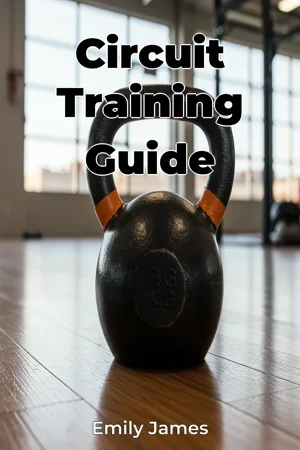
"Circuit Training Guide" offers a comprehensive exploration of circuit training, a highly effective method for achieving full-body conditioning by integrating strength and cardiovascular exercises. This approach boosts your metabolic rate, enhances muscular endurance, and improves overall cardiovascular fitness, all in a time-efficient manner. The book traces circuit training's evolution from military fitness programs to its current widespread adoption, highlighting its adaptability for various fitness goals and levels. This guide emphasizes both the physiological benefits and practical applications of circuit design. It progresses from foundational concepts to advanced techniques, ensuring readers understand not just *what* to do, but *why*. You'll learn how to select and sequence exercises effectively, tailoring workouts to your specific needs, whether you're a fitness enthusiast, athlete, or healthcare professional. The book also addresses how to modify circuit training for different fitness levels, injuries, or equipment limitations, making it a uniquely valuable resource for anyone seeking comprehensive fitness improvements.
Book Details
ISBN
9788235252234
Publisher
Publifye AS
Your Licenses
You don't own any licenses for this book
Purchase a license below to unlock this book and download the EPUB.
Purchase License
Select a tier to unlock this book
Need bulk licensing?
Contact us for enterprise agreements.