
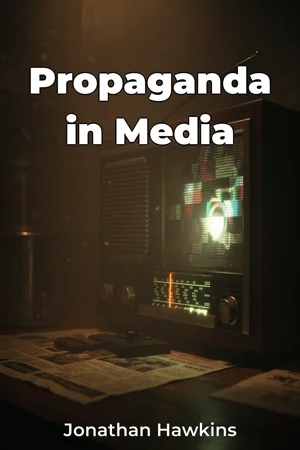
About This Book
How do governments and organizations shape our perceptions of reality? "Propaganda in Media" delves into the pervasive influence of persuasive communication, examining its deployment by state actors, political campaigns, and corporate entities. This book is essential for understanding the subtle yet powerful forces shaping public opinion in the modern world. This book explores three key areas: wartime propaganda, political messaging, and public relations tactics. Each area is important because these strategies directly affect political discourse, influence policy decisions, and ultimately shape our understanding of critical events. By deconstructing these methods, we aim to empower readers to critically evaluate the information they encounter daily. To understand modern propaganda, this book begins by establishing a historical context, tracing the evolution of persuasive techniques from the early 20th century through to the digital age. It will also explain basic concepts in rhetoric, media studies, and political science to provide a solid foundation for understanding the arguments. The central argument of this book is that propaganda is not simply about spreading falsehoods; it is a sophisticated system of communication designed to cultivate specific beliefs and behaviors. Recognizing the underlying mechanisms of propaganda is crucial for maintaining an informed and engaged citizenry. The book is structured in three parts. Part one introduces the fundamental concepts of propaganda, explaining its various forms, channels, and psychological underpinnings. Part two examines specific case studies, dissecting historical and contemporary examples of wartime propaganda, political campaigns, and corporate public relations. Part three focuses on the ethics of persuasion and discusses strategies for critical media consumption, offering tools for readers to identify and resist manipulative messaging. The culmination of the argument centers on the idea that media literacy is a vital skill in the 21st century, essential for protecting democratic values and individual autonomy. Supporting this analysis, the book draws on a range of sources, including primary documents from propaganda campaigns, academic research in media studies and political psychology, and statistical analyses of media consumption patterns. Unique data will also be presented from analyses of social media trends during significant political events to provide a contemporary perspective. This project connects to several other fields, including history by examining the historical precedents for modern propaganda techniques, sociology through exploring how propaganda shapes social norms and behaviors, and psychology by investigating the cognitive biases that make individuals susceptible to persuasive messaging. These interdisciplinary connections enrich the analysis and provide a holistic understanding. This book adopts a balanced approach, avoiding sensationalism and presenting a nuanced view of propaganda's role in society. The writing style is accessible yet rigorous, making complex concepts understandable to a broad audience while maintaining academic integrity. The target audience includes students of political science, journalism, and communications, as well as anyone interested in understanding how information shapes our world. This book promotes critical thinking and will be valuable to anyone seeking to navigate the complexities of modern media. As a work in political journalism, this book adheres to standards of accuracy, objectivity, and ethical reporting. While the scope of the book is broad, covering a wide range of case studies and examples, it focuses primarily on propaganda in democratic societies, acknowledging that the dynamics of persuasion may differ in authoritarian regimes. The book also explores the practical applications of media literacy skills, providing readers with tools to analyze information sources, identify bias, and engage in constructive dialogue. Finally, the book also engages with ongoing debates about the role of social media platforms in amplifying propaganda and the ethical responsibilities of journalists and policymakers in combating disinformation. It acknowledges the complexities and uncertainties surrounding these issues, offering a framework for navigating these challenges.
How do governments and organizations shape our perceptions of reality? "Propaganda in Media" delves into the pervasive influence of persuasive communication, examining its deployment by state actors, political campaigns, and corporate entities. This book is essential for understanding the subtle yet powerful forces shaping public opinion in the modern world. This book explores three key areas: wartime propaganda, political messaging, and public relations tactics. Each area is important because these strategies directly affect political discourse, influence policy decisions, and ultimately shape our understanding of critical events. By deconstructing these methods, we aim to empower readers to critically evaluate the information they encounter daily. To understand modern propaganda, this book begins by establishing a historical context, tracing the evolution of persuasive techniques from the early 20th century through to the digital age. It will also explain basic concepts in rhetoric, media studies, and political science to provide a solid foundation for understanding the arguments. The central argument of this book is that propaganda is not simply about spreading falsehoods; it is a sophisticated system of communication designed to cultivate specific beliefs and behaviors. Recognizing the underlying mechanisms of propaganda is crucial for maintaining an informed and engaged citizenry. The book is structured in three parts. Part one introduces the fundamental concepts of propaganda, explaining its various forms, channels, and psychological underpinnings. Part two examines specific case studies, dissecting historical and contemporary examples of wartime propaganda, political campaigns, and corporate public relations. Part three focuses on the ethics of persuasion and discusses strategies for critical media consumption, offering tools for readers to identify and resist manipulative messaging. The culmination of the argument centers on the idea that media literacy is a vital skill in the 21st century, essential for protecting democratic values and individual autonomy. Supporting this analysis, the book draws on a range of sources, including primary documents from propaganda campaigns, academic research in media studies and political psychology, and statistical analyses of media consumption patterns. Unique data will also be presented from analyses of social media trends during significant political events to provide a contemporary perspective. This project connects to several other fields, including history by examining the historical precedents for modern propaganda techniques, sociology through exploring how propaganda shapes social norms and behaviors, and psychology by investigating the cognitive biases that make individuals susceptible to persuasive messaging. These interdisciplinary connections enrich the analysis and provide a holistic understanding. This book adopts a balanced approach, avoiding sensationalism and presenting a nuanced view of propaganda's role in society. The writing style is accessible yet rigorous, making complex concepts understandable to a broad audience while maintaining academic integrity. The target audience includes students of political science, journalism, and communications, as well as anyone interested in understanding how information shapes our world. This book promotes critical thinking and will be valuable to anyone seeking to navigate the complexities of modern media. As a work in political journalism, this book adheres to standards of accuracy, objectivity, and ethical reporting. While the scope of the book is broad, covering a wide range of case studies and examples, it focuses primarily on propaganda in democratic societies, acknowledging that the dynamics of persuasion may differ in authoritarian regimes. The book also explores the practical applications of media literacy skills, providing readers with tools to analyze information sources, identify bias, and engage in constructive dialogue. Finally, the book also engages with ongoing debates about the role of social media platforms in amplifying propaganda and the ethical responsibilities of journalists and policymakers in combating disinformation. It acknowledges the complexities and uncertainties surrounding these issues, offering a framework for navigating these challenges.
"Propaganda in Media" examines how political messaging, wartime propaganda, and public relations shape public opinion. It explores how governments and organizations use persuasive communication to influence our perceptions, highlighting that propaganda isn't just about falsehoods; it's a sophisticated system designed to cultivate specific beliefs. For example, the book might expose how subtle cues in political campaigns or public relations influence policy decisions. Understanding these tactics is crucial for an informed citizenry. The book traces the evolution of propaganda from the early 20th century to the digital age, explaining basic concepts in rhetoric, media studies, and political science. Structured in three parts, it introduces propaganda's forms and psychological underpinnings, examines case studies, and focuses on media literacy. By providing tools for critical media consumption, it empowers readers to identify and resist manipulative messaging.
Book Details
ISBN
9788235252180
Publisher
Publifye AS
Your Licenses
You don't own any licenses for this book
Purchase a license below to unlock this book and download the EPUB.
Purchase License
Select a tier to unlock this book
Need bulk licensing?
Contact us for enterprise agreements.