
About This Book
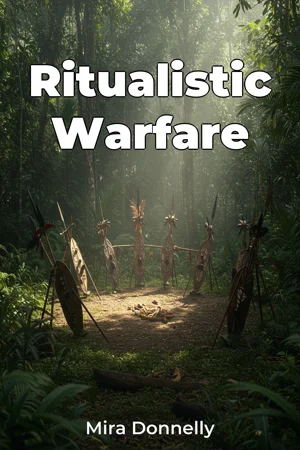
Why did indigenous societies engage in warfare, and what can their practices tell us about the nature of conflict, alliance, and identity? "Ritualistic Warfare" delves into the intricate world of indigenous conflicts, moving beyond simplistic notions of aggression to explore the deep-seated symbolic meanings and socio-political functions of war in these societies. This book examines how warfare was not merely a means of territorial expansion or resource acquisition, but a complex system of rituals, beliefs, and social negotiations that profoundly shaped tribal alliances and rivalries. Three key interconnected concepts are central to understanding indigenous warfare: its ritualistic nature, its symbolic significance, and its role in shaping socio-political structures. The ritualistic aspect encompasses formalized combat practices, ceremonial preparations, and post-conflict rituals, each laden with cultural meaning. The symbolic dimension explores how warfare communicated values, status, and cosmological beliefs. Finally, the book shows how conflicts fostered alliances, defined tribal boundaries, and maintained social order. This book argues that indigenous warfare, often dismissed as primitive or chaotic, was in fact a highly structured activity governed by complex social and cultural codes. These conflicts served as vital mechanisms for social cohesion, identity formation, and the maintenance of power dynamics within and between tribal groups. Understanding these conflicts requires a shift in perspective, recognizing indigenous societies as sophisticated actors whose warfare was embedded in intricate cultural frameworks. The book is structured to provide a comprehensive understanding of indigenous warfare, beginning with an introduction to the key concepts and a survey of anthropological and historical perspectives. It then examines specific case studies from diverse regions across the globe, looking at the Americas, Oceania, and Africa, to illustrate the varied expressions of ritualistic warfare. Major chapters explore the role of warriors and warrior societies, the symbolic meanings of weapons and battlegrounds, and the impact of warfare on gender roles and social hierarchies. The culmination of the argument demonstrates how these ritualized conflicts shaped long-term intertribal relationships and influenced broader historical trajectories. Evidence will be drawn from a wide range of sources, including ethnographic accounts, archaeological findings, oral histories, and early colonial records. This interdisciplinary approach combines anthropological insights with historical analysis to offer a nuanced understanding of indigenous warfare. The book also connects to fields such as political science, sociology, and religious studies. By examining the political functions of warfare, the social dynamics of conflict, and the religious beliefs that shaped combat practices, "Ritualistic Warfare" contributes to a broader understanding of human behavior and social organization. What sets this book apart is its emphasis on the emic perspective, prioritizing indigenous voices and interpretations of warfare. It avoids imposing Western frameworks and instead seeks to understand conflict from the viewpoints of the societies themselves. The tone is academic yet accessible, aiming to engage both scholars and general readers interested in history, anthropology, and indigenous cultures. The book avoids jargon and provides clear explanations of complex concepts. The target audience includes students and scholars of anthropology, history, and indigenous studies, as well as anyone interested in learning about the cultural dimensions of warfare. The book offers valuable insights into the diversity of human experience and challenges conventional understandings of conflict. As a work of social science history, this book adheres to principles of rigorous research and evidence-based analysis. While the scope is broad, covering diverse geographical regions and historical periods, it is limited by the availability of reliable sources and the challenges of interpreting past events. The information presented has real-world applications for understanding contemporary conflicts and peace-building efforts. By recognizing the importance of cultural context and symbolic meanings, this book can inform strategies for conflict resolution and intercultural dialogue. The book addresses debates surrounding the causes and consequences of indigenous warfare, particularly regarding the impact of colonialism and globalization. It offers a nuanced perspective that acknowledges both the internal dynamics of indigenous societies and the external forces that shaped their conflicts.
Why did indigenous societies engage in warfare, and what can their practices tell us about the nature of conflict, alliance, and identity? "Ritualistic Warfare" delves into the intricate world of indigenous conflicts, moving beyond simplistic notions of aggression to explore the deep-seated symbolic meanings and socio-political functions of war in these societies. This book examines how warfare was not merely a means of territorial expansion or resource acquisition, but a complex system of rituals, beliefs, and social negotiations that profoundly shaped tribal alliances and rivalries. Three key interconnected concepts are central to understanding indigenous warfare: its ritualistic nature, its symbolic significance, and its role in shaping socio-political structures. The ritualistic aspect encompasses formalized combat practices, ceremonial preparations, and post-conflict rituals, each laden with cultural meaning. The symbolic dimension explores how warfare communicated values, status, and cosmological beliefs. Finally, the book shows how conflicts fostered alliances, defined tribal boundaries, and maintained social order. This book argues that indigenous warfare, often dismissed as primitive or chaotic, was in fact a highly structured activity governed by complex social and cultural codes. These conflicts served as vital mechanisms for social cohesion, identity formation, and the maintenance of power dynamics within and between tribal groups. Understanding these conflicts requires a shift in perspective, recognizing indigenous societies as sophisticated actors whose warfare was embedded in intricate cultural frameworks. The book is structured to provide a comprehensive understanding of indigenous warfare, beginning with an introduction to the key concepts and a survey of anthropological and historical perspectives. It then examines specific case studies from diverse regions across the globe, looking at the Americas, Oceania, and Africa, to illustrate the varied expressions of ritualistic warfare. Major chapters explore the role of warriors and warrior societies, the symbolic meanings of weapons and battlegrounds, and the impact of warfare on gender roles and social hierarchies. The culmination of the argument demonstrates how these ritualized conflicts shaped long-term intertribal relationships and influenced broader historical trajectories. Evidence will be drawn from a wide range of sources, including ethnographic accounts, archaeological findings, oral histories, and early colonial records. This interdisciplinary approach combines anthropological insights with historical analysis to offer a nuanced understanding of indigenous warfare. The book also connects to fields such as political science, sociology, and religious studies. By examining the political functions of warfare, the social dynamics of conflict, and the religious beliefs that shaped combat practices, "Ritualistic Warfare" contributes to a broader understanding of human behavior and social organization. What sets this book apart is its emphasis on the emic perspective, prioritizing indigenous voices and interpretations of warfare. It avoids imposing Western frameworks and instead seeks to understand conflict from the viewpoints of the societies themselves. The tone is academic yet accessible, aiming to engage both scholars and general readers interested in history, anthropology, and indigenous cultures. The book avoids jargon and provides clear explanations of complex concepts. The target audience includes students and scholars of anthropology, history, and indigenous studies, as well as anyone interested in learning about the cultural dimensions of warfare. The book offers valuable insights into the diversity of human experience and challenges conventional understandings of conflict. As a work of social science history, this book adheres to principles of rigorous research and evidence-based analysis. While the scope is broad, covering diverse geographical regions and historical periods, it is limited by the availability of reliable sources and the challenges of interpreting past events. The information presented has real-world applications for understanding contemporary conflicts and peace-building efforts. By recognizing the importance of cultural context and symbolic meanings, this book can inform strategies for conflict resolution and intercultural dialogue. The book addresses debates surrounding the causes and consequences of indigenous warfare, particularly regarding the impact of colonialism and globalization. It offers a nuanced perspective that acknowledges both the internal dynamics of indigenous societies and the external forces that shaped their conflicts.
"Ritualistic Warfare" explores the multifaceted nature of indigenous warfare, revealing it as far more than simple aggression. It delves into the symbolic meanings and socio-political functions embedded within these conflicts, highlighting their role in shaping tribal alliances, social order, and identity. The book emphasizes that warfare in indigenous societies was a structured activity governed by complex cultural codes, not merely chaotic violence. The book examines formalized combat practices, ceremonial preparations, and post-conflict rituals, each infused with cultural significance. For example, warfare communicated values, status, and cosmological beliefs. It fostered social cohesion, defined tribal boundaries, and maintained power dynamics. The book progresses from introducing key concepts and anthropological perspectives to analyzing case studies from the Americas, Oceania, and Africa. Warriors, weapons, battlegrounds, gender roles, and social hierarchies are all examined to demonstrate how ritualized conflicts shaped intertribal relationships. What sets this book apart is its emphasis on understanding conflict from the emic perspective, prioritizing indigenous interpretations and avoiding Western frameworks. By drawing from ethnographic accounts, archaeological findings, oral histories, and early colonial records, it offers a nuanced understanding of indigenous warfare, connecting to broader fields like political science, sociology, and religious studies.
Book Details
ISBN
9788235252111
Publisher
Publifye AS
Your Licenses
You don't own any licenses for this book
Purchase a license below to unlock this book and download the EPUB.
Purchase License
Select a tier to unlock this book
Need bulk licensing?
Contact us for enterprise agreements.