
About This Book
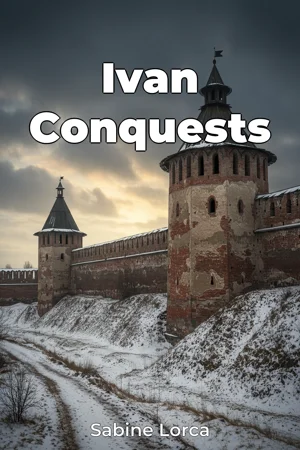
How did a single ruler transform a fragmented medieval state into a formidable empire? "Ivan Conquests" delves into the reign of Ivan IV, commonly known as Ivan the Terrible, to analyze his military campaigns, massive territorial expansions, and ruthless consolidation of power that fundamentally reshaped Russia. This book examines how Ivan's military strategies and internal policies forged the foundations of the Russian Empire, leaving an enduring legacy still pertinent to understanding modern Russia's geopolitical posture. This book is organized around three core themes: Ivan's military innovations and campaigns, his policies of territorial expansion, and his methods of consolidating autocratic power. Understanding these topics is crucial because they reveal how Ivan the Terrible transitioned Russia from a collection of principalities into a centralized, expansionist state. The military aspect details his tactical and logistical reforms, while the territorial expansion section analyzes the strategies used to conquer diverse regions. The consolidation of power segment explores the brutal mechanisms used to subdue the nobility and centralize authority. Historically, Russia in the 16th century was surrounded by powerful neighbors, necessitating a strong military and centralized leadership. Prior knowledge of medieval European history and Russian geography will enhance the reader's understanding, but is not required. The central argument of "Ivan Conquests" is that Ivan the Terrible's reign, despite its brutality, was a pivotal period of state-building, establishing the template for future Russian imperial expansion and autocratic rule. This argument is vital because it challenges simplified portrayals of Ivan as merely a cruel tyrant, presenting a more nuanced view of his impact on Russian history. The book begins by introducing the context of 16th-century Russia, then dedicates chapters to analyzing specific military campaigns, such as the conquest of Kazan and Astrakhan. Subsequently, it examines the Oprichnina, Ivan's domestic policy designed to eliminate dissent and consolidate his personal power. It concludes by assessing Ivan's long-term impact on Russia's political and military trajectory, including its subsequent imperial ambitions. Evidence presented within the book will consist of primary source material, including chronicles, correspondence, and legal documents from the period. Secondary sources, comprising modern historical analyses and interpretations, will complement this primary evidence. Military campaign analysis will rely on detailed maps, troop deployment records when available, and accounts of battles from the period. This book connects to other fields, such as political science, analyzing state-building processes and the dynamics of autocracy; sociology, examining the social impact of military campaigns and political repression; and geography, considering the strategic importance of territorial expansion and resource control. These connections enhance the book's argument by providing a multidisciplinary lens through which to understand Ivan's reign. "Ivan Conquests" adopts a balanced historiographical approach, seeking to present a nuanced account of Ivan's reign, acknowledging both his achievements and atrocities. The writing style will be factual and analytical, avoiding sensationalism. The target audience includes students of Russian history, military historians, and general readers interested in the dynamics of empire-building and autocratic rule. The book would be valuable by providing a comprehensive and balanced account of a pivotal figure in Russian history, moving beyond simplistic narratives. As a work of military history, it will adhere to genre conventions by providing detailed accounts of battles, tactical innovations, and strategic considerations. As a work of world history, it will connect Ivan's reign to broader trends in 16th-century Europe and Asia. The book's scope is limited to the reign of Ivan IV, specifically focusing on his military campaigns, territorial expansion, and consolidation of power. It does not delve into the social or cultural aspects of his reign in detail, as the focus remains squarely on the state-building process. Understanding Ivan's methods of consolidating power and expanding territory provides insights into contemporary geopolitical strategies employed by various nations. His use of propaganda, internal repression, and military force remains relevant for understanding statecraft. Historical debates surrounding Ivan the Terrible often revolve around the extent of his cruelty and its impact on Russia's development. This book addresses these controversies by presenting a comprehensive analysis of his reign, allowing readers to form their own informed opinions.
How did a single ruler transform a fragmented medieval state into a formidable empire? "Ivan Conquests" delves into the reign of Ivan IV, commonly known as Ivan the Terrible, to analyze his military campaigns, massive territorial expansions, and ruthless consolidation of power that fundamentally reshaped Russia. This book examines how Ivan's military strategies and internal policies forged the foundations of the Russian Empire, leaving an enduring legacy still pertinent to understanding modern Russia's geopolitical posture. This book is organized around three core themes: Ivan's military innovations and campaigns, his policies of territorial expansion, and his methods of consolidating autocratic power. Understanding these topics is crucial because they reveal how Ivan the Terrible transitioned Russia from a collection of principalities into a centralized, expansionist state. The military aspect details his tactical and logistical reforms, while the territorial expansion section analyzes the strategies used to conquer diverse regions. The consolidation of power segment explores the brutal mechanisms used to subdue the nobility and centralize authority. Historically, Russia in the 16th century was surrounded by powerful neighbors, necessitating a strong military and centralized leadership. Prior knowledge of medieval European history and Russian geography will enhance the reader's understanding, but is not required. The central argument of "Ivan Conquests" is that Ivan the Terrible's reign, despite its brutality, was a pivotal period of state-building, establishing the template for future Russian imperial expansion and autocratic rule. This argument is vital because it challenges simplified portrayals of Ivan as merely a cruel tyrant, presenting a more nuanced view of his impact on Russian history. The book begins by introducing the context of 16th-century Russia, then dedicates chapters to analyzing specific military campaigns, such as the conquest of Kazan and Astrakhan. Subsequently, it examines the Oprichnina, Ivan's domestic policy designed to eliminate dissent and consolidate his personal power. It concludes by assessing Ivan's long-term impact on Russia's political and military trajectory, including its subsequent imperial ambitions. Evidence presented within the book will consist of primary source material, including chronicles, correspondence, and legal documents from the period. Secondary sources, comprising modern historical analyses and interpretations, will complement this primary evidence. Military campaign analysis will rely on detailed maps, troop deployment records when available, and accounts of battles from the period. This book connects to other fields, such as political science, analyzing state-building processes and the dynamics of autocracy; sociology, examining the social impact of military campaigns and political repression; and geography, considering the strategic importance of territorial expansion and resource control. These connections enhance the book's argument by providing a multidisciplinary lens through which to understand Ivan's reign. "Ivan Conquests" adopts a balanced historiographical approach, seeking to present a nuanced account of Ivan's reign, acknowledging both his achievements and atrocities. The writing style will be factual and analytical, avoiding sensationalism. The target audience includes students of Russian history, military historians, and general readers interested in the dynamics of empire-building and autocratic rule. The book would be valuable by providing a comprehensive and balanced account of a pivotal figure in Russian history, moving beyond simplistic narratives. As a work of military history, it will adhere to genre conventions by providing detailed accounts of battles, tactical innovations, and strategic considerations. As a work of world history, it will connect Ivan's reign to broader trends in 16th-century Europe and Asia. The book's scope is limited to the reign of Ivan IV, specifically focusing on his military campaigns, territorial expansion, and consolidation of power. It does not delve into the social or cultural aspects of his reign in detail, as the focus remains squarely on the state-building process. Understanding Ivan's methods of consolidating power and expanding territory provides insights into contemporary geopolitical strategies employed by various nations. His use of propaganda, internal repression, and military force remains relevant for understanding statecraft. Historical debates surrounding Ivan the Terrible often revolve around the extent of his cruelty and its impact on Russia's development. This book addresses these controversies by presenting a comprehensive analysis of his reign, allowing readers to form their own informed opinions.
"Ivan Conquests" explores how Ivan the Terrible transformed Russia from a fragmented state into a formidable empire during the 16th century. It analyzes his military campaigns, territorial expansion, and autocratic rule, revealing how these factors laid the groundwork for the future Russian Empire. Ivan's reign was characterized by significant military innovations, such as reforms in army structure and tactics, and the ruthless consolidation of power through the Oprichnina, a state-sponsored system of terror. The book argues that despite the brutality associated with his rule, Ivan's actions were crucial for state-building, establishing a template for future imperial expansion. The approach is balanced, using primary sources like chronicles and correspondence alongside modern historical analysis. The book examines specific military campaigns, including the conquests of Kazan and Astrakhan, while also delving into Ivan's domestic policies aimed at eliminating dissent. By connecting Ivan's reign to broader trends in 16th-century Europe and Asia, "Ivan Conquests" provides a valuable resource for students of Russian history, military historians, and anyone interested in empire-building and autocratic rule. The book progresses by first setting the context of 16th-century Russia, then moves through his military exploits, internal policies, and finally, his long-term impact.
Book Details
ISBN
9788235252098
Publisher
Publifye AS
Your Licenses
You don't own any licenses for this book
Purchase a license below to unlock this book and download the EPUB.
Purchase License
Select a tier to unlock this book
Need bulk licensing?
Contact us for enterprise agreements.