
About This Book
Have you ever considered the profound and multifaceted role of milk in shaping human history, nutrition, and industry? "Milk Uses" delves into the captivating story of dairy farming, exploring its evolution from ancient practices to modern technological advancements and its continuing impact on global food systems. This book offers a comprehensive look at milk, not just as a dietary staple, but as a cornerstone of civilization. This exploration pivots on three key themes: the historical development of dairy farming, the nutritional complexities of milk, and the economic structures of the dairy industry. Understanding these components is crucial because milk has served as a primary food source, a catalyst for economic growth, and a subject of ongoing scientific and societal debate. To fully appreciate these themes, we will explore the context of milk's historical significance. The domestication of dairy animals marked a pivotal moment in human history, facilitating settled agriculture and population growth. Furthermore, the science of nutrition plays a critical role, requiring some understanding of macronutrients, vitamins, and the human digestive system. The central argument of "Milk Uses" is that milk, and the dairy industry surrounding it, represents a powerful intersection of science, history, and economics, directly impacting human health and global food security. By understanding this intersection, readers can gain a nuanced perspective on the complexities and challenges facing modern food systems. The book unfolds as follows: First, we will introduce the main concepts of domestication, nutrition, and industrialization. Then, we will develop these ideas through exploring prehistoric dairy practices, examining the nutritional composition of various milk types (cow, goat, sheep, etc.) and their effects on the human body, and analyzing the transformation of family farms into large-scale industrial operations. These points will culminate in an examination of current issues, such as sustainable dairy farming practices, ethical considerations in animal treatment, and the impact of milk alternatives. Finally, we will discuss practical applications, including dietary recommendations, innovations in dairy processing, and policy implications for food safety and environmental regulations. This book will support its arguments using archaeological evidence, historical records, scientific studies on nutrition and health, and economic data from the dairy industry. We will analyze primary source material from agricultural archives alongside contemporary research findings to provide a multifaceted and data-driven exploration. "Milk Uses" connects to several other fields, including anthropology (through the study of early agricultural practices), public health (through the analysis of milk’s nutritional impact), and environmental science (through the evaluation of sustainability practices in dairy farming). These interdisciplinary connections enrich the book’s narrative and reinforce its central argument about the wide-ranging influence of milk. One of the book’s unique approaches involves examining the cultural beliefs and practices surrounding milk consumption across different regions and time periods. By comparing and contrasting these perspectives, we offer insights into the social and symbolic significance of milk beyond its nutritional value. The writing style in "Milk Uses" will be accessible and informative, blending scientific rigor with narrative elements to engage a broad audience. Complex scientific concepts will be explained in a clear and concise manner, making the book suitable for readers with varying levels of prior knowledge. Our target audience includes students of food science, history, and nutrition, as well as general readers interested in the history and impact of food production. This book offers valuable insights for anyone seeking a deeper understanding of the complex relationship between milk, human society, and the environment. As a work of non-fiction in the science and history genres, “Milk Uses” will adhere to the conventions of factual accuracy, evidence-based arguments, and clear sourcing. It is our intention to provide a balanced and objective account of the topic, acknowledging diverse perspectives and ongoing debates within the field. The scope of the book is intentionally broad, covering a wide range of historical periods, geographical regions, and scientific disciplines. However, it does not delve deeply into the specific details of dairy farm management or advanced biotechnology, focusing instead on the larger trends and implications for human society. The information in “Milk Uses” can be applied to real-world situations in several ways. Dietary recommendations based on current understanding of milk’s nutritional properties, inform consumer choices, and insights into sustainable dairy practices can guide policy decisions and industry innovations. The book will address controversies such as the debate surrounding the health effects of saturated fat in milk, the environmental impact of dairy farming, and the ethical considerations of animal welfare. We will present different perspectives on these issues, providing readers with the information needed to form their own informed opinions.
Have you ever considered the profound and multifaceted role of milk in shaping human history, nutrition, and industry? "Milk Uses" delves into the captivating story of dairy farming, exploring its evolution from ancient practices to modern technological advancements and its continuing impact on global food systems. This book offers a comprehensive look at milk, not just as a dietary staple, but as a cornerstone of civilization. This exploration pivots on three key themes: the historical development of dairy farming, the nutritional complexities of milk, and the economic structures of the dairy industry. Understanding these components is crucial because milk has served as a primary food source, a catalyst for economic growth, and a subject of ongoing scientific and societal debate. To fully appreciate these themes, we will explore the context of milk's historical significance. The domestication of dairy animals marked a pivotal moment in human history, facilitating settled agriculture and population growth. Furthermore, the science of nutrition plays a critical role, requiring some understanding of macronutrients, vitamins, and the human digestive system. The central argument of "Milk Uses" is that milk, and the dairy industry surrounding it, represents a powerful intersection of science, history, and economics, directly impacting human health and global food security. By understanding this intersection, readers can gain a nuanced perspective on the complexities and challenges facing modern food systems. The book unfolds as follows: First, we will introduce the main concepts of domestication, nutrition, and industrialization. Then, we will develop these ideas through exploring prehistoric dairy practices, examining the nutritional composition of various milk types (cow, goat, sheep, etc.) and their effects on the human body, and analyzing the transformation of family farms into large-scale industrial operations. These points will culminate in an examination of current issues, such as sustainable dairy farming practices, ethical considerations in animal treatment, and the impact of milk alternatives. Finally, we will discuss practical applications, including dietary recommendations, innovations in dairy processing, and policy implications for food safety and environmental regulations. This book will support its arguments using archaeological evidence, historical records, scientific studies on nutrition and health, and economic data from the dairy industry. We will analyze primary source material from agricultural archives alongside contemporary research findings to provide a multifaceted and data-driven exploration. "Milk Uses" connects to several other fields, including anthropology (through the study of early agricultural practices), public health (through the analysis of milk’s nutritional impact), and environmental science (through the evaluation of sustainability practices in dairy farming). These interdisciplinary connections enrich the book’s narrative and reinforce its central argument about the wide-ranging influence of milk. One of the book’s unique approaches involves examining the cultural beliefs and practices surrounding milk consumption across different regions and time periods. By comparing and contrasting these perspectives, we offer insights into the social and symbolic significance of milk beyond its nutritional value. The writing style in "Milk Uses" will be accessible and informative, blending scientific rigor with narrative elements to engage a broad audience. Complex scientific concepts will be explained in a clear and concise manner, making the book suitable for readers with varying levels of prior knowledge. Our target audience includes students of food science, history, and nutrition, as well as general readers interested in the history and impact of food production. This book offers valuable insights for anyone seeking a deeper understanding of the complex relationship between milk, human society, and the environment. As a work of non-fiction in the science and history genres, “Milk Uses” will adhere to the conventions of factual accuracy, evidence-based arguments, and clear sourcing. It is our intention to provide a balanced and objective account of the topic, acknowledging diverse perspectives and ongoing debates within the field. The scope of the book is intentionally broad, covering a wide range of historical periods, geographical regions, and scientific disciplines. However, it does not delve deeply into the specific details of dairy farm management or advanced biotechnology, focusing instead on the larger trends and implications for human society. The information in “Milk Uses” can be applied to real-world situations in several ways. Dietary recommendations based on current understanding of milk’s nutritional properties, inform consumer choices, and insights into sustainable dairy practices can guide policy decisions and industry innovations. The book will address controversies such as the debate surrounding the health effects of saturated fat in milk, the environmental impact of dairy farming, and the ethical considerations of animal welfare. We will present different perspectives on these issues, providing readers with the information needed to form their own informed opinions.
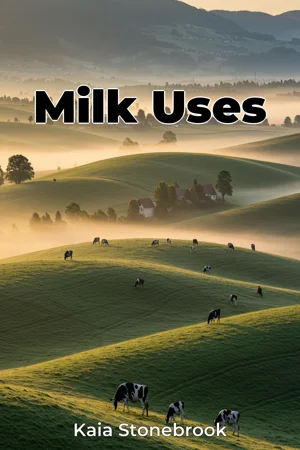
"Milk Uses" explores the extensive history and impact of milk, tracing its journey from ancient domestication practices to its role in modern food systems. The book examines how dairy farming has evolved, influencing human nutrition, economic structures, and global food security. It acknowledges milk as more than just a dietary staple, highlighting its profound influence on civilization. Readers will discover intriguing aspects such as how the domestication of dairy animals promoted settled agriculture and population growth, and how milk's nutritional composition affects the human body. The book addresses the intersection of science, history, and economics within the dairy industry. It begins by introducing key concepts like domestication and industrialization, then delves into prehistoric dairy practices, the nutritional properties of different milk types, and the transformation of family farms into large-scale operations. The approach blends scientific rigor with narrative elements, making complex concepts accessible. Culminating in an examination of current issues, "Milk Uses" covers sustainable dairy farming, ethical animal treatment, and the impact of milk alternatives. It analyzes archaeological evidence, historical records, and scientific studies to provide a data-driven exploration of the many facets of milk. This approach ensures a comprehensive understanding of milk's past, present, and future, making it valuable for students and general readers interested in food science, history, and nutrition.
Book Details
ISBN
9788235251954
Publisher
Publifye AS
Your Licenses
You don't own any licenses for this book
Purchase a license below to unlock this book and download the EPUB.
Purchase License
Select a tier to unlock this book
Need bulk licensing?
Contact us for enterprise agreements.