
About This Book
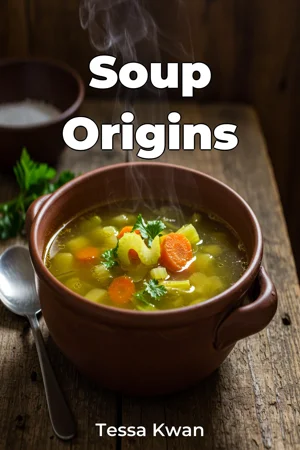
Have you ever considered the long and winding journey of soup, a dish so ubiquitous it transcends cultures and continents? "Soup Origins" delves into this global phenomenon, tracing the development of soup from its humble beginnings as simple broths to its current status as a culinary art form. We explore not just recipes, but the historical, social, and cultural forces that shaped this fundamental food. This book examines soup through the lens of three key topics: the foundational broths of ancient civilizations, the diversification of soup traditions across geographical regions, and the impact of trade and technology on modern soup varieties. These topics are significant because understanding the history of soup provides insights into human migration, resource management, and the evolution of taste. No prior knowledge is needed to appreciate this journey through culinary history. We will define all key terms, such as 'broth', 'stew' and 'bisque', within their historical context. The central argument of "Soup Origins" is that soup, far from being a simple dish, acts as a microcosm of human history, reflecting our ingenuity, adaptability, and interconnectedness. This argument is important because it challenges conventional thinking about food history, shifting focus from elite cuisines to the everyday meals of ordinary people. The book is structured in four parts. First, we introduce the basic concept of soup and its earliest forms, drawing on archaeological evidence and ancient texts to illustrate the preparation and consumption of broths in Mesopotamia, Egypt, and China. Second, we explore how regional variations arose, with chapters dedicated to the development of minestrone in Italy, borscht in Eastern Europe, and pho in Vietnam. Each chapter explores the unique ingredients and preparation techniques used in these areas. Third, we analyze the impact of the Columbian Exchange and industrialization on soup making, highlighting the introduction of new ingredients and the rise of canned soups. Finally, we conclude by examining contemporary soup trends, including the rise of fusion cuisine and the resurgence of interest in traditional soup recipes, addressing the debates around "authentic" vs. "modern" soup making. Our research is based on a wide range of sources, including archaeological records, historical cookbooks, anthropological studies, and culinary analyses. We draw from primary sources, such as ancient recipe collections, to interpret historical preparation methods. "Soup Origins" connects to several other disciplines. It touches upon anthropology, by examining the cultural roles of soup in different societies; economics, by considering the impact of trade on ingredient availability; and environmental science, by evaluating the sustainability of current soup production methods. These interdisciplinary connections enrich the book's central argument, demonstrating that the history of soup is intertwined with broader human concerns. This book takes a unique approach by combining historical analysis with practical culinary insights. Each chapter not only describes the history of a particular type of soup but also includes adapted recipes, allowing readers to engage with the material in a tangible way. The tone is informative and accessible, aiming to engage both academic scholars and home cooks. Our target audience is anyone interested in food history, world cultures, or cooking. The book will be valuable to them by providing a comprehensive and engaging overview of the origins and evolution of soup. As a work of non-fiction, "Soup Origins" adheres to the genre's conventions of accuracy, clarity, and objectivity. All claims are supported by evidence, and sources are clearly cited. The scope of the book is global, covering soup traditions from around the world. However, we focus on regions where the historical record is most complete, acknowledging that the story of soup in some areas remains to be fully uncovered. The information in "Soup Origins" can be applied practically. Readers can gain a deeper appreciation for the cultural significance of the foods they eat and can expand their culinary horizons by trying new soup recipes from around the world. While soup seems universally beloved, there are debates among culinary historians about the authenticity of certain recipes and the cultural appropriation of traditional dishes. We address these controversies by presenting multiple perspectives and encouraging readers to think critically about the complex issues surrounding food and culture.
Have you ever considered the long and winding journey of soup, a dish so ubiquitous it transcends cultures and continents? "Soup Origins" delves into this global phenomenon, tracing the development of soup from its humble beginnings as simple broths to its current status as a culinary art form. We explore not just recipes, but the historical, social, and cultural forces that shaped this fundamental food. This book examines soup through the lens of three key topics: the foundational broths of ancient civilizations, the diversification of soup traditions across geographical regions, and the impact of trade and technology on modern soup varieties. These topics are significant because understanding the history of soup provides insights into human migration, resource management, and the evolution of taste. No prior knowledge is needed to appreciate this journey through culinary history. We will define all key terms, such as 'broth', 'stew' and 'bisque', within their historical context. The central argument of "Soup Origins" is that soup, far from being a simple dish, acts as a microcosm of human history, reflecting our ingenuity, adaptability, and interconnectedness. This argument is important because it challenges conventional thinking about food history, shifting focus from elite cuisines to the everyday meals of ordinary people. The book is structured in four parts. First, we introduce the basic concept of soup and its earliest forms, drawing on archaeological evidence and ancient texts to illustrate the preparation and consumption of broths in Mesopotamia, Egypt, and China. Second, we explore how regional variations arose, with chapters dedicated to the development of minestrone in Italy, borscht in Eastern Europe, and pho in Vietnam. Each chapter explores the unique ingredients and preparation techniques used in these areas. Third, we analyze the impact of the Columbian Exchange and industrialization on soup making, highlighting the introduction of new ingredients and the rise of canned soups. Finally, we conclude by examining contemporary soup trends, including the rise of fusion cuisine and the resurgence of interest in traditional soup recipes, addressing the debates around "authentic" vs. "modern" soup making. Our research is based on a wide range of sources, including archaeological records, historical cookbooks, anthropological studies, and culinary analyses. We draw from primary sources, such as ancient recipe collections, to interpret historical preparation methods. "Soup Origins" connects to several other disciplines. It touches upon anthropology, by examining the cultural roles of soup in different societies; economics, by considering the impact of trade on ingredient availability; and environmental science, by evaluating the sustainability of current soup production methods. These interdisciplinary connections enrich the book's central argument, demonstrating that the history of soup is intertwined with broader human concerns. This book takes a unique approach by combining historical analysis with practical culinary insights. Each chapter not only describes the history of a particular type of soup but also includes adapted recipes, allowing readers to engage with the material in a tangible way. The tone is informative and accessible, aiming to engage both academic scholars and home cooks. Our target audience is anyone interested in food history, world cultures, or cooking. The book will be valuable to them by providing a comprehensive and engaging overview of the origins and evolution of soup. As a work of non-fiction, "Soup Origins" adheres to the genre's conventions of accuracy, clarity, and objectivity. All claims are supported by evidence, and sources are clearly cited. The scope of the book is global, covering soup traditions from around the world. However, we focus on regions where the historical record is most complete, acknowledging that the story of soup in some areas remains to be fully uncovered. The information in "Soup Origins" can be applied practically. Readers can gain a deeper appreciation for the cultural significance of the foods they eat and can expand their culinary horizons by trying new soup recipes from around the world. While soup seems universally beloved, there are debates among culinary historians about the authenticity of certain recipes and the cultural appropriation of traditional dishes. We address these controversies by presenting multiple perspectives and encouraging readers to think critically about the complex issues surrounding food and culture.
"Soup Origins" explores the fascinating history of soup, revealing its journey from simple broths in ancient civilizations to the diverse culinary art form we know today. This book argues that soup is more than just a meal; it's a reflection of human history, ingenuity, and interconnectedness. Early broths, for example, were crucial for survival in Mesopotamia, Egypt, and China, utilizing readily available ingredients and simple cooking techniques. The book progresses by examining regional soup traditions like Italian minestrone, Eastern European borscht, and Vietnamese pho, highlighting unique ingredients and preparation methods. It also analyzes the impact of the Columbian Exchange and industrialization, including the introduction of new ingredients and the rise of canned soups. "Soup Origins" concludes with contemporary soup trends, such as fusion cuisine and the resurgence of traditional recipes, addressing debates around authenticity in modern soup making. This unique approach combines historical analysis with practical culinary insights, offering adapted recipes alongside historical context. By tracing the evolution of soup across cultures and eras, the book offers a comprehensive overview of this fundamental food, appealing to anyone interested in food history, world cultures, and cooking.
Book Details
ISBN
9788235251909
Publisher
Publifye AS
Your Licenses
You don't own any licenses for this book
Purchase a license below to unlock this book and download the EPUB.
Purchase License
Select a tier to unlock this book
Need bulk licensing?
Contact us for enterprise agreements.