
About This Book
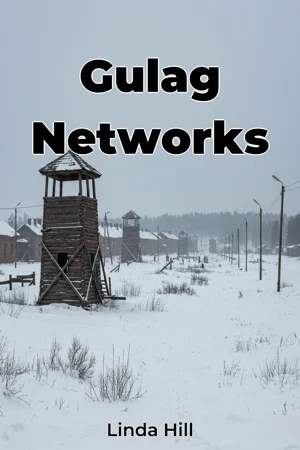
How did a vast network of forced labor camps become so integral to the Soviet state's operation and identity? "Gulag Networks" delves into the intricate system of the Gulag, exploring its profound impact on Soviet politics, society, and economy. This book illuminates not only the brutal conditions endured by the prisoners but also the complex mechanisms through which the Gulag became deeply embedded within the Soviet system. At its core, "Gulag Networks" examines three key areas: the evolution of the Gulag system from its inception to its eventual decline, the everyday realities of life and survival within the camps, and the Gulag's crucial role in the Soviet economy and its connection to the party's political goals. The book argues that the Gulag was not merely a tool of repression but a cornerstone of the Soviet economic model, providing essential labor for large-scale industrial projects and resource extraction. The camps were also inextricably linked to the Soviet security apparatus and the political ambitions of the Communist Party. To understand the Gulag's significance, this book provides context on the political and ideological climate of the Soviet Union, from the early revolutionary period through Stalin's purges and beyond. It explores the policies and decrees that led to mass arrests and deportations, filling the camps with political prisoners, common criminals, and ethnic minorities. "Gulag Networks" is structured to provide a comprehensive overview, beginning with an introduction to the origins and expansion of the Gulag system. It traces the development of forced labor from its initial, smaller-scale implementation to its transformation into a massive network of camps and settlements. The book then analyzes the internal workings of the Gulag, detailing the camp hierarchy, the types of labor performed, and the strategies prisoners employed to survive in the face of starvation, disease, and violence. Subsequent chapters examine the Gulag's economic function, providing specific case studies of industries and projects that relied heavily on forced labor, such as mining, forestry, and construction. The book culminates with an analysis of the Gulag's legacy, exploring its impact on Soviet society and its continued relevance in contemporary discussions of human rights and state power. The evidence presented in "Gulag Networks" draws upon a range of sources, including archival documents from Soviet-era institutions, memoirs and testimonies of former Gulag prisoners, and scholarly research on the Gulag system. The book utilizes statistical data on camp populations, mortality rates, and economic output to provide a quantitative analysis of the Gulag's impact. This book also connects to other fields of study, including criminology, economic history, and political science. By examining the Gulag through multiple lenses, the book offers a more nuanced understanding of its complexities and its place in Soviet history. "Gulag Networks" offers a fresh perspective by focusing on how the Gulag operated as a complex network, rather than simply a series of isolated camps. This approach highlights the interconnectedness of the Gulag with other Soviet institutions and reveals the extent to which forced labor penetrated Soviet society. Written in an accessible and engaging style, "Gulag Networks" is aimed at students, researchers, and anyone interested in Soviet history, human rights, and the history of forced labor. It provides valuable insights into a dark chapter of the 20th century and offers lessons about the dangers of unchecked state power. The book's scope is limited to the Soviet Gulag system, primarily focusing on the period from the 1930s to the 1950s. While it acknowledges the existence of forced labor camps in other countries, it concentrates on the unique features and impact of the Gulag within the Soviet context. The information presented in "Gulag Networks" has real-world applications for understanding contemporary issues related to human trafficking, prison labor, and state-sponsored repression. It serves as a reminder of the importance of safeguarding human rights and holding governments accountable for their actions. The book contributes to ongoing debates about the nature of totalitarian regimes and the legacy of the Soviet Union.
How did a vast network of forced labor camps become so integral to the Soviet state's operation and identity? "Gulag Networks" delves into the intricate system of the Gulag, exploring its profound impact on Soviet politics, society, and economy. This book illuminates not only the brutal conditions endured by the prisoners but also the complex mechanisms through which the Gulag became deeply embedded within the Soviet system. At its core, "Gulag Networks" examines three key areas: the evolution of the Gulag system from its inception to its eventual decline, the everyday realities of life and survival within the camps, and the Gulag's crucial role in the Soviet economy and its connection to the party's political goals. The book argues that the Gulag was not merely a tool of repression but a cornerstone of the Soviet economic model, providing essential labor for large-scale industrial projects and resource extraction. The camps were also inextricably linked to the Soviet security apparatus and the political ambitions of the Communist Party. To understand the Gulag's significance, this book provides context on the political and ideological climate of the Soviet Union, from the early revolutionary period through Stalin's purges and beyond. It explores the policies and decrees that led to mass arrests and deportations, filling the camps with political prisoners, common criminals, and ethnic minorities. "Gulag Networks" is structured to provide a comprehensive overview, beginning with an introduction to the origins and expansion of the Gulag system. It traces the development of forced labor from its initial, smaller-scale implementation to its transformation into a massive network of camps and settlements. The book then analyzes the internal workings of the Gulag, detailing the camp hierarchy, the types of labor performed, and the strategies prisoners employed to survive in the face of starvation, disease, and violence. Subsequent chapters examine the Gulag's economic function, providing specific case studies of industries and projects that relied heavily on forced labor, such as mining, forestry, and construction. The book culminates with an analysis of the Gulag's legacy, exploring its impact on Soviet society and its continued relevance in contemporary discussions of human rights and state power. The evidence presented in "Gulag Networks" draws upon a range of sources, including archival documents from Soviet-era institutions, memoirs and testimonies of former Gulag prisoners, and scholarly research on the Gulag system. The book utilizes statistical data on camp populations, mortality rates, and economic output to provide a quantitative analysis of the Gulag's impact. This book also connects to other fields of study, including criminology, economic history, and political science. By examining the Gulag through multiple lenses, the book offers a more nuanced understanding of its complexities and its place in Soviet history. "Gulag Networks" offers a fresh perspective by focusing on how the Gulag operated as a complex network, rather than simply a series of isolated camps. This approach highlights the interconnectedness of the Gulag with other Soviet institutions and reveals the extent to which forced labor penetrated Soviet society. Written in an accessible and engaging style, "Gulag Networks" is aimed at students, researchers, and anyone interested in Soviet history, human rights, and the history of forced labor. It provides valuable insights into a dark chapter of the 20th century and offers lessons about the dangers of unchecked state power. The book's scope is limited to the Soviet Gulag system, primarily focusing on the period from the 1930s to the 1950s. While it acknowledges the existence of forced labor camps in other countries, it concentrates on the unique features and impact of the Gulag within the Soviet context. The information presented in "Gulag Networks" has real-world applications for understanding contemporary issues related to human trafficking, prison labor, and state-sponsored repression. It serves as a reminder of the importance of safeguarding human rights and holding governments accountable for their actions. The book contributes to ongoing debates about the nature of totalitarian regimes and the legacy of the Soviet Union.
"Gulag Networks" explores the vast network of forced labor camps within the Soviet Union, revealing its integral role in Soviet politics, society, and the economy. The book highlights that the Gulag system was not merely a tool for political repression under Stalin, but a fundamental component of the Soviet economic model. This system provided essential labor for large-scale industrial projects like mining and forestry, showcasing the interconnectedness between the camps and the state's ambitions. The book analyzes the evolution of the Gulag, the harsh realities of life within the camps, and its deep connection to the Communist Party's political goals. The book examines how the Gulag system expanded from its inception into a massive network of camps and settlements filled with political prisoners and others deemed undesirable. It traces the policies that led to mass arrests and deportations, and details the camp hierarchy and survival strategies employed by prisoners. By drawing on archival documents, memoirs, and statistical data, "Gulag Networks" presents a quantitative analysis of the Gulag's impact, connecting it to broader fields like criminology and economic history. The book uniquely focuses on the Gulag as a complex, interconnected network rather than isolated camps, emphasizing how deeply forced labor penetrated Soviet society. Progressing from the origins and expansion of the Gulag to its economic functions and lasting legacy, the book provides a comprehensive understanding of this dark chapter of world history, offering valuable insights for anyone interested in Soviet history, human rights, and the dangers of unchecked state power.
Book Details
ISBN
9788235251886
Publisher
Publifye AS
Your Licenses
You don't own any licenses for this book
Purchase a license below to unlock this book and download the EPUB.
Purchase License
Select a tier to unlock this book
Need bulk licensing?
Contact us for enterprise agreements.