
About This Book
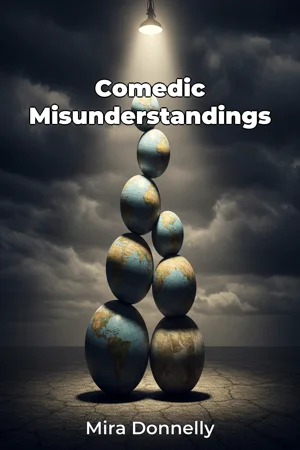
Have you ever considered how a simple joke could spark international outrage or trigger unintended social consequences? "Comedic Misunderstandings" delves into the surprising and often unsettling world where humor goes awry, examining pivotal historical instances where jokes, satire, and comedic performances have been misinterpreted, leading to significant real-world repercussions. This book explores the multifaceted nature of humor, particularly the crucial roles of context, culture, and individual perception in shaping its reception. This book addresses three central topics: the historical evolution of comedic interpretation, the cross-cultural challenges in translating humor, and the socio-political impact of misinterpreted jokes. These topics are vital because, in an increasingly interconnected world, understanding the potential pitfalls of humor is essential for effective communication and preventing unnecessary conflict. To understand these incidents, we must first acknowledge the historical context in which jokes are conceived and received. Varying social norms, political climates, and access to information all influence how an audience perceives humor. Readers should be aware of basic concepts in communication theory, such as encoding and decoding messages, and have a foundational understanding of cultural relativism to fully appreciate the arguments presented. The central argument of "Comedic Misunderstandings" is that comedic intent does not guarantee comedic reception. A joke's success relies heavily on external factors, and misinterpretations can have serious, far-reaching implications, from diplomatic crises to social unrest. Recognizing the potential for miscommunication within humor is crucial for fostering empathy and responsible communication practices across diverse audiences. The book unfolds in several stages. First, it introduces the core concepts of comedic theory and the psychology of humor. Then, it presents a series of case studies, organized chronologically and thematically. These cases will illustrate how seemingly innocuous jokes have been misunderstood, with examples drawn from political satire, stand-up comedy, and online humor. The analysis will focus on the short-term and long-term effects of these misunderstandings. The culmination of the argument synthesizes these case studies to offer a framework for understanding and mitigating the risks of comedic misinterpretation. Finally, the book explores practical applications for this framework in diplomacy, media, and education. Evidence presented in "Comedic Misunderstandings" will draw from diverse sources, including primary source materials like news reports, transcripts of comedic performances, and government documents, as well as secondary source analyses from scholars in communication, history, and sociology. The research will also incorporate audience reception studies and analyses of social media trends to gain a comprehensive understanding of how jokes spread and are interpreted in the digital age. The book connects to other fields such as political science, examining how humor can be used as a tool for political commentary and dissent, as well as the potential for it to be weaponized as propaganda. It also engages with the field of psychology, exploring the cognitive processes involved in understanding jokes and the individual differences in humor appreciation. Furthermore, the book intersects with linguistics, analyzing the role of language and translation in comedic misunderstandings. "Comedic Misunderstandings" offers a unique perspective by focusing on the unintended consequences of humor, rather than simply celebrating its positive aspects. It moves beyond theoretical discussions of humor to provide concrete examples and practical strategies for navigating the complexities of comedic communication. The book adopts a scholarly yet accessible tone, using clear and concise language to explain complex concepts. While grounded in rigorous research, the writing style aims to engage a broad audience, including students, researchers, and anyone interested in the power and perils of humor. The target audience includes college students studying communication, history, and social sciences, as well as professionals in media, diplomacy, and public relations. The book offers valuable insights for anyone who communicates across cultures or relies on humor in their professional lives. As a work of non-fiction in history and social science, "Comedic Misunderstandings" adheres to standards of factual accuracy and rigorous research. It presents a balanced perspective, acknowledging the complexities of each case study and avoiding overly simplistic interpretations. The book's scope is intentionally broad, covering a wide range of historical and contemporary examples of comedic misunderstandings. However, it does not attempt to provide an exhaustive catalog of every instance where a joke has gone wrong. Instead, it focuses on representative cases that illustrate key principles and patterns. The information presented in "Comedic Misunderstandings" can be applied in various real-world settings. For example, diplomats can use the book's framework to avoid gaffes in international negotiations. Media professionals can use it to craft more culturally sensitive content. Educators can use it to teach students about the importance of critical thinking and media literacy. The book also addresses ongoing debates about the limits of free speech and the role of humor in challenging social norms. It explores the tension between the right to express oneself through humor and the responsibility to avoid causing harm or offense.
Have you ever considered how a simple joke could spark international outrage or trigger unintended social consequences? "Comedic Misunderstandings" delves into the surprising and often unsettling world where humor goes awry, examining pivotal historical instances where jokes, satire, and comedic performances have been misinterpreted, leading to significant real-world repercussions. This book explores the multifaceted nature of humor, particularly the crucial roles of context, culture, and individual perception in shaping its reception. This book addresses three central topics: the historical evolution of comedic interpretation, the cross-cultural challenges in translating humor, and the socio-political impact of misinterpreted jokes. These topics are vital because, in an increasingly interconnected world, understanding the potential pitfalls of humor is essential for effective communication and preventing unnecessary conflict. To understand these incidents, we must first acknowledge the historical context in which jokes are conceived and received. Varying social norms, political climates, and access to information all influence how an audience perceives humor. Readers should be aware of basic concepts in communication theory, such as encoding and decoding messages, and have a foundational understanding of cultural relativism to fully appreciate the arguments presented. The central argument of "Comedic Misunderstandings" is that comedic intent does not guarantee comedic reception. A joke's success relies heavily on external factors, and misinterpretations can have serious, far-reaching implications, from diplomatic crises to social unrest. Recognizing the potential for miscommunication within humor is crucial for fostering empathy and responsible communication practices across diverse audiences. The book unfolds in several stages. First, it introduces the core concepts of comedic theory and the psychology of humor. Then, it presents a series of case studies, organized chronologically and thematically. These cases will illustrate how seemingly innocuous jokes have been misunderstood, with examples drawn from political satire, stand-up comedy, and online humor. The analysis will focus on the short-term and long-term effects of these misunderstandings. The culmination of the argument synthesizes these case studies to offer a framework for understanding and mitigating the risks of comedic misinterpretation. Finally, the book explores practical applications for this framework in diplomacy, media, and education. Evidence presented in "Comedic Misunderstandings" will draw from diverse sources, including primary source materials like news reports, transcripts of comedic performances, and government documents, as well as secondary source analyses from scholars in communication, history, and sociology. The research will also incorporate audience reception studies and analyses of social media trends to gain a comprehensive understanding of how jokes spread and are interpreted in the digital age. The book connects to other fields such as political science, examining how humor can be used as a tool for political commentary and dissent, as well as the potential for it to be weaponized as propaganda. It also engages with the field of psychology, exploring the cognitive processes involved in understanding jokes and the individual differences in humor appreciation. Furthermore, the book intersects with linguistics, analyzing the role of language and translation in comedic misunderstandings. "Comedic Misunderstandings" offers a unique perspective by focusing on the unintended consequences of humor, rather than simply celebrating its positive aspects. It moves beyond theoretical discussions of humor to provide concrete examples and practical strategies for navigating the complexities of comedic communication. The book adopts a scholarly yet accessible tone, using clear and concise language to explain complex concepts. While grounded in rigorous research, the writing style aims to engage a broad audience, including students, researchers, and anyone interested in the power and perils of humor. The target audience includes college students studying communication, history, and social sciences, as well as professionals in media, diplomacy, and public relations. The book offers valuable insights for anyone who communicates across cultures or relies on humor in their professional lives. As a work of non-fiction in history and social science, "Comedic Misunderstandings" adheres to standards of factual accuracy and rigorous research. It presents a balanced perspective, acknowledging the complexities of each case study and avoiding overly simplistic interpretations. The book's scope is intentionally broad, covering a wide range of historical and contemporary examples of comedic misunderstandings. However, it does not attempt to provide an exhaustive catalog of every instance where a joke has gone wrong. Instead, it focuses on representative cases that illustrate key principles and patterns. The information presented in "Comedic Misunderstandings" can be applied in various real-world settings. For example, diplomats can use the book's framework to avoid gaffes in international negotiations. Media professionals can use it to craft more culturally sensitive content. Educators can use it to teach students about the importance of critical thinking and media literacy. The book also addresses ongoing debates about the limits of free speech and the role of humor in challenging social norms. It explores the tension between the right to express oneself through humor and the responsibility to avoid causing harm or offense.
"Comedic Misunderstandings" explores the often-overlooked dark side of humor, examining historical instances where jokes, satire, and comedic performances have been misconstrued, leading to unintended social consequences. It tackles the complexities of cross-cultural communication, revealing how a joke intended to unite can, instead, spark diplomatic crises or social unrest. The book highlights that a joke's success hinges on external factors like social norms and political climate, emphasizing that comedic intent doesn't guarantee comedic reception. The book uniquely emphasizes the potential pitfalls of humor rather than its positive aspects. It begins by introducing comedic theory, then progresses through case studies organized chronologically and thematically, illustrating how seemingly innocuous jokes have been misinterpreted in political satire, stand-up comedy, and online platforms. By exploring the historical evolution of comedic interpretation, the book provides a framework for mitigating misinterpretations in various fields, from diplomacy to education, making it a valuable resource for anyone seeking to navigate the complex landscape of humor.
Book Details
ISBN
9788235251626
Publisher
Publifye AS
Your Licenses
You don't own any licenses for this book
Purchase a license below to unlock this book and download the EPUB.
Purchase License
Select a tier to unlock this book
Need bulk licensing?
Contact us for enterprise agreements.