
About This Book
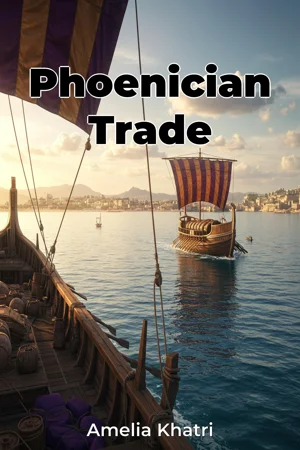
Imagine a world where a single, seafaring people held the keys to unlocking unprecedented global exchange. This book, *Phoenician Trade*, delves into the captivating story of how the Phoenicians, masters of the Mediterranean, established a network of commerce that profoundly shaped the ancient world, disseminating not only valuable goods but also the seeds of language and culture itself. This book primarily concerns itself with analyzing Phoenician trade routes, their impact on the socio-economic landscape of the Mediterranean, and the mechanisms by which Phoenician culture was disseminated. These elements are important because understanding Phoenician trade offers a unique window into the dynamics of early globalization, the spread of technology, and the interconnectedness of ancient civilizations. Historically, the Phoenicians emerged from the Levant, a region strategically positioned at the crossroads of Mesopotamia, Egypt, and the Mediterranean. Their expertise in shipbuilding and navigation, coupled with a scarcity of natural resources in their homeland, compelled them to venture across the seas in search of raw materials and new markets. The book presupposes a general understanding of ancient Near Eastern geography and basic maritime concepts. The central argument of *Phoenician Trade* posits that the Phoenicians, far from being mere merchants, acted as essential cultural brokers, facilitating the exchange of ideas, technologies, and artistic styles that laid the foundation for subsequent Mediterranean civilizations. This argument is important because it challenges traditional narratives that often overlook the Phoenicians' significant contribution to cultural diffusion. The book is structured to systematically explore the Phoenician world. It begins by examining the origins of Phoenician maritime power, detailing their shipbuilding techniques and navigational skills. The narrative then progresses to explore key trade routes, including those to Cyprus, Greece, Italy, North Africa, and even beyond the Pillars of Hercules. Major chapters focus on the specific goods traded – timber, textiles dyed with Tyrian purple, metals, and luxury items – and the economic systems that supported these trade networks. The book culminates in an analysis of the lasting impact of Phoenician trade on language, art, and religion, demonstrating its profound influence on the development of the Mediterranean world. The analysis presented here is supported by archaeological evidence from Phoenician settlements and shipwrecks, as well as textual sources from contemporary civilizations, including Egyptian, Assyrian, and Greek records. Furthermore, the book utilizes recent advances in maritime archaeology to reconstruct ancient ship designs and trade routes with greater accuracy. *Phoenician Trade* connects to several other academic disciplines, including linguistics (through the study of the Phoenician alphabet's influence), art history (through the analysis of Phoenician artistic motifs and their spread), and religious studies (through the examination of Phoenician religious practices and their transmission). These interdisciplinary connections enhance the book's argument by illustrating the multifaceted impact of Phoenician trade on the ancient world. This book provides a refreshing viewpoint by focusing on the tangible impact of Phoenician commerce and cultural exchange, rather than abstract concepts of power or imperialism. The tone of the book is academic yet accessible, engaging readers with a captivating narrative while maintaining scholarly rigor. The target audience includes students of ancient history, archaeology, and maritime studies, as well as general readers interested in learning more about the Phoenicians and their role in shaping the ancient world. This book will appeal to those seeking a comprehensive and up-to-date account of Phoenician trade and its lasting legacy. Adhering to the conventions of historical non-fiction, this book provides a balanced and evidence-based account of Phoenician trade, acknowledging both its positive and negative aspects, such as the potential for exploitation of resources and labor. The scope of the book encompasses the entire period of Phoenician maritime activity, from its origins in the Bronze Age to its decline under Roman rule. However, it intentionally limits its focus to the economic and cultural aspects of Phoenician trade, rather than delving into the political complexities of their city-states. The insights provided can be applied to modern discussions about globalization, cultural exchange, and the impact of trade on societies. The book engages with ongoing debates about the extent of Phoenician influence in the Atlantic and the nature of their relationship with other Mediterranean powers, offering a nuanced perspective based on the latest research.
Imagine a world where a single, seafaring people held the keys to unlocking unprecedented global exchange. This book, *Phoenician Trade*, delves into the captivating story of how the Phoenicians, masters of the Mediterranean, established a network of commerce that profoundly shaped the ancient world, disseminating not only valuable goods but also the seeds of language and culture itself. This book primarily concerns itself with analyzing Phoenician trade routes, their impact on the socio-economic landscape of the Mediterranean, and the mechanisms by which Phoenician culture was disseminated. These elements are important because understanding Phoenician trade offers a unique window into the dynamics of early globalization, the spread of technology, and the interconnectedness of ancient civilizations. Historically, the Phoenicians emerged from the Levant, a region strategically positioned at the crossroads of Mesopotamia, Egypt, and the Mediterranean. Their expertise in shipbuilding and navigation, coupled with a scarcity of natural resources in their homeland, compelled them to venture across the seas in search of raw materials and new markets. The book presupposes a general understanding of ancient Near Eastern geography and basic maritime concepts. The central argument of *Phoenician Trade* posits that the Phoenicians, far from being mere merchants, acted as essential cultural brokers, facilitating the exchange of ideas, technologies, and artistic styles that laid the foundation for subsequent Mediterranean civilizations. This argument is important because it challenges traditional narratives that often overlook the Phoenicians' significant contribution to cultural diffusion. The book is structured to systematically explore the Phoenician world. It begins by examining the origins of Phoenician maritime power, detailing their shipbuilding techniques and navigational skills. The narrative then progresses to explore key trade routes, including those to Cyprus, Greece, Italy, North Africa, and even beyond the Pillars of Hercules. Major chapters focus on the specific goods traded – timber, textiles dyed with Tyrian purple, metals, and luxury items – and the economic systems that supported these trade networks. The book culminates in an analysis of the lasting impact of Phoenician trade on language, art, and religion, demonstrating its profound influence on the development of the Mediterranean world. The analysis presented here is supported by archaeological evidence from Phoenician settlements and shipwrecks, as well as textual sources from contemporary civilizations, including Egyptian, Assyrian, and Greek records. Furthermore, the book utilizes recent advances in maritime archaeology to reconstruct ancient ship designs and trade routes with greater accuracy. *Phoenician Trade* connects to several other academic disciplines, including linguistics (through the study of the Phoenician alphabet's influence), art history (through the analysis of Phoenician artistic motifs and their spread), and religious studies (through the examination of Phoenician religious practices and their transmission). These interdisciplinary connections enhance the book's argument by illustrating the multifaceted impact of Phoenician trade on the ancient world. This book provides a refreshing viewpoint by focusing on the tangible impact of Phoenician commerce and cultural exchange, rather than abstract concepts of power or imperialism. The tone of the book is academic yet accessible, engaging readers with a captivating narrative while maintaining scholarly rigor. The target audience includes students of ancient history, archaeology, and maritime studies, as well as general readers interested in learning more about the Phoenicians and their role in shaping the ancient world. This book will appeal to those seeking a comprehensive and up-to-date account of Phoenician trade and its lasting legacy. Adhering to the conventions of historical non-fiction, this book provides a balanced and evidence-based account of Phoenician trade, acknowledging both its positive and negative aspects, such as the potential for exploitation of resources and labor. The scope of the book encompasses the entire period of Phoenician maritime activity, from its origins in the Bronze Age to its decline under Roman rule. However, it intentionally limits its focus to the economic and cultural aspects of Phoenician trade, rather than delving into the political complexities of their city-states. The insights provided can be applied to modern discussions about globalization, cultural exchange, and the impact of trade on societies. The book engages with ongoing debates about the extent of Phoenician influence in the Atlantic and the nature of their relationship with other Mediterranean powers, offering a nuanced perspective based on the latest research.
"Phoenician Trade" explores how this ancient civilization dominated Mediterranean trade, shaping the course of history through cultural and economic exchange. The book highlights the Phoenicians' pivotal role as more than just merchants, revealing them as essential cultural brokers who disseminated ideas, technologies, and artistic styles across the ancient world. Readers will discover how their mastery of shipbuilding and navigation allowed them to establish trade routes spanning from Cyprus and Greece to North Africa and beyond, impacting language, art, and religion. The book examines the origins of Phoenician maritime power and their skills, progressing to explore key trade routes and goods traded, such as timber and textiles dyed with Tyrian purple. Supported by archaeological evidence and textual sources, the book reconstructs ancient ship designs and trade routes, offering a comprehensive account of Phoenician trade and its lasting legacy. This study provides a refreshing viewpoint by focusing on the tangible impact of Phoenician commerce on economic systems and cultural exchange rather than abstract concepts of power.
Book Details
ISBN
9788235251619
Publisher
Publifye AS
Your Licenses
You don't own any licenses for this book
Purchase a license below to unlock this book and download the EPUB.
Purchase License
Select a tier to unlock this book
Need bulk licensing?
Contact us for enterprise agreements.