
About This Book
In an increasingly noisy world, how do we legally define and control the din that impacts our health and well-being? "Noise Pollution Limits" delves into the complex landscape of noise regulation in urban and rural environments, exploring how legal frameworks attempt to balance economic activity with public health and environmental protection. This book examines the fundamental concepts underpinning noise pollution legislation, the practical challenges of enforcement, and the ongoing debates surrounding acceptable noise levels in diverse settings. This book is crucial because noise pollution is not merely an annoyance; it is a significant public health concern, linked to a range of adverse health outcomes, including sleep disturbance, cardiovascular disease, and cognitive impairment, particularly in children. Understanding the legal and regulatory mechanisms designed to mitigate noise pollution is essential for policymakers, urban planners, environmental advocates, and concerned citizens alike. The book first provides historical context, tracing the evolution of noise regulations from early nuisance laws to modern environmental protection statutes. It also establishes the scientific foundation of noise pollution, explaining how sound is measured, how it affects the human body, and how its impact varies depending on factors like frequency, intensity, and duration. The central argument of "Noise Pollution Limits" is that effective noise regulation requires a multi-faceted approach that integrates zoning laws, public health regulations, and environmental impact assessments. It posits that a lack of coordination between these regulatory silos often leads to inadequate enforcement and inconsistent protection across different communities. The book is structured in three major parts. First, it introduces the core concepts of noise pollution, defining key terms such as decibels, sound pressure levels, and noise exposure limits. It explores the sources of noise pollution in both urban and rural areas, ranging from transportation and construction to industrial activities and recreational events. Second, the book examines the legal and regulatory frameworks governing noise pollution at the local, state, and federal levels. It analyzes zoning ordinances, noise ordinances, environmental impact assessment procedures, and occupational safety regulations. Specific case studies of cities and regions with innovative or particularly effective noise control strategies are featured. Third, it explores the practical challenges of enforcing noise regulations, including issues related to monitoring, measurement, and compliance. This includes discussion on the role of technology in noise monitoring, the legal obstacles to enforcement, and the ethical considerations surrounding noise pollution control. To support its arguments, "Noise Pollution Limits" draws upon a wide range of evidence. This includes legal statutes and court decisions, scientific studies on the health effects of noise, statistical data on noise levels in different communities, and reports from regulatory agencies. It also incorporates qualitative data from interviews with policymakers, environmental advocates, and industry representatives. The book connects to several other fields of study, including public health, urban planning, environmental science, and law. The public health connection highlights the direct impact of noise on physical and mental well-being. The urban planning connection considers how city design can mitigate noise pollution. The environmental science connection emphasizes the broader ecological effects of noise on wildlife and ecosystems. The connection to law focuses on the legal frameworks and enforcement mechanisms used to regulate noise. "Noise Pollution Limits" offers a novel perspective by emphasizing the need for integrated regulatory approaches that transcend traditional disciplinary boundaries. It highlights the importance of community engagement and public participation in the development and implementation of noise control policies. The book is written in a clear and accessible style, making it suitable for a broad audience, including students, policymakers, environmental professionals, and concerned citizens. It aims to provide readers with a comprehensive understanding of the legal and regulatory landscape of noise pollution control, as well as the tools and knowledge they need to advocate for quieter and healthier communities. The book's scope is limited to the legal and regulatory aspects of noise pollution, with a focus on the United States. While it acknowledges the technological solutions for noise reduction, it does not delve deeply into the engineering aspects of noise control. The information presented in "Noise Pollution Limits" can be applied in numerous practical ways. It can inform policy decisions related to zoning, transportation, and urban development. It can help environmental advocates develop effective strategies for lobbying and public education. It can empower citizens to understand their rights and advocate for noise control in their communities. The book also addresses the ongoing debates surrounding acceptable noise levels, particularly in the context of economic development and industrial activity. It explores the tension between the need to protect public health and the desire to promote economic growth. It considers the challenges of balancing competing interests and finding solutions that are both effective and equitable.
In an increasingly noisy world, how do we legally define and control the din that impacts our health and well-being? "Noise Pollution Limits" delves into the complex landscape of noise regulation in urban and rural environments, exploring how legal frameworks attempt to balance economic activity with public health and environmental protection. This book examines the fundamental concepts underpinning noise pollution legislation, the practical challenges of enforcement, and the ongoing debates surrounding acceptable noise levels in diverse settings. This book is crucial because noise pollution is not merely an annoyance; it is a significant public health concern, linked to a range of adverse health outcomes, including sleep disturbance, cardiovascular disease, and cognitive impairment, particularly in children. Understanding the legal and regulatory mechanisms designed to mitigate noise pollution is essential for policymakers, urban planners, environmental advocates, and concerned citizens alike. The book first provides historical context, tracing the evolution of noise regulations from early nuisance laws to modern environmental protection statutes. It also establishes the scientific foundation of noise pollution, explaining how sound is measured, how it affects the human body, and how its impact varies depending on factors like frequency, intensity, and duration. The central argument of "Noise Pollution Limits" is that effective noise regulation requires a multi-faceted approach that integrates zoning laws, public health regulations, and environmental impact assessments. It posits that a lack of coordination between these regulatory silos often leads to inadequate enforcement and inconsistent protection across different communities. The book is structured in three major parts. First, it introduces the core concepts of noise pollution, defining key terms such as decibels, sound pressure levels, and noise exposure limits. It explores the sources of noise pollution in both urban and rural areas, ranging from transportation and construction to industrial activities and recreational events. Second, the book examines the legal and regulatory frameworks governing noise pollution at the local, state, and federal levels. It analyzes zoning ordinances, noise ordinances, environmental impact assessment procedures, and occupational safety regulations. Specific case studies of cities and regions with innovative or particularly effective noise control strategies are featured. Third, it explores the practical challenges of enforcing noise regulations, including issues related to monitoring, measurement, and compliance. This includes discussion on the role of technology in noise monitoring, the legal obstacles to enforcement, and the ethical considerations surrounding noise pollution control. To support its arguments, "Noise Pollution Limits" draws upon a wide range of evidence. This includes legal statutes and court decisions, scientific studies on the health effects of noise, statistical data on noise levels in different communities, and reports from regulatory agencies. It also incorporates qualitative data from interviews with policymakers, environmental advocates, and industry representatives. The book connects to several other fields of study, including public health, urban planning, environmental science, and law. The public health connection highlights the direct impact of noise on physical and mental well-being. The urban planning connection considers how city design can mitigate noise pollution. The environmental science connection emphasizes the broader ecological effects of noise on wildlife and ecosystems. The connection to law focuses on the legal frameworks and enforcement mechanisms used to regulate noise. "Noise Pollution Limits" offers a novel perspective by emphasizing the need for integrated regulatory approaches that transcend traditional disciplinary boundaries. It highlights the importance of community engagement and public participation in the development and implementation of noise control policies. The book is written in a clear and accessible style, making it suitable for a broad audience, including students, policymakers, environmental professionals, and concerned citizens. It aims to provide readers with a comprehensive understanding of the legal and regulatory landscape of noise pollution control, as well as the tools and knowledge they need to advocate for quieter and healthier communities. The book's scope is limited to the legal and regulatory aspects of noise pollution, with a focus on the United States. While it acknowledges the technological solutions for noise reduction, it does not delve deeply into the engineering aspects of noise control. The information presented in "Noise Pollution Limits" can be applied in numerous practical ways. It can inform policy decisions related to zoning, transportation, and urban development. It can help environmental advocates develop effective strategies for lobbying and public education. It can empower citizens to understand their rights and advocate for noise control in their communities. The book also addresses the ongoing debates surrounding acceptable noise levels, particularly in the context of economic development and industrial activity. It explores the tension between the need to protect public health and the desire to promote economic growth. It considers the challenges of balancing competing interests and finding solutions that are both effective and equitable.
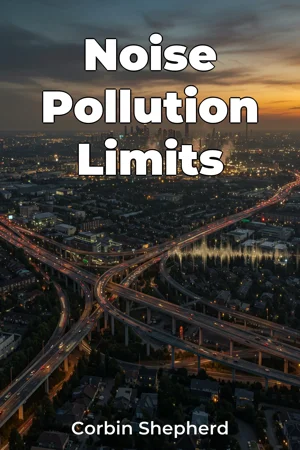
"Noise Pollution Limits" explores the complex legal and regulatory landscape surrounding noise pollution, a critical issue impacting public health and environmental protection. The book argues for a multi-faceted approach integrating zoning laws, public health regulations, and environmental impact assessments to effectively control noise levels in both urban and rural settings. Intriguingly, noise pollution is linked to cardiovascular disease, sleep disturbance, and cognitive impairment, especially in children, highlighting the urgency of effective noise regulation. The book traces the evolution of noise regulations and establishes the scientific foundation of noise pollution by defining key terms such as decibels and noise exposure limits. It progresses by examining legal frameworks at local, state, and federal levels, featuring case studies of cities with effective noise control strategies. The book further delves into the practical challenges of enforcement, including monitoring and measurement, emphasizing the need for community engagement. "Noise Pollution Limits" uniquely emphasizes integrated regulatory approaches transcending traditional boundaries. It examines noise ordinances and the role of technology in noise monitoring, drawing upon legal statutes, scientific studies, and statistical data. Ultimately, the book aims to empower readers with the knowledge to advocate for quieter, healthier communities by understanding their rights and promoting effective noise control policies.
Book Details
ISBN
9788235251572
Publisher
Publifye AS
Your Licenses
You don't own any licenses for this book
Purchase a license below to unlock this book and download the EPUB.
Purchase License
Select a tier to unlock this book
Need bulk licensing?
Contact us for enterprise agreements.