
About This Book
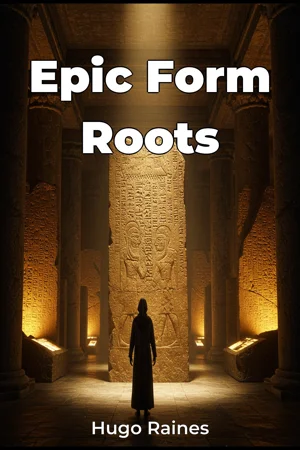
What echoes through millennia to shape not only our literature but our understanding of ourselves? *Epic Form Roots* delves deep into the origins and evolution of the epic form, tracing its development through documented linguistic and cultural records. This book is crucial because understanding the epic form provides insights into the values, beliefs, and social structures of past civilizations and how they continue to resonate in modern narratives. We will explore key topics, including the oral tradition and its role in shaping early epics, the development of written epic forms, and the cultural transmission encoded within these narratives. The oral tradition highlights the communal creation and flexible nature of early epics, while written forms demonstrate a shift toward authorial control and standardization. Understanding the cultural transmission within epics reveals how societies used these stories to preserve and pass on their values, history, and identity. To fully grasp the evolution of the epic, we will examine historical contexts, from ancient Mesopotamia to classical Greece and beyond. Familiarity with foundational texts like the *Epic of Gilgamesh* and Homer's *Iliad* and *Odyssey* is helpful, but not required, as these will be comprehensively discussed. Our central argument is that the epic form is not merely a literary genre but a dynamic cultural artifact. It reflects and shapes the worldview of the societies that produce it. Further, each iteration builds on prior ones, remixing established tropes and narrative patterns to reflect the current views and cultural aspirations of the day. By documenting the linguistic and cultural changes embedded within epic narratives, we can gain a deeper understanding of the forces that have shaped human civilization. The book unfolds in three primary sections. First, we establish the foundation, defining the key characteristics of the epic form and exploring its origins in oral storytelling traditions. Second, we trace the evolution of the epic through various cultures and historical periods, examining specific examples and analyzing the linguistic and cultural changes reflected in these works. This section contains chapters dedicated to Mesopotamian, Ancient Greek, and Roman epics, with specific attention devoted to the evolution of language and cultural values portrayed in each. Finally, we explore the legacy of the epic form in modern literature and culture, demonstrating its continuing relevance and influence. The analysis relies on linguistic analysis of original texts(in translation when necessary), comparative mythology, and historical records. Unique data sources include recently discovered fragments of ancient tablets containing previously unknown epic narratives and comparative analyses of variant versions of well-known epics, revealing subtle but significant cultural shifts. This study draws connections to other fields, including anthropology, sociology, and comparative literature. Anthropology provides insights into the cultural contexts that shaped the epic, sociology helps us understand the social functions of epic narratives, and comparative literature offers a broader perspective on the evolution of literary forms across different cultures. These connections enhance the book's argument by providing a more holistic understanding of the epic form and its place in human society. This book offers a unique perspective by combining linguistic analysis with cultural history to trace the evolution of the epic. This allows us to move beyond traditional literary analysis and uncover the deeper cultural codes embedded within these narratives. The tone is academic yet accessible, aiming to engage both scholars and general readers interested in literature, history, and culture. The target audience includes students and scholars of literature, history, and cultural studies, as well as general readers interested in exploring the roots of storytelling and the evolution of human civilization. It will appeal to readers who enjoy historical and cultural explorations, particularly those with an interest in classical literature and mythology. As a work of non-fiction within Language Arts and History, it adheres to the conventions of academic rigor, including detailed citations, thorough research, and logical argumentation. The scope of the book is broad, covering the major developments in the epic form from its earliest origins to its modern manifestations. However, it focuses primarily on Western and Near Eastern traditions, acknowledging the limitations of a single volume. Understanding the evolution of the epic form can illuminate the cultural values and historical forces that have shaped our world. For writers, it provides a deeper understanding of narrative structure and the power of storytelling. For historians, it offers a valuable window into the beliefs and values of past societies. While the definition and interpretation of “epic” are subjects of ongoing discussion, this book provides a framework for understanding these debates. By exploring the historical roots and cultural contexts of the epic form, we can better appreciate its enduring power and influence.
What echoes through millennia to shape not only our literature but our understanding of ourselves? *Epic Form Roots* delves deep into the origins and evolution of the epic form, tracing its development through documented linguistic and cultural records. This book is crucial because understanding the epic form provides insights into the values, beliefs, and social structures of past civilizations and how they continue to resonate in modern narratives. We will explore key topics, including the oral tradition and its role in shaping early epics, the development of written epic forms, and the cultural transmission encoded within these narratives. The oral tradition highlights the communal creation and flexible nature of early epics, while written forms demonstrate a shift toward authorial control and standardization. Understanding the cultural transmission within epics reveals how societies used these stories to preserve and pass on their values, history, and identity. To fully grasp the evolution of the epic, we will examine historical contexts, from ancient Mesopotamia to classical Greece and beyond. Familiarity with foundational texts like the *Epic of Gilgamesh* and Homer's *Iliad* and *Odyssey* is helpful, but not required, as these will be comprehensively discussed. Our central argument is that the epic form is not merely a literary genre but a dynamic cultural artifact. It reflects and shapes the worldview of the societies that produce it. Further, each iteration builds on prior ones, remixing established tropes and narrative patterns to reflect the current views and cultural aspirations of the day. By documenting the linguistic and cultural changes embedded within epic narratives, we can gain a deeper understanding of the forces that have shaped human civilization. The book unfolds in three primary sections. First, we establish the foundation, defining the key characteristics of the epic form and exploring its origins in oral storytelling traditions. Second, we trace the evolution of the epic through various cultures and historical periods, examining specific examples and analyzing the linguistic and cultural changes reflected in these works. This section contains chapters dedicated to Mesopotamian, Ancient Greek, and Roman epics, with specific attention devoted to the evolution of language and cultural values portrayed in each. Finally, we explore the legacy of the epic form in modern literature and culture, demonstrating its continuing relevance and influence. The analysis relies on linguistic analysis of original texts(in translation when necessary), comparative mythology, and historical records. Unique data sources include recently discovered fragments of ancient tablets containing previously unknown epic narratives and comparative analyses of variant versions of well-known epics, revealing subtle but significant cultural shifts. This study draws connections to other fields, including anthropology, sociology, and comparative literature. Anthropology provides insights into the cultural contexts that shaped the epic, sociology helps us understand the social functions of epic narratives, and comparative literature offers a broader perspective on the evolution of literary forms across different cultures. These connections enhance the book's argument by providing a more holistic understanding of the epic form and its place in human society. This book offers a unique perspective by combining linguistic analysis with cultural history to trace the evolution of the epic. This allows us to move beyond traditional literary analysis and uncover the deeper cultural codes embedded within these narratives. The tone is academic yet accessible, aiming to engage both scholars and general readers interested in literature, history, and culture. The target audience includes students and scholars of literature, history, and cultural studies, as well as general readers interested in exploring the roots of storytelling and the evolution of human civilization. It will appeal to readers who enjoy historical and cultural explorations, particularly those with an interest in classical literature and mythology. As a work of non-fiction within Language Arts and History, it adheres to the conventions of academic rigor, including detailed citations, thorough research, and logical argumentation. The scope of the book is broad, covering the major developments in the epic form from its earliest origins to its modern manifestations. However, it focuses primarily on Western and Near Eastern traditions, acknowledging the limitations of a single volume. Understanding the evolution of the epic form can illuminate the cultural values and historical forces that have shaped our world. For writers, it provides a deeper understanding of narrative structure and the power of storytelling. For historians, it offers a valuable window into the beliefs and values of past societies. While the definition and interpretation of “epic” are subjects of ongoing discussion, this book provides a framework for understanding these debates. By exploring the historical roots and cultural contexts of the epic form, we can better appreciate its enduring power and influence.
*Epic Form Roots* explores the rich history and evolution of the epic form, revealing its profound impact on literature and our understanding of civilization. The book traces the epic from its origins in oral tradition, where stories were communal and ever-changing, to its development in written forms, which allowed for standardization and authorial control. By examining ancient epics such as the *Epic of Gilgamesh*, the *Iliad*, and the *Odyssey*, the study uncovers how these narratives encoded and transmitted the values, beliefs, and social structures of past societies, echoes of which still resonate today. Through linguistic analysis and cultural history, the book demonstrates that the epic is more than just a literary genre; it's a dynamic cultural artifact that reflects and shapes the worldview of the societies that produce it. The book uniquely combines linguistic analysis with cultural history. It's approach moves beyond traditional literary analysis to uncover the deeper cultural codes embedded within these narratives. Progressing from the origins of oral storytelling to the legacy of epics in modern literature, the book provides a comprehensive understanding of how the epic form has evolved across cultures and historical periods, highlighting its continuing relevance and influence.
Book Details
ISBN
9788235251374
Publisher
Publifye AS
Your Licenses
You don't own any licenses for this book
Purchase a license below to unlock this book and download the EPUB.
Purchase License
Select a tier to unlock this book
Need bulk licensing?
Contact us for enterprise agreements.