
About This Book
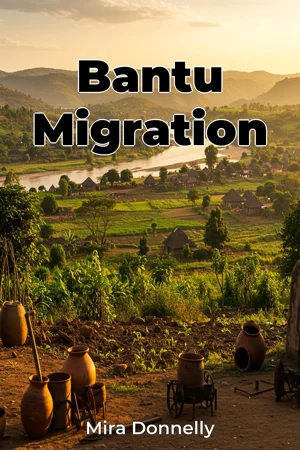
How did a single group of people so profoundly impact the entire African continent? "Bantu Migration" explores the extensive movement of the Bantu-speaking peoples, a demographic shift that fundamentally reshaped the linguistic, cultural, agricultural, and metallurgical landscapes of sub-Saharan Africa. This book delves into three core aspects of this pivotal era: the drivers and mechanics of the Bantu expansion, the transformative impact on the societies they encountered, and the enduring legacy of their migrations in contemporary Africa. Understanding these elements is crucial for grasping the complexities of African history and the diverse cultural tapestry of the continent. This book provides a historical, archaeological, and linguistic examination of the Bantu expansion. While pinpointing the precise origins of the Bantu people remains a subject of ongoing research, current evidence suggests their roots lie in the region of modern-day Cameroon and Nigeria. This serves as the starting point. The central argument of "Bantu Migration" is that the Bantu expansion was not a singular event but a series of complex and interconnected migrations driven by factors such as population growth, environmental changes, and the pursuit of fertile land. Moreover, their spread facilitated the dissemination of crucial technologies like iron smelting and agricultural techniques, leading to significant societal transformations. Understanding this intricate process challenges simplistic narratives of African history and highlights the dynamic interactions between different populations. The book unfolds in three major sections. The first section introduces the early Bantu people, their language family, and the environmental and social factors that prompted their initial movements. It then examines the routes and timelines of the migrations, drawing on archaeological findings, linguistic analysis, and genetic studies. The second section analyzes the impact of the Bantu expansion on the existing populations of sub-Saharan Africa, focusing on cultural exchange, technological diffusion, and the restructuring of social and political systems. Specific attention is given to the interactions with hunter-gatherer groups and the development of new agricultural practices. The third section traces the long-term legacy of the Bantu migrations, examining the distribution of Bantu languages today, the persistence of cultural traditions, and the genetic footprint of the Bantu expansion in modern African populations. "Bantu Migration" relies on a synthesis of evidence from diverse disciplines. Archaeological data, including settlement patterns, iron tools, and pottery, provides crucial insights into the timing and scope of the migrations. Linguistic analysis of Bantu languages allows for the reconstruction of proto-Bantu vocabulary and the tracing of language diversification. Genetic studies offer further evidence of population movements and intermingling. This interdisciplinary approach provides a nuanced and comprehensive understanding of the Bantu expansion. This study also connects to broader fields such as anthropology (understanding cultural diffusion), environmental studies (examining the impact of agriculture on ecosystems), and political science (analyzing the formation of new political structures). By integrating these perspectives, the book offers a holistic view of the Bantu expansion and its lasting consequences. "Bantu Migration" adopts a fact-based and accessible tone, aiming to engage readers with a clear and compelling narrative. It is intended for students, researchers, and anyone interested in African history, linguistics, and archaeology. The book acknowledges the complexities and uncertainties inherent in historical reconstruction, presenting different interpretations of the evidence and highlighting areas where further research is needed. While the book focuses primarily on the demographic, cultural, and technological aspects of the Bantu expansion, it acknowledges the ongoing debates surrounding the precise motivations and consequences of these migrations. It aims to provide a balanced and nuanced perspective, acknowledging the contributions and perspectives of diverse scholars. Ultimately, "Bantu Migration" seeks to provide readers with a deeper appreciation of the rich and complex history of Africa and the enduring legacy of the Bantu-speaking peoples. The information presented can be applied to understanding modern African demographics, cultural diversity, and linguistic patterns.
How did a single group of people so profoundly impact the entire African continent? "Bantu Migration" explores the extensive movement of the Bantu-speaking peoples, a demographic shift that fundamentally reshaped the linguistic, cultural, agricultural, and metallurgical landscapes of sub-Saharan Africa. This book delves into three core aspects of this pivotal era: the drivers and mechanics of the Bantu expansion, the transformative impact on the societies they encountered, and the enduring legacy of their migrations in contemporary Africa. Understanding these elements is crucial for grasping the complexities of African history and the diverse cultural tapestry of the continent. This book provides a historical, archaeological, and linguistic examination of the Bantu expansion. While pinpointing the precise origins of the Bantu people remains a subject of ongoing research, current evidence suggests their roots lie in the region of modern-day Cameroon and Nigeria. This serves as the starting point. The central argument of "Bantu Migration" is that the Bantu expansion was not a singular event but a series of complex and interconnected migrations driven by factors such as population growth, environmental changes, and the pursuit of fertile land. Moreover, their spread facilitated the dissemination of crucial technologies like iron smelting and agricultural techniques, leading to significant societal transformations. Understanding this intricate process challenges simplistic narratives of African history and highlights the dynamic interactions between different populations. The book unfolds in three major sections. The first section introduces the early Bantu people, their language family, and the environmental and social factors that prompted their initial movements. It then examines the routes and timelines of the migrations, drawing on archaeological findings, linguistic analysis, and genetic studies. The second section analyzes the impact of the Bantu expansion on the existing populations of sub-Saharan Africa, focusing on cultural exchange, technological diffusion, and the restructuring of social and political systems. Specific attention is given to the interactions with hunter-gatherer groups and the development of new agricultural practices. The third section traces the long-term legacy of the Bantu migrations, examining the distribution of Bantu languages today, the persistence of cultural traditions, and the genetic footprint of the Bantu expansion in modern African populations. "Bantu Migration" relies on a synthesis of evidence from diverse disciplines. Archaeological data, including settlement patterns, iron tools, and pottery, provides crucial insights into the timing and scope of the migrations. Linguistic analysis of Bantu languages allows for the reconstruction of proto-Bantu vocabulary and the tracing of language diversification. Genetic studies offer further evidence of population movements and intermingling. This interdisciplinary approach provides a nuanced and comprehensive understanding of the Bantu expansion. This study also connects to broader fields such as anthropology (understanding cultural diffusion), environmental studies (examining the impact of agriculture on ecosystems), and political science (analyzing the formation of new political structures). By integrating these perspectives, the book offers a holistic view of the Bantu expansion and its lasting consequences. "Bantu Migration" adopts a fact-based and accessible tone, aiming to engage readers with a clear and compelling narrative. It is intended for students, researchers, and anyone interested in African history, linguistics, and archaeology. The book acknowledges the complexities and uncertainties inherent in historical reconstruction, presenting different interpretations of the evidence and highlighting areas where further research is needed. While the book focuses primarily on the demographic, cultural, and technological aspects of the Bantu expansion, it acknowledges the ongoing debates surrounding the precise motivations and consequences of these migrations. It aims to provide a balanced and nuanced perspective, acknowledging the contributions and perspectives of diverse scholars. Ultimately, "Bantu Migration" seeks to provide readers with a deeper appreciation of the rich and complex history of Africa and the enduring legacy of the Bantu-speaking peoples. The information presented can be applied to understanding modern African demographics, cultural diversity, and linguistic patterns.
"Bantu Migration" explores the remarkable expansion of Bantu-speaking peoples across sub-Saharan Africa, a pivotal event that reshaped the continent's linguistic, cultural, and technological landscape. This comprehensive study examines the drivers behind this widespread movement, its transformative impact on existing societies, and its enduring legacy in modern Africa. The book highlights how the Bantu expansion facilitated the spread of iron smelting and advanced agricultural techniques, leading to significant societal changes. The book approaches the topic by synthesizing archaeological, linguistic, and genetic evidence to provide a nuanced understanding of the Bantu migration. While the exact origins remain debated, current evidence suggests roots in modern-day Cameroon and Nigeria, from where the Bantu people spread their culture and languages. The book unfolds across chapters, first introducing the early Bantu people and their language family, then analyzing the impact on existing populations, and finally tracing the long-term legacy of the migrations. This exploration offers a valuable perspective on African history, moving beyond simplistic narratives to reveal the dynamic interactions between different populations. Understanding the Bantu expansion is crucial for grasping the complexities of African demographics, cultural diversity, and linguistic patterns that continue to shape the continent today.
Book Details
ISBN
9788235251114
Publisher
Publifye AS
Your Licenses
You don't own any licenses for this book
Purchase a license below to unlock this book and download the EPUB.
Purchase License
Select a tier to unlock this book
Need bulk licensing?
Contact us for enterprise agreements.