
About This Book
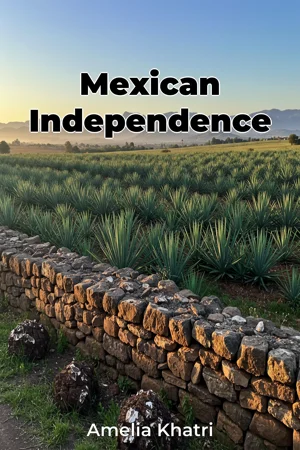
Was Mexico's independence an inevitable revolution, or a series of contingent events shaped by individual ambition and global upheaval? This book, "Mexican Independence," delves into the complex historical tapestry of late colonial Mexico to understand the forces that culminated in the nation's separation from Spain. We examine the key events, influential figures, and protracted battles that defined this pivotal era, ultimately analyzing the long-term effects of independence on Mexico's national identity and its turbulent path toward self-governance. This book focuses on three core themes: the socio-political conditions within New Spain prior to 1810, the diverse ideologies driving the independence movement, and the challenges of nation-building in the aftermath of liberation. Understanding these themes is crucial, as they provide insights, not only into Mexican history but also into the broader processes of decolonization and nation-state formation in the Americas. The backdrop to Mexican independence includes the rigid social hierarchy of New Spain, the discontent of the Criollo class (Spaniards born in the Americas) who were excluded from high office, and the economic exploitation of indigenous populations. Influenced by Enlightenment ideals and witnessing the success of the American Revolution, simmering resentment against Spanish rule finally erupted in 1810. The central argument of "Mexican Independence" is that Mexico's path to self-determination was neither a unified movement with a singular goal nor a simple transfer of power. Rather, it was a multifaceted struggle involving competing interests, shifting alliances, and profound ideological disagreements that shaped the nascent nation's political and social landscape for decades to come. The book is structured in three parts. First, it explores the conditions in New Spain before 1810, including the social structure, economy, and increasing political tensions. Second, it analyzes the independence movement itself, examining the roles of key figures such as Miguel Hidalgo, José María Morelos, and Agustín de Iturbide, and detailing the major battles and turning points of the war. It also investigates significant regional variations in the struggle for independence. Finally, the book examines the immediate aftermath of independence, including the establishment of the First Mexican Empire, the subsequent rise of republicanism, and the enduring social and economic inequalities that plagued the new nation. The analysis presented in this volume draws on a range of primary sources, including colonial administrative records, personal correspondence of key figures, and contemporary accounts of the independence war. Secondary scholarship from leading historians of Mexico is also employed providing a balanced and comprehensive treatment of the subject. "Mexican Independence" connects to broader fields such as Latin American studies, post-colonial studies, and political science. By exploring the nuances of Mexican nation-building, this book offers valuable insights into the challenges faced by newly independent nations in establishing stable governments and forging a national identity. This book offers a multi-faceted examination of the independence era going beyond a mere chronological account of events. It investigates the complex interplay of factors that shaped the trajectory of Mexican history. The writing style is intended to be scholarly yet accessible, catering to both students and general readers interested in Mexican history. The target audience includes university students studying Latin American history, researchers in related fields, and general readers seeking a deeper understanding of Mexican identity and the nation's origins. As a work of history, this book adheres to the principles of historical accuracy, objectivity, and evidence-based analysis. The scope of this book is primarily focused on the period from 1800 to 1836 encompassing the late colonial era, the independence war (1810-1821), and the early years of the Mexican nation. While the book touches on the broader context of Spanish colonialism and later periods of Mexican history, its primary focus remains on the independence movement and its immediate consequences. Understanding the complexities of Mexican independence is highly relevant today, given the ongoing debates about national identity, social justice, and political reform in Mexico and across Latin America. The book addresses ongoing debates surrounding the legacy of key figures in the independence movement, the role of indigenous populations in the struggle, and the long-term impact of colonialism.
Was Mexico's independence an inevitable revolution, or a series of contingent events shaped by individual ambition and global upheaval? This book, "Mexican Independence," delves into the complex historical tapestry of late colonial Mexico to understand the forces that culminated in the nation's separation from Spain. We examine the key events, influential figures, and protracted battles that defined this pivotal era, ultimately analyzing the long-term effects of independence on Mexico's national identity and its turbulent path toward self-governance. This book focuses on three core themes: the socio-political conditions within New Spain prior to 1810, the diverse ideologies driving the independence movement, and the challenges of nation-building in the aftermath of liberation. Understanding these themes is crucial, as they provide insights, not only into Mexican history but also into the broader processes of decolonization and nation-state formation in the Americas. The backdrop to Mexican independence includes the rigid social hierarchy of New Spain, the discontent of the Criollo class (Spaniards born in the Americas) who were excluded from high office, and the economic exploitation of indigenous populations. Influenced by Enlightenment ideals and witnessing the success of the American Revolution, simmering resentment against Spanish rule finally erupted in 1810. The central argument of "Mexican Independence" is that Mexico's path to self-determination was neither a unified movement with a singular goal nor a simple transfer of power. Rather, it was a multifaceted struggle involving competing interests, shifting alliances, and profound ideological disagreements that shaped the nascent nation's political and social landscape for decades to come. The book is structured in three parts. First, it explores the conditions in New Spain before 1810, including the social structure, economy, and increasing political tensions. Second, it analyzes the independence movement itself, examining the roles of key figures such as Miguel Hidalgo, José María Morelos, and Agustín de Iturbide, and detailing the major battles and turning points of the war. It also investigates significant regional variations in the struggle for independence. Finally, the book examines the immediate aftermath of independence, including the establishment of the First Mexican Empire, the subsequent rise of republicanism, and the enduring social and economic inequalities that plagued the new nation. The analysis presented in this volume draws on a range of primary sources, including colonial administrative records, personal correspondence of key figures, and contemporary accounts of the independence war. Secondary scholarship from leading historians of Mexico is also employed providing a balanced and comprehensive treatment of the subject. "Mexican Independence" connects to broader fields such as Latin American studies, post-colonial studies, and political science. By exploring the nuances of Mexican nation-building, this book offers valuable insights into the challenges faced by newly independent nations in establishing stable governments and forging a national identity. This book offers a multi-faceted examination of the independence era going beyond a mere chronological account of events. It investigates the complex interplay of factors that shaped the trajectory of Mexican history. The writing style is intended to be scholarly yet accessible, catering to both students and general readers interested in Mexican history. The target audience includes university students studying Latin American history, researchers in related fields, and general readers seeking a deeper understanding of Mexican identity and the nation's origins. As a work of history, this book adheres to the principles of historical accuracy, objectivity, and evidence-based analysis. The scope of this book is primarily focused on the period from 1800 to 1836 encompassing the late colonial era, the independence war (1810-1821), and the early years of the Mexican nation. While the book touches on the broader context of Spanish colonialism and later periods of Mexican history, its primary focus remains on the independence movement and its immediate consequences. Understanding the complexities of Mexican independence is highly relevant today, given the ongoing debates about national identity, social justice, and political reform in Mexico and across Latin America. The book addresses ongoing debates surrounding the legacy of key figures in the independence movement, the role of indigenous populations in the struggle, and the long-term impact of colonialism.
"Mexican Independence" explores the multifaceted struggle that led to Mexico's separation from Spain, moving beyond a simple recounting of events to examine the complex interplay of socio-political conditions, diverse ideologies, and key figures. The book highlights how the rigid social hierarchy of New Spain, particularly the discontent of the Criollo class excluded from high office, combined with Enlightenment ideals to fuel the independence movement. It delves into the roles of influential leaders like Miguel Hidalgo, José María Morelos, and Agustín de Iturbide, illustrating how their shifting alliances and ideological disagreements shaped the nascent nation. The book is structured to first explore New Spain's pre-1810 conditions, then analyze the independence movement's major battles and regional variations, and finally examine the turbulent aftermath, including the establishment of the First Mexican Empire. By drawing on primary sources and secondary scholarship, it provides a balanced treatment of the subject, revealing that Mexican nation-building was not a unified movement but a complex struggle with profound implications. Understanding Mexico's path to self-determination offers valuable insights into decolonization processes and the challenges faced by newly independent nations.
Book Details
ISBN
9788235251060
Publisher
Publifye AS
Your Licenses
You don't own any licenses for this book
Purchase a license below to unlock this book and download the EPUB.
Purchase License
Select a tier to unlock this book
Need bulk licensing?
Contact us for enterprise agreements.