
About This Book
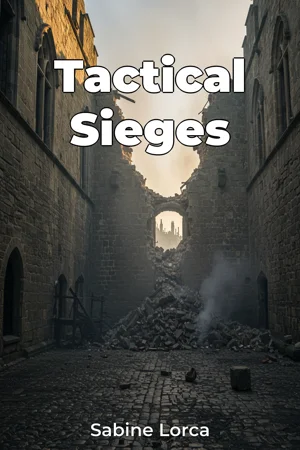
What drove the outcomes of historical sieges: the strength of walls or the ingenuity of tactics? *Tactical Sieges* delves into the multifaceted strategies employed in siege warfare throughout history, revealing how these often-brutal encounters fundamentally shaped military outcomes and geopolitical landscapes. This book dissects the critical elements that determined success or failure in these protracted conflicts, focusing on fortification breaches, starvation strategies, and the psychological warfare waged within and without besieged cities. Siege warfare represents a crucial facet of military history, demanding an intricate blend of engineering prowess, logistical planning, and psychological manipulation. The book explores the evolution of siege tactics from ancient times to the early modern period, examining how innovations in weaponry, such as trebuchets, cannons, and increasingly sophisticated mining techniques, forced constant adaptation in defensive architecture. These adaptations included the development of concentric walls, bastions, and other complex fortifications designed to withstand prolonged assaults. Analyzing these developments is vital for understanding the strategic thinking that underpinned military campaigns and the technological advancements that drove them. The central argument of *Tactical Sieges* is that the outcome of a siege was rarely determined solely by brute force or technological superiority. Rather, success hinged upon the integration of diverse tactical approaches, tailored to the specific circumstances of each encounter. The book underscores the significance of logistical considerations, highlighting how the ability to maintain a steady supply of provisions and resources for the besieging army often proved more decisive than battlefield victories. *Tactical Sieges* unfolds by first establishing a foundation of key siege concepts, including the principles of fortification and the mechanics of various siege engines. It then develops these concepts through focused analyses of specific historical sieges, such as the Siege of Alesia, the Siege of Constantinople (1453), and the Siege of Antwerp (1584-1855). Each case study serves to illustrate the interplay of tactical choices, logistical constraints, and psychological factors in determining the siege's resolution. The book culminates in a discussion of the long-term implications of siege warfare on military strategy and the development of urban centers. The book draws upon a wide range of primary and secondary sources, including archaeological reports, military treatises, and eyewitness accounts from both besiegers and besieged. Detailed maps and technical illustrations are used to clarify the spatial and mechanical aspects of siege operations. A unique aspect of the research involves the analysis of food supply records and demographic data to assess the impact of starvation strategies on civilian populations. *Tactical Sieges* intersects with several other fields of study, including engineering, urban planning, and social psychology. The engineering aspect is evident in the discussion of fortification design and the mechanics of siege weaponry. Urban planning is relevant in understanding how sieges influenced the layout and development of cities. Social psychology provides insights into the mental and emotional stresses experienced by both besiegers and besieged, as well as the dynamics of morale and resistance within a besieged city. The book adopts a balanced and objective tone, presenting information in a clear and accessible manner suitable for both academic and general readers interested in military history. It is intended for military history enthusiasts, students of military strategy, and anyone interested in the history of technology and urban development. The book’s scope is limited to sieges that occurred before the widespread adoption of modern artillery, focusing primarily on engagements where tactical maneuvering and siegecraft played a dominant role. This focus enables a more in-depth examination of the specific tactics and strategies employed in pre-modern siege warfare. The book avoids speculation and prioritizes fact-based accounts and analysis. The lessons learned from historical sieges have practical applications for understanding contemporary conflicts, particularly in asymmetrical warfare and urban combat scenarios. The principles of logistical planning, psychological warfare, and adaptation to changing technological landscapes remain relevant for military strategists and policymakers today. By examining the strategic complexities and human costs of past sieges, *Tactical Sieges* offers valuable insights into the enduring challenges of warfare and the importance of integrated tactical thinking.
What drove the outcomes of historical sieges: the strength of walls or the ingenuity of tactics? *Tactical Sieges* delves into the multifaceted strategies employed in siege warfare throughout history, revealing how these often-brutal encounters fundamentally shaped military outcomes and geopolitical landscapes. This book dissects the critical elements that determined success or failure in these protracted conflicts, focusing on fortification breaches, starvation strategies, and the psychological warfare waged within and without besieged cities. Siege warfare represents a crucial facet of military history, demanding an intricate blend of engineering prowess, logistical planning, and psychological manipulation. The book explores the evolution of siege tactics from ancient times to the early modern period, examining how innovations in weaponry, such as trebuchets, cannons, and increasingly sophisticated mining techniques, forced constant adaptation in defensive architecture. These adaptations included the development of concentric walls, bastions, and other complex fortifications designed to withstand prolonged assaults. Analyzing these developments is vital for understanding the strategic thinking that underpinned military campaigns and the technological advancements that drove them. The central argument of *Tactical Sieges* is that the outcome of a siege was rarely determined solely by brute force or technological superiority. Rather, success hinged upon the integration of diverse tactical approaches, tailored to the specific circumstances of each encounter. The book underscores the significance of logistical considerations, highlighting how the ability to maintain a steady supply of provisions and resources for the besieging army often proved more decisive than battlefield victories. *Tactical Sieges* unfolds by first establishing a foundation of key siege concepts, including the principles of fortification and the mechanics of various siege engines. It then develops these concepts through focused analyses of specific historical sieges, such as the Siege of Alesia, the Siege of Constantinople (1453), and the Siege of Antwerp (1584-1855). Each case study serves to illustrate the interplay of tactical choices, logistical constraints, and psychological factors in determining the siege's resolution. The book culminates in a discussion of the long-term implications of siege warfare on military strategy and the development of urban centers. The book draws upon a wide range of primary and secondary sources, including archaeological reports, military treatises, and eyewitness accounts from both besiegers and besieged. Detailed maps and technical illustrations are used to clarify the spatial and mechanical aspects of siege operations. A unique aspect of the research involves the analysis of food supply records and demographic data to assess the impact of starvation strategies on civilian populations. *Tactical Sieges* intersects with several other fields of study, including engineering, urban planning, and social psychology. The engineering aspect is evident in the discussion of fortification design and the mechanics of siege weaponry. Urban planning is relevant in understanding how sieges influenced the layout and development of cities. Social psychology provides insights into the mental and emotional stresses experienced by both besiegers and besieged, as well as the dynamics of morale and resistance within a besieged city. The book adopts a balanced and objective tone, presenting information in a clear and accessible manner suitable for both academic and general readers interested in military history. It is intended for military history enthusiasts, students of military strategy, and anyone interested in the history of technology and urban development. The book’s scope is limited to sieges that occurred before the widespread adoption of modern artillery, focusing primarily on engagements where tactical maneuvering and siegecraft played a dominant role. This focus enables a more in-depth examination of the specific tactics and strategies employed in pre-modern siege warfare. The book avoids speculation and prioritizes fact-based accounts and analysis. The lessons learned from historical sieges have practical applications for understanding contemporary conflicts, particularly in asymmetrical warfare and urban combat scenarios. The principles of logistical planning, psychological warfare, and adaptation to changing technological landscapes remain relevant for military strategists and policymakers today. By examining the strategic complexities and human costs of past sieges, *Tactical Sieges* offers valuable insights into the enduring challenges of warfare and the importance of integrated tactical thinking.
*Tactical Sieges* explores the intricate world of siege warfare, arguing that success depended less on brute force and more on a blend of tactics, logistics, and psychological manipulation. The book delves into how sieges shaped military outcomes and geopolitical landscapes, highlighting the evolution of siege tactics from ancient times through the early modern period. Intriguingly, the ability to maintain a steady supply line often proved more decisive than battlefield victories, and the development of concentric walls and bastions demonstrates the constant adaptation required by both attackers and defenders. The book progresses by first establishing key siege concepts, such as fortification principles and siege engine mechanics. It then analyzes specific historical sieges like the Siege of Constantinople, illustrating the interplay of tactical choices, logistical constraints, and psychological factors. By examining these historical events, *Tactical Sieges* emphasizes the importance of integrated tactical thinking and offers insights into the enduring challenges of warfare.
Book Details
ISBN
9788235250940
Publisher
Publifye AS
Your Licenses
You don't own any licenses for this book
Purchase a license below to unlock this book and download the EPUB.
Purchase License
Select a tier to unlock this book
Need bulk licensing?
Contact us for enterprise agreements.