
About This Book
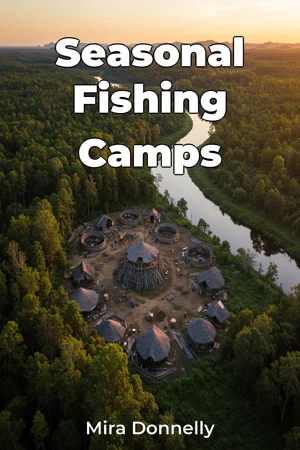
Why did indigenous communities, generation after generation, return to specific locations for short periods each year? This book, "Seasonal Fishing Camps," explores the crucial role of temporary fishing villages in the lives of indigenous groups across diverse geographical locations, focusing on their establishment and operation along rivers, lakes, and coastal waters to facilitate seasonal harvests. Examining these camps is vital to understanding indigenous resource management, social structures, and adaptability in the face of environmental opportunities. This book centers around three core themes: the ecological knowledge embedded in site selection, the socio-cultural organization of labor within these camps, and the long-term impact of these seasonal practices on both the environment and indigenous societies. These themes are significant because they reveal the sophisticated understanding indigenous people possessed of their environment and how they strategically utilized resources while maintaining social cohesion. To understand these seasonal camps, readers will need to appreciate the basic principles of indigenous subsistence economies, the migratory patterns of various fish species, and rudimentary archaeological methods used to identify and analyze camp locations. The book will provide necessary background information on these topics. The central argument of this book is that seasonal fishing camps were not merely temporary settlements; they were integral components of a sustainable resource management system that allowed indigenous communities to thrive for centuries. This argument challenges the often-misconceived notion of indigenous people as passive inhabitants and highlights their active role in shaping their environment. The book is structured into three major sections. The first section introduces the diverse environmental settings where these camps were located and overviews the main species of fish harvested. The second section delves into the practical aspects of camp life, including construction techniques, fishing technologies, food preservation methods, and social organization. The third section examines the lasting legacy of these practices, analyzing their impact on contemporary indigenous identities and resource management strategies. The study culminates in a discussion of the implications for modern fisheries management and cultural heritage preservation. The evidence presented within this book draws from a variety of sources, including archaeological site reports, ethnographic accounts, oral histories collected from indigenous communities, and environmental data. The research incorporates both quantitative analysis of material artifacts and qualitative interpretation of cultural practices. Unique data sources include previously unpublished archaeological surveys and newly transcribed interviews with elders knowledgeable about traditional fishing practices. Interdisciplinary connections enrich the arguments presented. The book bridges archaeology, anthropology, and ecology, offering a holistic perspective on the role of seasonal fishing camps. Specifically, archaeological data provides a material record of camp activities, anthropological studies offer insights into the social and cultural context, and ecological analyses demonstrate the environmental knowledge embedded in indigenous practices. What sets this book apart is its emphasis on the interconnectedness of ecological knowledge, social organization, and long-term sustainability within the context of seasonal fishing camps. It also provides insight into the ways indigenous knowledge systems offer valuable lessons for contemporary resource management. The writing style adopts a balanced tone, blending scholarly rigor with accessible language. Complex topics are explained clearly, ensuring that the book is engaging for both academic and general audiences. The primary target audience includes students and scholars in archaeology, anthropology, environmental studies, and indigenous studies. Additionally, it will appeal to anyone interested in learning about indigenous cultures, sustainable resource management, and the history of human-environment interactions. As a work of social science and history, this book adheres to the standards of rigorous scholarship, including proper citation of sources, transparent methodologies, and balanced interpretations of evidence. The scope of the book encompasses a broad range of geographical regions and time periods, exploring examples of seasonal fishing camps from North America, South America, and other parts of the world. However, it intentionally focuses on pre-industrial examples to highlight the sustainability principles inherent in traditional practices. The information presented has real-world applications for modern fisheries management, cultural heritage preservation, and indigenous rights advocacy. By understanding the long-term sustainability of traditional fishing practices, policymakers can develop more effective and equitable resource management strategies. The book also touches upon ongoing debates regarding indigenous rights to resources, the impact of climate change on traditional fishing practices, and the role of traditional knowledge in contemporary environmental management.
Why did indigenous communities, generation after generation, return to specific locations for short periods each year? This book, "Seasonal Fishing Camps," explores the crucial role of temporary fishing villages in the lives of indigenous groups across diverse geographical locations, focusing on their establishment and operation along rivers, lakes, and coastal waters to facilitate seasonal harvests. Examining these camps is vital to understanding indigenous resource management, social structures, and adaptability in the face of environmental opportunities. This book centers around three core themes: the ecological knowledge embedded in site selection, the socio-cultural organization of labor within these camps, and the long-term impact of these seasonal practices on both the environment and indigenous societies. These themes are significant because they reveal the sophisticated understanding indigenous people possessed of their environment and how they strategically utilized resources while maintaining social cohesion. To understand these seasonal camps, readers will need to appreciate the basic principles of indigenous subsistence economies, the migratory patterns of various fish species, and rudimentary archaeological methods used to identify and analyze camp locations. The book will provide necessary background information on these topics. The central argument of this book is that seasonal fishing camps were not merely temporary settlements; they were integral components of a sustainable resource management system that allowed indigenous communities to thrive for centuries. This argument challenges the often-misconceived notion of indigenous people as passive inhabitants and highlights their active role in shaping their environment. The book is structured into three major sections. The first section introduces the diverse environmental settings where these camps were located and overviews the main species of fish harvested. The second section delves into the practical aspects of camp life, including construction techniques, fishing technologies, food preservation methods, and social organization. The third section examines the lasting legacy of these practices, analyzing their impact on contemporary indigenous identities and resource management strategies. The study culminates in a discussion of the implications for modern fisheries management and cultural heritage preservation. The evidence presented within this book draws from a variety of sources, including archaeological site reports, ethnographic accounts, oral histories collected from indigenous communities, and environmental data. The research incorporates both quantitative analysis of material artifacts and qualitative interpretation of cultural practices. Unique data sources include previously unpublished archaeological surveys and newly transcribed interviews with elders knowledgeable about traditional fishing practices. Interdisciplinary connections enrich the arguments presented. The book bridges archaeology, anthropology, and ecology, offering a holistic perspective on the role of seasonal fishing camps. Specifically, archaeological data provides a material record of camp activities, anthropological studies offer insights into the social and cultural context, and ecological analyses demonstrate the environmental knowledge embedded in indigenous practices. What sets this book apart is its emphasis on the interconnectedness of ecological knowledge, social organization, and long-term sustainability within the context of seasonal fishing camps. It also provides insight into the ways indigenous knowledge systems offer valuable lessons for contemporary resource management. The writing style adopts a balanced tone, blending scholarly rigor with accessible language. Complex topics are explained clearly, ensuring that the book is engaging for both academic and general audiences. The primary target audience includes students and scholars in archaeology, anthropology, environmental studies, and indigenous studies. Additionally, it will appeal to anyone interested in learning about indigenous cultures, sustainable resource management, and the history of human-environment interactions. As a work of social science and history, this book adheres to the standards of rigorous scholarship, including proper citation of sources, transparent methodologies, and balanced interpretations of evidence. The scope of the book encompasses a broad range of geographical regions and time periods, exploring examples of seasonal fishing camps from North America, South America, and other parts of the world. However, it intentionally focuses on pre-industrial examples to highlight the sustainability principles inherent in traditional practices. The information presented has real-world applications for modern fisheries management, cultural heritage preservation, and indigenous rights advocacy. By understanding the long-term sustainability of traditional fishing practices, policymakers can develop more effective and equitable resource management strategies. The book also touches upon ongoing debates regarding indigenous rights to resources, the impact of climate change on traditional fishing practices, and the role of traditional knowledge in contemporary environmental management.
"Seasonal Fishing Camps" delves into the world of temporary indigenous fishing settlements, revealing their importance in sustainable resource management and cultural heritage. These camps, strategically located near rivers, lakes, and coasts, were crucial for seasonal harvests. By examining these sites through the lenses of archaeology, anthropology, and environmental studies, the book uncovers the sophisticated ecological knowledge embedded in indigenous practices. An intriguing insight is how these communities understood fish migratory patterns and utilized specific site selection for optimal yields. The book explores the socio-cultural organization of labor within these camps, highlighting how indigenous societies maintained social cohesion while strategically utilizing resources. It also examines how these seasonal practices have had long-term impacts on both the environment and indigenous societies, challenging the misconception of indigenous people as passive inhabitants. The book progresses by first introducing the environmental settings and fish species, then delving into camp life and technologies, and finally analyzing the lasting legacy of these practices. This exploration emphasizes the interconnectedness of ecological knowledge, social organization, and long-term sustainability.
Book Details
ISBN
9788235250926
Publisher
Publifye AS
Your Licenses
You don't own any licenses for this book
Purchase a license below to unlock this book and download the EPUB.
Purchase License
Select a tier to unlock this book
Need bulk licensing?
Contact us for enterprise agreements.