
About This Book
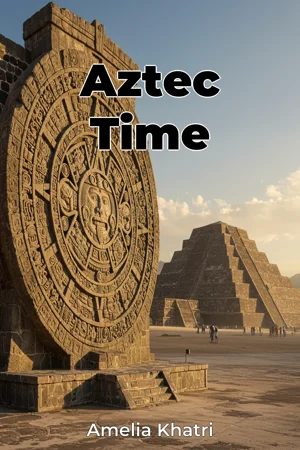
Ever wondered how an ancient civilization meticulously tracked time, weaving together the sacred and the practical? "Aztec Time" delves into the intricate dual-calendar system employed by the Aztecs, revealing its profound impact on their religious observances and agricultural practices. This book explores the Mesoamerican civilization’s sophisticated understanding of time, offering insights into how they harmonized ritualistic cycles with the demands of sustenance. The book primarily addresses two key themes: the structure and function of the Aztec calendar system and its profound influence on Aztec society. Understanding the Aztec calendar is vital as it provides a window into their worldview, their religious beliefs, and their organizational capabilities. Moreover, examining its influence helps us appreciate how deeply intertwined timekeeping was with every facet of their lives. To fully grasp the intricacies of the Aztec calendar, some background knowledge of Mesoamerican cultures and their cosmological beliefs is helpful. The book will provide this context by exploring the origins of the calendar system in earlier Mesoamerican civilizations, such as the Olmecs and Maya, and how the Aztecs adapted and refined these traditions. "Aztec Time" argues that the Aztec dual-calendar system was not merely a tool for measuring time but a framework that structured their entire society. The calendar dictated when religious ceremonies were held, when crops were planted and harvested, and even when wars were waged. This demonstrates the Aztec's remarkable ability to integrate their spiritual beliefs with the practical necessities of daily life. The book is structured to provide a comprehensive overview. It begins by introducing the two main components of the Aztec calendar: the 365-day solar calendar (xiuhpohualli) and the 260-day ritual calendar (tonalpohualli). It then explores how these two calendars intertwined to form a 52-year cycle, a period of great significance in Aztec cosmology. Subsequent chapters delve into the religious significance of specific dates and rituals, examining how the calendar influenced agricultural practices, social hierarchies, and political decisions. The book culminates by considering the legacy of the Aztec calendar and its relevance to our understanding of Mesoamerican civilization. The arguments presented will be supported by a variety of evidence, including archaeological findings, ethnohistorical accounts from Spanish conquistadors and missionaries, and studies of surviving codices (Aztec books). It also draws upon recent advancements in archaeoastronomy to analyze how the Aztecs aligned their temples and cities with celestial events. The study of "Aztec Time" bridges several disciplines, including anthropology, archaeology, and astronomy. It provides insights into the complexities of ancient cultures, the development of sophisticated timekeeping systems, and humanity’s enduring fascination with the cosmos. This book offers a unique perspective by analyzing the Aztec calendar not just as a timekeeping device, but as a reflection of their worldview and their relationship with the natural world. The writing style is clear and accessible, designed to engage both academic and general readers. The target audience includes students of history, anthropology, and Mesoamerican studies, as well as anyone with an interest in ancient civilizations or timekeeping. The book would be valuable to those seeking an understanding of how the Aztecs shaped their world. As a work of history, this book adheres to standards of factual accuracy and scholarly rigor. It acknowledges the limitations of the available evidence and presents multiple perspectives where appropriate. The book primarily focuses on the Aztec Empire during its height (14th-16th centuries), acknowledging the diversity and complexity that existed both within and outside the empire. The knowledge gained from "Aztec Time" can be applied to a broader understanding of how different cultures have structured their societies around concepts of time and cosmology. It offers insights into the human capacity for abstract thought and the development of complex systems of knowledge and belief. Finally, this book also acknowledges the ongoing debates surrounding the interpretation of Aztec culture and history. It presents different perspectives on these topics, encouraging readers to form their own informed opinions.
Ever wondered how an ancient civilization meticulously tracked time, weaving together the sacred and the practical? "Aztec Time" delves into the intricate dual-calendar system employed by the Aztecs, revealing its profound impact on their religious observances and agricultural practices. This book explores the Mesoamerican civilization’s sophisticated understanding of time, offering insights into how they harmonized ritualistic cycles with the demands of sustenance. The book primarily addresses two key themes: the structure and function of the Aztec calendar system and its profound influence on Aztec society. Understanding the Aztec calendar is vital as it provides a window into their worldview, their religious beliefs, and their organizational capabilities. Moreover, examining its influence helps us appreciate how deeply intertwined timekeeping was with every facet of their lives. To fully grasp the intricacies of the Aztec calendar, some background knowledge of Mesoamerican cultures and their cosmological beliefs is helpful. The book will provide this context by exploring the origins of the calendar system in earlier Mesoamerican civilizations, such as the Olmecs and Maya, and how the Aztecs adapted and refined these traditions. "Aztec Time" argues that the Aztec dual-calendar system was not merely a tool for measuring time but a framework that structured their entire society. The calendar dictated when religious ceremonies were held, when crops were planted and harvested, and even when wars were waged. This demonstrates the Aztec's remarkable ability to integrate their spiritual beliefs with the practical necessities of daily life. The book is structured to provide a comprehensive overview. It begins by introducing the two main components of the Aztec calendar: the 365-day solar calendar (xiuhpohualli) and the 260-day ritual calendar (tonalpohualli). It then explores how these two calendars intertwined to form a 52-year cycle, a period of great significance in Aztec cosmology. Subsequent chapters delve into the religious significance of specific dates and rituals, examining how the calendar influenced agricultural practices, social hierarchies, and political decisions. The book culminates by considering the legacy of the Aztec calendar and its relevance to our understanding of Mesoamerican civilization. The arguments presented will be supported by a variety of evidence, including archaeological findings, ethnohistorical accounts from Spanish conquistadors and missionaries, and studies of surviving codices (Aztec books). It also draws upon recent advancements in archaeoastronomy to analyze how the Aztecs aligned their temples and cities with celestial events. The study of "Aztec Time" bridges several disciplines, including anthropology, archaeology, and astronomy. It provides insights into the complexities of ancient cultures, the development of sophisticated timekeeping systems, and humanity’s enduring fascination with the cosmos. This book offers a unique perspective by analyzing the Aztec calendar not just as a timekeeping device, but as a reflection of their worldview and their relationship with the natural world. The writing style is clear and accessible, designed to engage both academic and general readers. The target audience includes students of history, anthropology, and Mesoamerican studies, as well as anyone with an interest in ancient civilizations or timekeeping. The book would be valuable to those seeking an understanding of how the Aztecs shaped their world. As a work of history, this book adheres to standards of factual accuracy and scholarly rigor. It acknowledges the limitations of the available evidence and presents multiple perspectives where appropriate. The book primarily focuses on the Aztec Empire during its height (14th-16th centuries), acknowledging the diversity and complexity that existed both within and outside the empire. The knowledge gained from "Aztec Time" can be applied to a broader understanding of how different cultures have structured their societies around concepts of time and cosmology. It offers insights into the human capacity for abstract thought and the development of complex systems of knowledge and belief. Finally, this book also acknowledges the ongoing debates surrounding the interpretation of Aztec culture and history. It presents different perspectives on these topics, encouraging readers to form their own informed opinions.
"Aztec Time" explores how the Aztec civilization meticulously tracked time using a dual-calendar system, deeply entwined with their religious observances and agricultural practices. This system, comprised of the 365-day solar Xiuhpohualli and the 260-day ritual Tonalpohualli, dictated not only the timing of ceremonies but also agricultural cycles and even warfare. The Aztecs' sophisticated timekeeping provides a window into their worldview, showcasing their ability to integrate spiritual beliefs with practical necessities. The book uniquely examines the Aztec calendar as more than just a timekeeping device, presenting it as a framework that structured their entire society and reflected their relationship with the natural world. For instance, the convergence of the two calendars every 52 years marked a period of great cosmological significance. Using archaeological findings, ethnohistorical accounts, and archaeoastronomy, "Aztec Time" presents a comprehensive overview, beginning with the components of the calendar and progressing through its religious significance, influence on social hierarchies, and its broader legacy in Mesoamerican studies. The arguments are supported by diverse evidence, offering insights into ancient cultures and the development of complex systems of knowledge. By understanding the Aztec calendar, readers gain a deeper appreciation for how this Mesoamerican civilization shaped its world.
Book Details
ISBN
9788235250704
Publisher
Publifye AS
Your Licenses
You don't own any licenses for this book
Purchase a license below to unlock this book and download the EPUB.
Purchase License
Select a tier to unlock this book
Need bulk licensing?
Contact us for enterprise agreements.