
About This Book
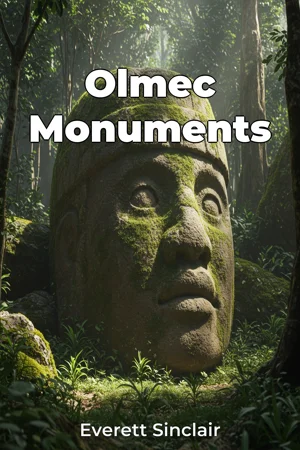
How did a civilization, lacking metal tools and the wheel, carve, transport, and erect colossal stone heads weighing upwards of 20 tons? "Olmec Monuments" delves into the heart of this captivating question, exploring the monumental art and architecture of the Olmecs, one of Mesoamerica’s foundational cultures. This book presents a comprehensive examination of Olmec artistic and engineering achievements, with a focus on their social, political, and religious significance. The central thesis of "Olmec Monuments" argues that the creation and display of these massive sculptures were not simply feats of engineering, but deliberate acts of political propaganda and religious affirmation, used to solidify the power of Olmec rulers and the elite. The book will demonstrate how these monuments served as visible manifestations of Olmec ideology, designed to impress both their own populace and neighboring groups. This investigation is crucial because it sheds light on the complex socio-political landscape of early Mesoamerica and the beginnings of state-level societies. "Olmec Monuments" will begin with a detailed introduction to Olmec civilization, covering its geographic location in the Gulf Coast of Mexico, its chronological development from roughly 1500 BCE to 400 BCE, and its cultural characteristics. It will then systematically explore the major categories of Olmec monuments: the colossal heads, altars or thrones, stelae, and other sculptural forms. Each category will be examined in terms of its artistic style, construction techniques, potential meaning, and spatial context within Olmec centers like San Lorenzo, La Venta, and Tres Zapotes. The analysis will then proceed in three thematic sections. The first will focus on the colossal heads themselves, detailing their physical characteristics, the quarries from which the stone was sourced (often many miles away), and the logistical challenges involved in their transportation and placement. The second section will examine the smaller-scale monuments and architectural complexes, analyzing their iconography and relationship to ritual practices. The final section will synthesize the archaeological evidence with insights from art history, anthropology, and comparative studies of early civilizations to provide a broader understanding of Olmec political organization and religious beliefs. The culmination of these analyses will demonstrate the intricate connections between Olmec monumental art, political power, and cosmological beliefs. The book relies on a range of data sources, including archaeological excavation reports, iconographic analyses of Olmec art, and geological studies of the stone used in the monuments. It integrates these data with theoretical frameworks from art history and social anthropology to offer a nuanced interpretation of Olmec culture. "Olmec Monuments" connects to fields such as anthropology, political science, and religious studies. The study of Olmec monumental art provides insights into the origins of social stratification, the development of early state societies, and the role of religion in legitimizing political power. Its innovative approach lies in its interdisciplinary synthesis of archaeological data, art historical analysis, and social theory. The book is written in an accessible yet scholarly style, appealing to a broad audience including archaeologists, art historians, students, and anyone interested in the ancient civilizations of Mesoamerica. The scope of "Olmec Monuments" is confined to the major monumental art and architecture of the Olmecs, with less emphasis on other aspects of their culture, such as their writing system (which remains largely undeciphered) or their economic practices. This focus allows for a more in-depth examination of the key topic while acknowledging the limitations of the available evidence. The book will also address ongoing debates in Olmec studies, such as the interpretations of specific monuments and the nature of Olmec political organization, presenting different perspectives and offering reasoned arguments for its own conclusions.
How did a civilization, lacking metal tools and the wheel, carve, transport, and erect colossal stone heads weighing upwards of 20 tons? "Olmec Monuments" delves into the heart of this captivating question, exploring the monumental art and architecture of the Olmecs, one of Mesoamerica’s foundational cultures. This book presents a comprehensive examination of Olmec artistic and engineering achievements, with a focus on their social, political, and religious significance. The central thesis of "Olmec Monuments" argues that the creation and display of these massive sculptures were not simply feats of engineering, but deliberate acts of political propaganda and religious affirmation, used to solidify the power of Olmec rulers and the elite. The book will demonstrate how these monuments served as visible manifestations of Olmec ideology, designed to impress both their own populace and neighboring groups. This investigation is crucial because it sheds light on the complex socio-political landscape of early Mesoamerica and the beginnings of state-level societies. "Olmec Monuments" will begin with a detailed introduction to Olmec civilization, covering its geographic location in the Gulf Coast of Mexico, its chronological development from roughly 1500 BCE to 400 BCE, and its cultural characteristics. It will then systematically explore the major categories of Olmec monuments: the colossal heads, altars or thrones, stelae, and other sculptural forms. Each category will be examined in terms of its artistic style, construction techniques, potential meaning, and spatial context within Olmec centers like San Lorenzo, La Venta, and Tres Zapotes. The analysis will then proceed in three thematic sections. The first will focus on the colossal heads themselves, detailing their physical characteristics, the quarries from which the stone was sourced (often many miles away), and the logistical challenges involved in their transportation and placement. The second section will examine the smaller-scale monuments and architectural complexes, analyzing their iconography and relationship to ritual practices. The final section will synthesize the archaeological evidence with insights from art history, anthropology, and comparative studies of early civilizations to provide a broader understanding of Olmec political organization and religious beliefs. The culmination of these analyses will demonstrate the intricate connections between Olmec monumental art, political power, and cosmological beliefs. The book relies on a range of data sources, including archaeological excavation reports, iconographic analyses of Olmec art, and geological studies of the stone used in the monuments. It integrates these data with theoretical frameworks from art history and social anthropology to offer a nuanced interpretation of Olmec culture. "Olmec Monuments" connects to fields such as anthropology, political science, and religious studies. The study of Olmec monumental art provides insights into the origins of social stratification, the development of early state societies, and the role of religion in legitimizing political power. Its innovative approach lies in its interdisciplinary synthesis of archaeological data, art historical analysis, and social theory. The book is written in an accessible yet scholarly style, appealing to a broad audience including archaeologists, art historians, students, and anyone interested in the ancient civilizations of Mesoamerica. The scope of "Olmec Monuments" is confined to the major monumental art and architecture of the Olmecs, with less emphasis on other aspects of their culture, such as their writing system (which remains largely undeciphered) or their economic practices. This focus allows for a more in-depth examination of the key topic while acknowledging the limitations of the available evidence. The book will also address ongoing debates in Olmec studies, such as the interpretations of specific monuments and the nature of Olmec political organization, presenting different perspectives and offering reasoned arguments for its own conclusions.
Olmec Monuments explores the impressive monumental art and architecture of the Olmec civilization, a foundational culture in Mesoamerica. It delves into how this ancient society, despite lacking metal tools and the wheel, managed to create colossal stone heads, some weighing over 20 tons. These massive sculptures weren't just feats of engineering, but served as powerful statements of political power and religious beliefs, solidifying the Olmec rulers' authority. Intriguingly, the stones were often sourced from quarries located miles away, presenting significant logistical challenges for transportation and placement. The book examines various categories of Olmec monuments, including the iconic colossal heads, altars, stelae, and other sculptures, analyzing their artistic style, construction, and potential meaning within Olmec centers. It progresses through thematic sections, first detailing the colossal heads, then exploring smaller monuments and architectural complexes, before synthesizing archaeological evidence with art history and anthropology. This approach provides a comprehensive understanding of the intricate connections between Olmec monumental art, political power, and cosmology, offering valuable insights into the origins of social stratification and the development of early state societies.
Book Details
ISBN
9788235250698
Publisher
Publifye AS
Your Licenses
You don't own any licenses for this book
Purchase a license below to unlock this book and download the EPUB.
Purchase License
Select a tier to unlock this book
Need bulk licensing?
Contact us for enterprise agreements.