
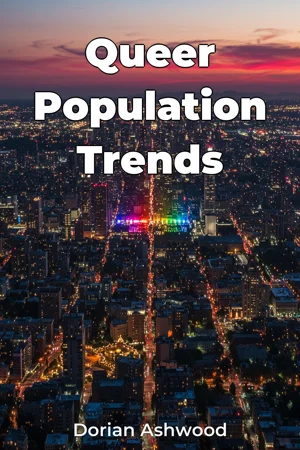
About This Book
How are LGBTQ populations reshaping nations, and what does that tell us about evolving social norms and political landscapes? "Queer Population Trends" delves into the complex demographic shifts within LGBTQ communities worldwide, examining how age distribution, identity formation, and urban migration have transformed over recent decades. Understanding these trends is crucial for policymakers, social scientists, and anyone interested in the future of inclusivity and equality. This book navigates three key themes. First, it analyzes the age distribution within LGBTQ populations, revealing whether these communities reflect or diverge from broader national trends. Second, it explores the multifaceted process of identity formation, paying close attention to how legal reforms, social attitudes, and digital spaces impact self-identification and community affiliation. Third, it investigates urban migration patterns, assessing the concentration of LGBTQ individuals in metropolitan areas and the socio-economic factors driving these movements. We begin by outlining the historical context, tracing how LGBTQ identities have been shaped by social movements, legal battles, and changing cultural norms. The book then presents a comprehensive analysis of available demographic data, drawing from national censuses, population surveys, and targeted research studies to map LGBTQ population trends across diverse nations. We address methodological challenges in data collection and interpretation, acknowledging the limitations inherent in studying populations that have historically been marginalized or hidden. The central argument of "Queer Population Trends" is that LGBTQ demographic trends are not merely reflections of individual choices but are profoundly influenced by broader political, economic, and social forces. These trends, furthermore, have significant implications for policy development, resource allocation, and the future of LGBTQ rights. The book is structured around a series of comparative case studies. It begins by introducing key concepts related to sexual orientation, gender identity, and demographic analysis. Subsequent chapters focus on: (1) Examining the legal and social landscapes that facilitate or impede LGBTQ visibility and acceptance; (2) Analyzing age distribution patterns and their implications for social services and healthcare; (3) Investigating the intersection of identity formation with factors like race, ethnicity, and socio-economic status; (4) Assessing the impact of urban migration on LGBTQ communities, including both opportunities and challenges. The book culminates in a discussion of policy recommendations and future research directions, emphasizing the need for inclusive data collection and evidence-based decision-making. The evidence presented throughout the book is grounded in quantitative data analysis, qualitative research, and legal and policy reviews. Unique data sources include government datasets, non-profit organization reports, and academic studies from around the globe. This book connects to several interdisciplinary fields, including sociology, political science, and urban studies. Its findings have implications for understanding social inequality, political mobilization, and urban development. Our approach emphasizes a comparative perspective, drawing lessons from different national contexts to identify both commonalities and divergences in LGBTQ demographic trends. This comparative lens allows for a more nuanced understanding of the factors shaping these trends and their potential consequences. The book adopts an academic yet accessible tone, presenting complex data and analysis in a clear and engaging manner. It is intended for a broad audience, including students, researchers, policymakers, and anyone interested in LGBTQ issues. The scope of "Queer Population Trends" encompasses a global perspective, but it acknowledges the limitations of available data and the challenges of cross-cultural comparisons. The information presented in this book has many real-world applications. It can inform policy debates on issues such as LGBTQ rights, healthcare access, and social inclusion. It can also help advocacy organizations and community groups develop more effective strategies for serving LGBTQ populations. Finally, the book addresses ongoing debates about the definition and measurement of sexual orientation and gender identity, acknowledging the fluidity and complexity of these concepts. It argues for a more inclusive and nuanced approach to data collection and analysis, one that respects the diversity of LGBTQ experiences.
How are LGBTQ populations reshaping nations, and what does that tell us about evolving social norms and political landscapes? "Queer Population Trends" delves into the complex demographic shifts within LGBTQ communities worldwide, examining how age distribution, identity formation, and urban migration have transformed over recent decades. Understanding these trends is crucial for policymakers, social scientists, and anyone interested in the future of inclusivity and equality. This book navigates three key themes. First, it analyzes the age distribution within LGBTQ populations, revealing whether these communities reflect or diverge from broader national trends. Second, it explores the multifaceted process of identity formation, paying close attention to how legal reforms, social attitudes, and digital spaces impact self-identification and community affiliation. Third, it investigates urban migration patterns, assessing the concentration of LGBTQ individuals in metropolitan areas and the socio-economic factors driving these movements. We begin by outlining the historical context, tracing how LGBTQ identities have been shaped by social movements, legal battles, and changing cultural norms. The book then presents a comprehensive analysis of available demographic data, drawing from national censuses, population surveys, and targeted research studies to map LGBTQ population trends across diverse nations. We address methodological challenges in data collection and interpretation, acknowledging the limitations inherent in studying populations that have historically been marginalized or hidden. The central argument of "Queer Population Trends" is that LGBTQ demographic trends are not merely reflections of individual choices but are profoundly influenced by broader political, economic, and social forces. These trends, furthermore, have significant implications for policy development, resource allocation, and the future of LGBTQ rights. The book is structured around a series of comparative case studies. It begins by introducing key concepts related to sexual orientation, gender identity, and demographic analysis. Subsequent chapters focus on: (1) Examining the legal and social landscapes that facilitate or impede LGBTQ visibility and acceptance; (2) Analyzing age distribution patterns and their implications for social services and healthcare; (3) Investigating the intersection of identity formation with factors like race, ethnicity, and socio-economic status; (4) Assessing the impact of urban migration on LGBTQ communities, including both opportunities and challenges. The book culminates in a discussion of policy recommendations and future research directions, emphasizing the need for inclusive data collection and evidence-based decision-making. The evidence presented throughout the book is grounded in quantitative data analysis, qualitative research, and legal and policy reviews. Unique data sources include government datasets, non-profit organization reports, and academic studies from around the globe. This book connects to several interdisciplinary fields, including sociology, political science, and urban studies. Its findings have implications for understanding social inequality, political mobilization, and urban development. Our approach emphasizes a comparative perspective, drawing lessons from different national contexts to identify both commonalities and divergences in LGBTQ demographic trends. This comparative lens allows for a more nuanced understanding of the factors shaping these trends and their potential consequences. The book adopts an academic yet accessible tone, presenting complex data and analysis in a clear and engaging manner. It is intended for a broad audience, including students, researchers, policymakers, and anyone interested in LGBTQ issues. The scope of "Queer Population Trends" encompasses a global perspective, but it acknowledges the limitations of available data and the challenges of cross-cultural comparisons. The information presented in this book has many real-world applications. It can inform policy debates on issues such as LGBTQ rights, healthcare access, and social inclusion. It can also help advocacy organizations and community groups develop more effective strategies for serving LGBTQ populations. Finally, the book addresses ongoing debates about the definition and measurement of sexual orientation and gender identity, acknowledging the fluidity and complexity of these concepts. It argues for a more inclusive and nuanced approach to data collection and analysis, one that respects the diversity of LGBTQ experiences.
"Queer Population Trends" examines the evolving demographics of LGBTQ communities globally, revealing how social norms and political landscapes influence these shifts. This book navigates through key themes such as age distribution, identity formation, and urban migration. It highlights how legal reforms and social attitudes impact self-identification, revealing that LGBTQ demographic trends are profoundly influenced by broader political, economic, and social forces, not merely individual choices. Delving into comparative case studies, the book analyzes legal and social environments affecting LGBTQ acceptance. It presents quantitative data and qualitative research, drawing from global datasets to address the challenges in studying marginalized populations. For example, the concentration of LGBTQ individuals in urban areas is assessed, examining the socio-economic drivers behind these movements. The book progresses by first introducing key concepts, then examining legal landscapes, age distribution patterns, and the intersection of identity with factors like race and socio-economic status. It culminates in policy recommendations, emphasizing the need for inclusive data collection to inform policy and resource allocation, thereby contributing to the future of LGBTQ rights.
Book Details
ISBN
9788235250643
Publisher
Publifye AS
Your Licenses
You don't own any licenses for this book
Purchase a license below to unlock this book and download the EPUB.
Purchase License
Select a tier to unlock this book
Need bulk licensing?
Contact us for enterprise agreements.