
About This Book
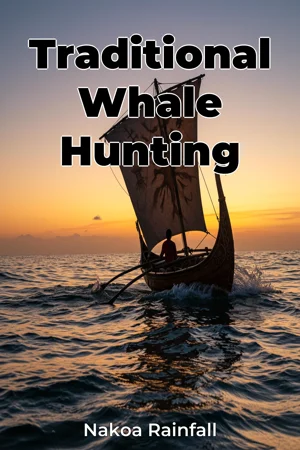
Imagine a world where survival hinges on the successful pursuit of the ocean's largest creatures. This book, *Traditional Whale Hunting*, explores the ingenuity and intricate knowledge systems of coastal indigenous groups who, for centuries, have relied on whales for sustenance, resources, and cultural identity. We delve into the techniques, technologies, and social structures that enabled these communities to thrive in often harsh environments, highlighting both their resourcefulness and the ecological implications of their practices. This book examines the sophisticated methods developed by various indigenous groups around the world to hunt whales. It reveals the critical role whales played in providing not only food, but also essential oil for light and heat, and raw materials for tools, shelter, and clothing. Understanding these traditional practices offers invaluable insights into human adaptation, resource management, and the complex relationship between humans and the marine environment. To fully appreciate these hunting traditions, we will explore the ecological context in which they evolved including whale migration patterns, marine ecosystems, and the impact of environmental changes. We will also consider the social and cultural dimensions of whale hunting, including the rituals, beliefs, and community structures that shaped these practices. Readers should have a basic understanding of anthropology, marine biology, and environmental history to fully grasp the book's arguments, but the core concepts will be explained in detail. The central argument of *Traditional Whale Hunting* is that the seemingly "primitive" whale hunting techniques of indigenous societies represent a sophisticated and sustainable form of resource management developed through generations of observation, experimentation, and adaptation. By dismantling the often-simplistic view of indigenous practices, the book demonstrates the profound ecological knowledge embedded within these cultures and their potential relevance for contemporary resource management strategies. The book is structured to first introduce the global context of traditional whale hunting, outlining the diverse geographic locations and cultural groups involved. It then develops the argument through three major sections. The first section explores the technological innovations, like specialized harpoons, boats, and navigational techniques, demonstrating the ingenuity of these communities. The second section examines the social organization of whale hunts, highlighting the roles, responsibilities, and knowledge systems that ensured success and resource distribution. The third section analyzes the ecological impact of traditional whale hunting, comparing it to modern industrial whaling and assessing its long-term sustainability. The book culminates by considering the implications of these historical practices for contemporary whale conservation efforts and the ongoing challenges faced by indigenous communities in maintaining their cultural heritage. Evidence presented includes archaeological findings of whaling tools and settlements, ethnographic studies documenting traditional hunting practices, and ecological data assessing the impact of whaling on whale populations. The book also draws on oral histories and traditional ecological knowledge passed down through generations within indigenous communities. *Traditional Whale Hunting* bridges anthropology, marine biology, and environmental studies. It connects to anthropology through its study of human cultures and social structures, to marine biology through its analysis of whale behavior and ecology, and to environmental studies through its consideration of resource management and sustainability. These interdisciplinary connections enrich the book's argument by providing a holistic understanding of the complex relationship between humans and whales. This book adopts a perspective that emphasizes the ecological intelligence and adaptive capacity of indigenous cultures, challenging prevailing narratives that often portray them as either inherently destructive or romanticized conservationists. The writing style maintains a balance between academic rigor and accessibility, making the information engaging for a broad audience. The target audience includes students and scholars in anthropology, environmental studies, and marine biology, as well as anyone interested in indigenous cultures, whale conservation, and sustainable resource management. The book will be valuable to readers interested in learning about the ingenuity and knowledge systems of indigenous people, and in gaining a deeper understanding of the complex relationship between humans and the natural world. As a work of non-fiction, the book relies on verifiable facts, documented research, and objective analysis. Care is taken to avoid speculation or exaggeration, presenting a balanced and nuanced account of traditional whale hunting practices. The scope of the book encompasses a global overview of traditional whale hunting, focusing on several case studies representing diverse geographic regions and cultural contexts. While it acknowledges the ongoing debates surrounding whaling, the book intentionally refrains from taking a prescriptive stance on current whaling policies, concentrating instead on the historical and ecological aspects of traditional practices. The information within can be applied to contemporary resource management, conservation strategies, and cultural preservation efforts. It can inform policymakers, conservationists, and indigenous communities seeking to balance cultural heritage with the need for sustainable practices. The book addresses debates regarding the ethics of whaling, the sustainability of traditional practices, and the rights of indigenous communities. It explores these controversies by presenting different perspectives and analyzing the available evidence, encouraging readers to critically evaluate the complex issues involved.
Imagine a world where survival hinges on the successful pursuit of the ocean's largest creatures. This book, *Traditional Whale Hunting*, explores the ingenuity and intricate knowledge systems of coastal indigenous groups who, for centuries, have relied on whales for sustenance, resources, and cultural identity. We delve into the techniques, technologies, and social structures that enabled these communities to thrive in often harsh environments, highlighting both their resourcefulness and the ecological implications of their practices. This book examines the sophisticated methods developed by various indigenous groups around the world to hunt whales. It reveals the critical role whales played in providing not only food, but also essential oil for light and heat, and raw materials for tools, shelter, and clothing. Understanding these traditional practices offers invaluable insights into human adaptation, resource management, and the complex relationship between humans and the marine environment. To fully appreciate these hunting traditions, we will explore the ecological context in which they evolved including whale migration patterns, marine ecosystems, and the impact of environmental changes. We will also consider the social and cultural dimensions of whale hunting, including the rituals, beliefs, and community structures that shaped these practices. Readers should have a basic understanding of anthropology, marine biology, and environmental history to fully grasp the book's arguments, but the core concepts will be explained in detail. The central argument of *Traditional Whale Hunting* is that the seemingly "primitive" whale hunting techniques of indigenous societies represent a sophisticated and sustainable form of resource management developed through generations of observation, experimentation, and adaptation. By dismantling the often-simplistic view of indigenous practices, the book demonstrates the profound ecological knowledge embedded within these cultures and their potential relevance for contemporary resource management strategies. The book is structured to first introduce the global context of traditional whale hunting, outlining the diverse geographic locations and cultural groups involved. It then develops the argument through three major sections. The first section explores the technological innovations, like specialized harpoons, boats, and navigational techniques, demonstrating the ingenuity of these communities. The second section examines the social organization of whale hunts, highlighting the roles, responsibilities, and knowledge systems that ensured success and resource distribution. The third section analyzes the ecological impact of traditional whale hunting, comparing it to modern industrial whaling and assessing its long-term sustainability. The book culminates by considering the implications of these historical practices for contemporary whale conservation efforts and the ongoing challenges faced by indigenous communities in maintaining their cultural heritage. Evidence presented includes archaeological findings of whaling tools and settlements, ethnographic studies documenting traditional hunting practices, and ecological data assessing the impact of whaling on whale populations. The book also draws on oral histories and traditional ecological knowledge passed down through generations within indigenous communities. *Traditional Whale Hunting* bridges anthropology, marine biology, and environmental studies. It connects to anthropology through its study of human cultures and social structures, to marine biology through its analysis of whale behavior and ecology, and to environmental studies through its consideration of resource management and sustainability. These interdisciplinary connections enrich the book's argument by providing a holistic understanding of the complex relationship between humans and whales. This book adopts a perspective that emphasizes the ecological intelligence and adaptive capacity of indigenous cultures, challenging prevailing narratives that often portray them as either inherently destructive or romanticized conservationists. The writing style maintains a balance between academic rigor and accessibility, making the information engaging for a broad audience. The target audience includes students and scholars in anthropology, environmental studies, and marine biology, as well as anyone interested in indigenous cultures, whale conservation, and sustainable resource management. The book will be valuable to readers interested in learning about the ingenuity and knowledge systems of indigenous people, and in gaining a deeper understanding of the complex relationship between humans and the natural world. As a work of non-fiction, the book relies on verifiable facts, documented research, and objective analysis. Care is taken to avoid speculation or exaggeration, presenting a balanced and nuanced account of traditional whale hunting practices. The scope of the book encompasses a global overview of traditional whale hunting, focusing on several case studies representing diverse geographic regions and cultural contexts. While it acknowledges the ongoing debates surrounding whaling, the book intentionally refrains from taking a prescriptive stance on current whaling policies, concentrating instead on the historical and ecological aspects of traditional practices. The information within can be applied to contemporary resource management, conservation strategies, and cultural preservation efforts. It can inform policymakers, conservationists, and indigenous communities seeking to balance cultural heritage with the need for sustainable practices. The book addresses debates regarding the ethics of whaling, the sustainability of traditional practices, and the rights of indigenous communities. It explores these controversies by presenting different perspectives and analyzing the available evidence, encouraging readers to critically evaluate the complex issues involved.
*Traditional Whale Hunting* delves into the sophisticated methods and ecological knowledge of indigenous cultures who relied on whales for survival. For centuries, these communities developed intricate techniques, technologies, and social structures to hunt whales sustainably, utilizing every part of the animal for food, tools, and shelter. The book reveals how these practices were deeply embedded in cultural identities, shaping rituals, beliefs, and community structures. Exploring the global context of traditional whale hunting, the book examines diverse geographic locations and cultural groups. It highlights the ingenuity of specialized harpoons, boats, and navigational techniques, while also analyzing the social organization of whale hunts and their ecological impact. *Traditional Whale Hunting* challenges simplistic views of indigenous practices, demonstrating the profound ecological awareness embedded within these cultures. The book progresses by first outlining the global context, then explores technological innovations, the social organization of hunts, and their ecological impact. Ultimately, it considers the implications of these historical practices for contemporary whale conservation and the challenges faced by indigenous communities in maintaining their cultural heritage. It invites readers to understand the delicate balance between human adaptation, resource management, and the marine environment.
Book Details
ISBN
9788235250544
Publisher
Publifye AS
Your Licenses
You don't own any licenses for this book
Purchase a license below to unlock this book and download the EPUB.
Purchase License
Select a tier to unlock this book
Need bulk licensing?
Contact us for enterprise agreements.