
About This Book
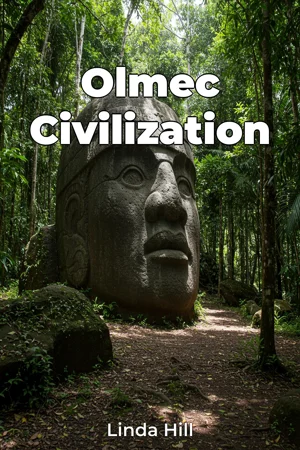
Was a sophisticated civilization flourishing in Mesoamerica centuries before the Maya and Aztecs rose to prominence? This book, "Olmec Civilization," delves into the enigmatic world of the Olmecs, widely regarded as the "mother culture" of Mesoamerica, exploring their origins, cultural innovations, and lasting impact on subsequent societies. The book focuses on three main areas: the Olmecs' societal structure and governance, their artistic and technological achievements, and the environmental factors that contributed to their rise and eventual decline. Understanding the Olmecs is crucial because their developments in areas like writing, calendrical systems, and monumental sculpture laid the groundwork for later Mesoamerican civilizations. This book provides essential historical and archaeological context. It assumes readers have a basic understanding of pre-Columbian history but provides in-depth explanations of key terms and concepts related to Mesoamerican archaeology. The central argument posits that the Olmec civilization, far from being merely a precursor to other cultures, was a complex and highly developed society with unique innovations that shaped the trajectory of Mesoamerican history. The book's structure begins with an introduction to the Olmecs, detailing the geographical setting of their primary settlements along the Gulf Coast of Mexico. We then investigate the social and political organization of the Olmecs, examining evidence for their ruling elite, social stratification, and forms of governance. This section analyzes the archaeological record, including monumental heads, to decipher Olmec social hierarchies. Next, the book explores Olmec artistic and technological achievements, examining their sophisticated stone carving, jade work, and the potential development of a writing system. Building upon these focused investigations, the book culminates in an exploration of the Olmecs’ decline, considering environmental factors, internal conflicts, and external pressures that may have led to the abandonment of their major centers. Finally, we look at the lasting legacy of the Olmecs. Archaeological evidence, including excavations at key Olmec sites like San Lorenzo and La Venta, forms the backbone of this study. The book also incorporates iconographic analysis of Olmec art and inscriptions, drawing on the latest scholarship in Mesoamerican studies. We also consider climate data and paleoenvironmental studies to understand the ecological context of Olmec civilization. Interdisciplinary connections enrich the study. Firstly, anthropological linguistics are crucial in deciphering potential elements of a proto-writing system, linking archaeology with linguistic analysis. Secondly, art history and archaeology intersect in the analysis of Olmec artistic motifs. Lastly, environmental history provides insights into the role climate change may have played in the civilization's trajectory. This book takes a comprehensive and balanced approach to Olmec civilization, integrating archaeological data with insights from art history, anthropology, and environmental studies. It avoids romanticizing the Olmecs, instead presenting a nuanced picture of their achievements and limitations. Aimed at students, academics, and general readers with an interest in ancient history, archaeology, and Mesoamerican cultures, this book is valuable for anyone seeking a deeper understanding of the Olmec civilization. The book is an accessible exploration of world history, tailored to readers interested in the origins of complex societies. In line with the conventions of non-fiction history, this book emphasizes factual accuracy, clear sourcing, and objective analysis. While covering a broad range of topics, this book focuses primarily on the core Olmec heartland and the Early and Middle Formative periods, acknowledging that later developments and peripheral regions are deserving of further, separate study. The insights gleaned from the study of the Olmecs have practical applications in understanding the development of complex societies in other parts of the world. By studying the Olmec example, we can gain insights into the factors that contribute to both the rise and fall of civilizations. The book addresses current debates surrounding the Olmecs, including the nature of their political organization, the extent of their influence on other Mesoamerican cultures, and the interpretation of their art and iconography.
Was a sophisticated civilization flourishing in Mesoamerica centuries before the Maya and Aztecs rose to prominence? This book, "Olmec Civilization," delves into the enigmatic world of the Olmecs, widely regarded as the "mother culture" of Mesoamerica, exploring their origins, cultural innovations, and lasting impact on subsequent societies. The book focuses on three main areas: the Olmecs' societal structure and governance, their artistic and technological achievements, and the environmental factors that contributed to their rise and eventual decline. Understanding the Olmecs is crucial because their developments in areas like writing, calendrical systems, and monumental sculpture laid the groundwork for later Mesoamerican civilizations. This book provides essential historical and archaeological context. It assumes readers have a basic understanding of pre-Columbian history but provides in-depth explanations of key terms and concepts related to Mesoamerican archaeology. The central argument posits that the Olmec civilization, far from being merely a precursor to other cultures, was a complex and highly developed society with unique innovations that shaped the trajectory of Mesoamerican history. The book's structure begins with an introduction to the Olmecs, detailing the geographical setting of their primary settlements along the Gulf Coast of Mexico. We then investigate the social and political organization of the Olmecs, examining evidence for their ruling elite, social stratification, and forms of governance. This section analyzes the archaeological record, including monumental heads, to decipher Olmec social hierarchies. Next, the book explores Olmec artistic and technological achievements, examining their sophisticated stone carving, jade work, and the potential development of a writing system. Building upon these focused investigations, the book culminates in an exploration of the Olmecs’ decline, considering environmental factors, internal conflicts, and external pressures that may have led to the abandonment of their major centers. Finally, we look at the lasting legacy of the Olmecs. Archaeological evidence, including excavations at key Olmec sites like San Lorenzo and La Venta, forms the backbone of this study. The book also incorporates iconographic analysis of Olmec art and inscriptions, drawing on the latest scholarship in Mesoamerican studies. We also consider climate data and paleoenvironmental studies to understand the ecological context of Olmec civilization. Interdisciplinary connections enrich the study. Firstly, anthropological linguistics are crucial in deciphering potential elements of a proto-writing system, linking archaeology with linguistic analysis. Secondly, art history and archaeology intersect in the analysis of Olmec artistic motifs. Lastly, environmental history provides insights into the role climate change may have played in the civilization's trajectory. This book takes a comprehensive and balanced approach to Olmec civilization, integrating archaeological data with insights from art history, anthropology, and environmental studies. It avoids romanticizing the Olmecs, instead presenting a nuanced picture of their achievements and limitations. Aimed at students, academics, and general readers with an interest in ancient history, archaeology, and Mesoamerican cultures, this book is valuable for anyone seeking a deeper understanding of the Olmec civilization. The book is an accessible exploration of world history, tailored to readers interested in the origins of complex societies. In line with the conventions of non-fiction history, this book emphasizes factual accuracy, clear sourcing, and objective analysis. While covering a broad range of topics, this book focuses primarily on the core Olmec heartland and the Early and Middle Formative periods, acknowledging that later developments and peripheral regions are deserving of further, separate study. The insights gleaned from the study of the Olmecs have practical applications in understanding the development of complex societies in other parts of the world. By studying the Olmec example, we can gain insights into the factors that contribute to both the rise and fall of civilizations. The book addresses current debates surrounding the Olmecs, including the nature of their political organization, the extent of their influence on other Mesoamerican cultures, and the interpretation of their art and iconography.
"Olmec Civilization" explores the fascinating world of the Olmecs, often called Mesoamerica's "mother culture." This book investigates their society, art, and the environmental influences impacting their trajectory. Uncover how innovations like early writing systems and monumental sculpture, exemplified by the colossal heads, influenced later civilizations such as the Maya and Aztecs. The book uniquely positions the Olmecs not just as predecessors but as a complex, influential society. The book progresses by first detailing the Olmecs' settlements along the Gulf Coast, then analyzing their social hierarchies through archaeological findings and art. It further examines their artistic and technological achievements, including sophisticated jade work. The book then considers potential factors of decline, such as environmental changes and internal conflicts. Archaeological findings from sites like San Lorenzo and La Venta are central to understanding this ancient civilization's social stratification and political organization. This study integrates archaeological data with insights from art history and anthropology, offering a balanced view of the Olmecs' accomplishments and limitations. Aimed at a broad audience, the book provides an accessible exploration of world history, tailored to those interested in the origins of complex societies and pre-Columbian history.
Book Details
ISBN
9788235250285
Publisher
Publifye AS
Your Licenses
You don't own any licenses for this book
Purchase a license below to unlock this book and download the EPUB.
Purchase License
Select a tier to unlock this book
Need bulk licensing?
Contact us for enterprise agreements.