
About This Book
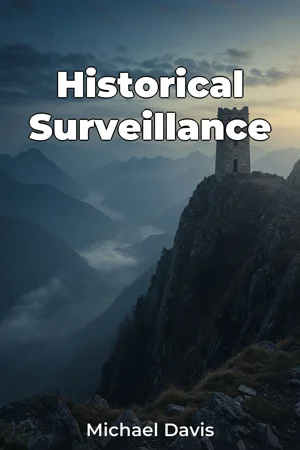
How did historical rulers truly *see* their realms and, more importantly, their people? This book, "Historical Surveillance," delves into the multifaceted strategies employed by rulers across various eras to monitor populations, control the flow of information, and leverage intelligence for both governance and military advantage. These themes are crucial for understanding the dynamics of power, social control, and statecraft throughout history, and their echoes resonate profoundly in contemporary society. We begin by establishing the historical context of surveillance, moving beyond modern technological interpretations to examine its pre-digital forms. This includes analyzing the social, political, and economic conditions that necessitated and shaped early surveillance practices. Readers will gain insight into systems of record-keeping, census taking, and geographical surveys that laid the groundwork for more sophisticated methods. A foundational understanding of these rudimentary techniques is essential to grasp the evolution of surveillance. The central argument posits that effective governance and military strength were inextricably linked to a ruler's capacity to gather, analyze, and utilize information about their populace and environment. This ability to "see" beyond the immediate horizon allowed rulers to anticipate threats, manage resources, and maintain order. "Historical Surveillance" explores this argument through several key sections. First, it examines the mechanisms of population monitoring, including the use of spies, informants, and official registries to track individuals and groups. Second, the book investigates methods of controlling information, ranging from censorship and propaganda to the strategic dissemination of carefully curated narratives. Third, it analyzes the application of gathered intelligence in both military campaigns and domestic governance, illustrating how information shaped policy decisions and strategic actions. This culminates in a discussion of the ethical and societal implications of these practices, both in their historical context and in their relevance to present-day debates about privacy and state power. The evidence presented relies on a diverse range of historical sources, from royal decrees and administrative records to personal letters and eyewitness accounts. Particular attention is given to examples of state-sponsored espionage and the development of early intelligence agencies. Furthermore, the book integrates quantitative data, such as census figures and trade statistics, to provide a comprehensive understanding of the scale and impact of historical surveillance practices. "Historical Surveillance" connects to various fields of study, including political science, sociology, and military history. The parallels between historical methods of information control and modern social media manipulation are explored, as are continuities in the use of intelligence for national security purposes. The approach is unique in its comparative analysis of surveillance techniques across different cultures and time periods, highlighting both commonalities and variations in response to specific political and social contexts. The book adopts a rigorous yet accessible tone, aiming to engage both academic and general readers interested in history, politics, and the evolution of power. The target audience includes students, researchers, policymakers, and anyone seeking a deeper understanding of the long and complex history of surveillance. This book is valuable because it provides a critical historical perspective on contemporary debates about privacy, security, and the role of the state. The book's chronological and geographical scope is broad, encompassing examples from ancient empires to early modern nation-states, but deliberately limits its in-depth analysis to pre-20th century practices to provide focus. The lessons gleaned can be applied to contemporary discussions about government oversight, data privacy, and the ethical use of technology. Understanding how past societies grappled with the challenges of information control can inform present-day efforts to balance security with individual liberties. "Historical Surveillance" also touches upon the ongoing debate about the trade-offs between security and freedom. By providing a historical context for these discussions, the book contributes to a more nuanced understanding of the enduring tension between state power and individual rights.
How did historical rulers truly *see* their realms and, more importantly, their people? This book, "Historical Surveillance," delves into the multifaceted strategies employed by rulers across various eras to monitor populations, control the flow of information, and leverage intelligence for both governance and military advantage. These themes are crucial for understanding the dynamics of power, social control, and statecraft throughout history, and their echoes resonate profoundly in contemporary society. We begin by establishing the historical context of surveillance, moving beyond modern technological interpretations to examine its pre-digital forms. This includes analyzing the social, political, and economic conditions that necessitated and shaped early surveillance practices. Readers will gain insight into systems of record-keeping, census taking, and geographical surveys that laid the groundwork for more sophisticated methods. A foundational understanding of these rudimentary techniques is essential to grasp the evolution of surveillance. The central argument posits that effective governance and military strength were inextricably linked to a ruler's capacity to gather, analyze, and utilize information about their populace and environment. This ability to "see" beyond the immediate horizon allowed rulers to anticipate threats, manage resources, and maintain order. "Historical Surveillance" explores this argument through several key sections. First, it examines the mechanisms of population monitoring, including the use of spies, informants, and official registries to track individuals and groups. Second, the book investigates methods of controlling information, ranging from censorship and propaganda to the strategic dissemination of carefully curated narratives. Third, it analyzes the application of gathered intelligence in both military campaigns and domestic governance, illustrating how information shaped policy decisions and strategic actions. This culminates in a discussion of the ethical and societal implications of these practices, both in their historical context and in their relevance to present-day debates about privacy and state power. The evidence presented relies on a diverse range of historical sources, from royal decrees and administrative records to personal letters and eyewitness accounts. Particular attention is given to examples of state-sponsored espionage and the development of early intelligence agencies. Furthermore, the book integrates quantitative data, such as census figures and trade statistics, to provide a comprehensive understanding of the scale and impact of historical surveillance practices. "Historical Surveillance" connects to various fields of study, including political science, sociology, and military history. The parallels between historical methods of information control and modern social media manipulation are explored, as are continuities in the use of intelligence for national security purposes. The approach is unique in its comparative analysis of surveillance techniques across different cultures and time periods, highlighting both commonalities and variations in response to specific political and social contexts. The book adopts a rigorous yet accessible tone, aiming to engage both academic and general readers interested in history, politics, and the evolution of power. The target audience includes students, researchers, policymakers, and anyone seeking a deeper understanding of the long and complex history of surveillance. This book is valuable because it provides a critical historical perspective on contemporary debates about privacy, security, and the role of the state. The book's chronological and geographical scope is broad, encompassing examples from ancient empires to early modern nation-states, but deliberately limits its in-depth analysis to pre-20th century practices to provide focus. The lessons gleaned can be applied to contemporary discussions about government oversight, data privacy, and the ethical use of technology. Understanding how past societies grappled with the challenges of information control can inform present-day efforts to balance security with individual liberties. "Historical Surveillance" also touches upon the ongoing debate about the trade-offs between security and freedom. By providing a historical context for these discussions, the book contributes to a more nuanced understanding of the enduring tension between state power and individual rights.
"Historical Surveillance" examines how rulers throughout history monitored populations and controlled information, linking these practices to governance and military strength. The book moves beyond modern technology to explore pre-digital surveillance, revealing how early forms of record-keeping, like census taking and geographical surveys, laid the groundwork for more sophisticated methods. Effective governance was often tied to gathering and using information about the populace, enabling rulers to anticipate threats and manage resources. The book investigates population monitoring through spies and registries, control of information via censorship and propaganda, and intelligence application in military and policy decisions. Evidence is drawn from royal decrees, personal letters, and statistical data, offering a comprehensive view of historical surveillance. By analyzing surveillance techniques across cultures and time periods, the book provides a unique comparative perspective. Readers will gain insights into the historical context of contemporary debates about privacy and state power. The book progresses chronologically, starting from ancient empires and moving to early modern nation-states, focusing primarily on pre-20th century practices. This approach enables a deeper understanding of the enduring tension between security and individual rights.
Book Details
ISBN
9788235250162
Publisher
Publifye AS
Your Licenses
You don't own any licenses for this book
Purchase a license below to unlock this book and download the EPUB.
Purchase License
Select a tier to unlock this book
Need bulk licensing?
Contact us for enterprise agreements.