
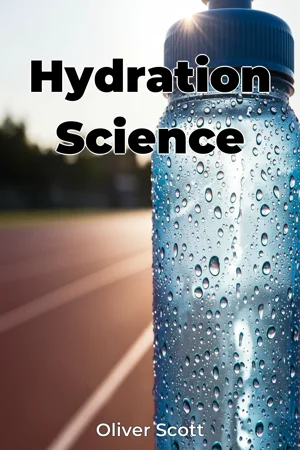
About This Book
Are you truly maximizing your athletic potential, or is suboptimal hydration holding you back? "Hydration Science" delves into the often-misunderstood realm of fluid and electrolyte balance, revealing the critical role of precise hydration strategies in achieving peak athletic performance. This book addresses two key topics: understanding the science of electrolytes and mastering water intake timing to optimize physical capabilities. These elements are crucial because even slight dehydration can measurably impair strength, endurance, and cognitive function, thereby hindering an athlete's ability to perform at their best. The human body's intricate relationship with water and electrolytes has been studied for decades, yet a clear consensus on optimal hydration practices for athletes remains elusive. Traditional recommendations often oversimplify the process, failing to account for individual variations, environmental factors, and the specific demands of different sports. "Hydration Science" cuts through the noise, presenting evidence-based guidelines informed by the latest research in exercise physiology and sports nutrition. The central argument of this book is that a nuanced, personalized approach to hydration, incorporating both electrolyte balance and strategic water intake, is essential for unlocking an athlete’s full potential. This argument is vital because generic hydration advice can be ineffective or even detrimental, leading to hyponatremia (low blood sodium) or other performance-limiting issues. The book begins by establishing a foundation in basic physiology, explaining how electrolytes like sodium, potassium, and magnesium influence fluid balance, nerve function, and muscle contraction. It then examines the impact of dehydration on various physiological parameters and athletic performance metrics. The subsequent sections explore strategies for accurately assessing hydration status, calculating individual fluid needs based on sweat rate and exercise intensity, and optimizing electrolyte intake through diet and supplementation. A significant portion is dedicated to dissecting the timing of fluid consumption, pre-, during, and post-exercise, to maximize absorption and minimize gastrointestinal distress. The culmination of the argument reveals practical, customizable hydration protocols tailored to diverse athletic disciplines and environmental conditions. The evidence presented in "Hydration Science" draws from a comprehensive review of peer-reviewed scientific literature, including randomized controlled trials, meta-analyses, and observational studies. Unique data sources, such as field studies conducted on athletes in real-world training and competition settings, add practical relevance to the research. This book connects to several other fields, including nutrition science, exercise physiology, and environmental science. The discussion of electrolyte balance bridges directly to nutritional biochemistry, while the analysis of hydration's impact on performance relies heavily on exercise physiology. The considerations of environmental factors like temperature and humidity incorporate elements of environmental science. These connections enrich the understanding of hydration as a multifaceted aspect of athletic performance. "Hydration Science" takes a novel approach by integrating cutting-edge research with practical, actionable advice. Instead of offering rigid prescriptions, it empowers athletes and coaches to develop personalized hydration plans based on scientific principles and individual needs. The tone is informative and accessible, presenting complex scientific concepts in a clear and engaging manner. It avoids jargon where possible and provides definitions and explanations for technical terms. The intended readership includes athletes of all levels, from recreational enthusiasts to elite competitors, as well as coaches, trainers, and sports medicine professionals. This book is valuable to them because it provides the knowledge and tools necessary to optimize hydration and enhance athletic performance safely and effectively. As a book within the "Health & Fitness" and "Sports" genres, it includes practical recommendations, case studies, and actionable strategies to help readers implement the insights discussed. While the book covers a broad spectrum of topics related to hydration, it intentionally limits its scope to the aspects most directly relevant to athletic performance, excluding detailed discussions of clinical hydration management for medical conditions unrelated to exercise. Readers will learn how to calculate their individual sweat rates, formulate customized electrolyte solutions, and implement strategic drinking schedules during training and competition. The book also addresses common misconceptions about hydration and clarifies the potential risks associated with overhydration and hyponatremia. One ongoing debate in the field centers around the optimal sodium concentration in sports drinks. "Hydration Science" addresses this controversy by presenting evidence supporting a range of sodium concentrations based on individual sweat sodium losses and exercise duration. It guides readers in determining the optimal sodium intake to prevent hyponatremia without over-consuming sodium.
Are you truly maximizing your athletic potential, or is suboptimal hydration holding you back? "Hydration Science" delves into the often-misunderstood realm of fluid and electrolyte balance, revealing the critical role of precise hydration strategies in achieving peak athletic performance. This book addresses two key topics: understanding the science of electrolytes and mastering water intake timing to optimize physical capabilities. These elements are crucial because even slight dehydration can measurably impair strength, endurance, and cognitive function, thereby hindering an athlete's ability to perform at their best. The human body's intricate relationship with water and electrolytes has been studied for decades, yet a clear consensus on optimal hydration practices for athletes remains elusive. Traditional recommendations often oversimplify the process, failing to account for individual variations, environmental factors, and the specific demands of different sports. "Hydration Science" cuts through the noise, presenting evidence-based guidelines informed by the latest research in exercise physiology and sports nutrition. The central argument of this book is that a nuanced, personalized approach to hydration, incorporating both electrolyte balance and strategic water intake, is essential for unlocking an athlete’s full potential. This argument is vital because generic hydration advice can be ineffective or even detrimental, leading to hyponatremia (low blood sodium) or other performance-limiting issues. The book begins by establishing a foundation in basic physiology, explaining how electrolytes like sodium, potassium, and magnesium influence fluid balance, nerve function, and muscle contraction. It then examines the impact of dehydration on various physiological parameters and athletic performance metrics. The subsequent sections explore strategies for accurately assessing hydration status, calculating individual fluid needs based on sweat rate and exercise intensity, and optimizing electrolyte intake through diet and supplementation. A significant portion is dedicated to dissecting the timing of fluid consumption, pre-, during, and post-exercise, to maximize absorption and minimize gastrointestinal distress. The culmination of the argument reveals practical, customizable hydration protocols tailored to diverse athletic disciplines and environmental conditions. The evidence presented in "Hydration Science" draws from a comprehensive review of peer-reviewed scientific literature, including randomized controlled trials, meta-analyses, and observational studies. Unique data sources, such as field studies conducted on athletes in real-world training and competition settings, add practical relevance to the research. This book connects to several other fields, including nutrition science, exercise physiology, and environmental science. The discussion of electrolyte balance bridges directly to nutritional biochemistry, while the analysis of hydration's impact on performance relies heavily on exercise physiology. The considerations of environmental factors like temperature and humidity incorporate elements of environmental science. These connections enrich the understanding of hydration as a multifaceted aspect of athletic performance. "Hydration Science" takes a novel approach by integrating cutting-edge research with practical, actionable advice. Instead of offering rigid prescriptions, it empowers athletes and coaches to develop personalized hydration plans based on scientific principles and individual needs. The tone is informative and accessible, presenting complex scientific concepts in a clear and engaging manner. It avoids jargon where possible and provides definitions and explanations for technical terms. The intended readership includes athletes of all levels, from recreational enthusiasts to elite competitors, as well as coaches, trainers, and sports medicine professionals. This book is valuable to them because it provides the knowledge and tools necessary to optimize hydration and enhance athletic performance safely and effectively. As a book within the "Health & Fitness" and "Sports" genres, it includes practical recommendations, case studies, and actionable strategies to help readers implement the insights discussed. While the book covers a broad spectrum of topics related to hydration, it intentionally limits its scope to the aspects most directly relevant to athletic performance, excluding detailed discussions of clinical hydration management for medical conditions unrelated to exercise. Readers will learn how to calculate their individual sweat rates, formulate customized electrolyte solutions, and implement strategic drinking schedules during training and competition. The book also addresses common misconceptions about hydration and clarifies the potential risks associated with overhydration and hyponatremia. One ongoing debate in the field centers around the optimal sodium concentration in sports drinks. "Hydration Science" addresses this controversy by presenting evidence supporting a range of sodium concentrations based on individual sweat sodium losses and exercise duration. It guides readers in determining the optimal sodium intake to prevent hyponatremia without over-consuming sodium.
"Hydration Science" explores the critical yet often misunderstood area of hydration for athletes, emphasizing the importance of fluid and electrolyte balance for peak performance. This book reveals that even mild dehydration can significantly impair physical and cognitive functions, impacting an athlete's ability to perform their best. Individualized hydration strategies are key, as generic advice can be ineffective or even harmful, potentially leading to issues like hyponatremia. The book begins with the basic physiology of electrolytes like sodium and their role in fluid balance and muscle function. It then examines how dehydration impacts athletic performance. Uniquely, "Hydration Science" integrates the latest research with practical advice, empowering athletes and coaches to develop personalized plans based on scientific principles. Readers will discover how to assess their hydration status, calculate fluid needs based on sweat rate, and optimize electrolyte intake for diverse sports and conditions. The book progresses by dissecting the timing of fluid consumption, pre-, during, and post-exercise, to maximize absorption and minimize gastrointestinal distress. By offering actionable strategies and addressing common misconceptions, "Hydration Science" provides essential knowledge for optimizing athletic performance through tailored hydration practices.
Book Details
ISBN
9788235250117
Publisher
Publifye AS
Your Licenses
You don't own any licenses for this book
Purchase a license below to unlock this book and download the EPUB.
Purchase License
Select a tier to unlock this book
Need bulk licensing?
Contact us for enterprise agreements.